THE death of Reverend Thomas Baker in the highlands of Viti Levu has become one of Fiji’s most enduring historical stories, its significance reaching far beyond the events of his final day.
More than 150 years later, it is the legacy that followed which continues to resonate.
His life ended in 1867, but the years that came after gave rise to remembrance and acts of reconciliation that would span generations.
Pieces of his story surfaced in churches, museums, old newspaper archives and even beneath the floorboards of the Baker Memorial Hall in Davuilevu.
A pair of worn boots, a tabua offered in atonement, a single bone carefully preserved and buried, and letters written in his own hand became enduring reminders of a missionary whose death marked one of the most significant moments in Fiji’s Christian history.
Rather than fading into history, Baker’s memory continued to shape the Methodist Church in Fiji and became part of the nation’s historical record.
His legacy was carried not only by those who knew him, but also by those who inherited the responsibility of remembering.
Remembered by those who knew him
Long after Baker’s death, those who had worked alongside him remembered him not simply the way he died, but for the character with which he lived.
In a paper presented before the Fijian Society on July 10, 1909, Reverend A.J. Small described Baker as a man whose greatest qualities lay in both his intellect and his heart.
“Thomas Baker was the fortunate possessor of many fine qualities of mind and heart,” Rev. Small said.
He described him as “sagacious, tactful, broad-minded, courageous, enthusiastic and devoted.”
Although he noted Baker was “not a scholar in the strict sense of the word”, Rev. Small believed he possessed a deep understanding of the people among whom he worked.
“As a Fijian speaker he took high rank, while his knowledge of native habits and customs was said to have been unique,” he said.
According to Rev. Small that understanding often proved invaluable during the difficult years of missionary work.
“Again, and again this special knowledge coupled with his unfailing tactfulness, saved him and his followers in those far away dark days.”
What stood out most however, was Baker’s unwavering commitment to his calling.
“Mr Baker was also a man of inflexible purpose. The path of duty once made clear to him no power on earth could turn him from it.”
For Rev. Small, Baker’s life could be summed up in a single image.
“Having lit his torch at the altar of the skies he marched boldly forward to do and die like the brave knight he was.”
His words became one of the earliest tributes to Baker’s legacy, shifting attention away from the tragedy of his death and towards the life he had dedicated to missionary work.
The final letters that remained
While Baker never returned home, the letters he left behind survived him.
Written only days before his death, they revealed not a man anticipating martyrdom, but one determined to complete the work he believed he had been called to do.
In a letter to his colleague, Reverend Jesse Carey, Baker wrote of his intention to continue across the island.
“I do not fear the natives, and we hope to do them good.”
The letter reflected both confidence and conviction.
Rather than expressing fear, Baker focused on the journey ahead and the communities he hoped to reach.
His final letter to his wife carried a more personal tone.
“I wish to do the people good,” he wrote.
He asked her to “cheer up and pray for me”, assuring her that he was “on my Master’s work.”
He spoke affectionately of their children, asking her to “kiss the children for me, all of them and tell them to pray for me.”
He even looked ahead to returning home, writing, “I may be home by tomorrow week.”
Those words would instead become his farewell.
Today, they remain among the most personal records of Baker’s final days, revealing a husband, father and missionary whose greatest concern was the work he believed still lay ahead.
How history remembered him
As the years passed, Baker’s death became part of Fiji’s historical narrative.
The Fiji Museum notes that early European missionaries often faced hostility during the first decades of Christian mission work in Fiji.
Within that broader history, Baker’s death became one of the defining events of the period.
Rev. Small concluded his 1909 paper with a tribute that reflected how many within the Methodist Church viewed his sacrifice.
“Thus ended the short but useful life of this heroic and devoted missionary,” Small wrote.
“He was in the 35th year of his life and the ninth of his ministry when he fell.
“The great day alone can reveal the good he was enabled to accomplish.”
His words did not attempt to measure Baker’s success by numbers or achievements, but by the enduring influence of the life he had lived.
That influence would become even more evident decades later.
A journey home
More than seven decades after Baker’s death, forgotten relics quietly resurfaced.
In May 1971, The Fiji Times reported the return of items linked to Baker’s death that had been believed lost for generations.
The relics included the remains of Baker’s boots and a tabua.
The newspaper reported that the tabua had originally been presented by the people of Navuso to the acting chairman of the church’s synod, Reverend William Slade, in 1899 as “an offering of atonement for their part in the killing.”
When Reverend Slade later returned to New Zealand, he unknowingly took Baker’s boot remains with him.
“For 70 years they were believed lost until Dr William Slade wrote to the Director of the Fiji Museum at the time, Bruce Palmer, offering them for display,” a church spokesman told The Fiji Times.
The relics were later brought back to Fiji by Reverend Selwyn Dawson, chairman of the New Zealand Council of Churches before being presented to the Methodist Church.
Their return was more than the recovery of historical objects.
It represented a bridge between two centuries, linking the events of 1867 with a generation determined to preserve rather than forget.
The return of the relics also demonstrated how Baker’s story had evolved. Once remembered primarily through accounts of his death, he was now being remembered through symbols of reconciliation and shared history.
A bone beneath the floor
More than four decades after Baker’s boots and the tabua returned to Fiji, another remarkable discovery brought his story back into the national spotlight.
In 2014, renovation work at the Thomas Baker Hall in Nausori uncovered a small enclosed concrete plot hidden beneath the building’s pulpit.
Construction workers had been removing the timber flooring when they came across the structure.
At first, they did not know what they had found.
Construction worker Mukesh Chandra recalled the moment.
“We did not know what it was until we read what was engraved on the plot, which was ‘Thomas Baker 1867’,” he said.
“Then we realised that it was a small burial plot for the late Thomas Baker.”
The plot contained a small casket holding a single bone belonging to the missionary.
According to Davuilevu Theological College history lecturer at the time Reverend Ilimeleki Susu, the bone had followed its own remarkable journey before finally being laid to rest.
He said the people of Nabutautau had presented the bone to the former chairman of the Methodist Mission, Reverend Arthur Small, in the early 1900s.
Years later, Rev. Small passed it to his successor, Reverend Robert L. McDonald.
On January 7, 1926, Rev. McDonald handed the bone to the principal of Davuilevu Theological College, Reverend Charles O. Lelean.
Rev. Susu said Rev. Lelean and his students then conducted what would become Baker’s final burial.
“Mr McDonald… handed over the remaining bone to the principal of the Davuilevu Theological College, Reverend Charles O. Lelean, who then, with students from his college, did the last honour in burying Mr Baker’s bone,” Rev. Susu said.
For more than 80 years, the small casket remained hidden beneath the hall.
Generations worshipped above it without knowing precisely where it rested.
Rev. Susu said Rev. Lelean had left behind an inscription that simply read:
“This casket contains a bone of Thomas Baker who was killed at Navosa on July 21, 1867.”
Methodist Church general secretary at the time Reverend Tevita Nawadra said the bone would remain where it had been buried despite the renovations to the hall.
“It was a significant piece of history for all Methodists in Fiji as it showed and reminded them of the sacrifices that Reverend Baker made in taking the Word of God to the people,” he said.
His remarks reflected a broader shift in how Baker has come to be remembered.
The rediscovery transformed what had been an ordinary renovation into the recovery of another chapter of Baker’s legacy.
It was a reminder that history is sometimes preserved quietly, waiting for the right moment to be uncovered.
History being the subject it is, a group’s version of events may not be the same as that held by another group. When publishing one account, it is not our intention to cause division or to disrespect other oral traditions. Those with a different version can contact us so we can publish your account of history too — Editor.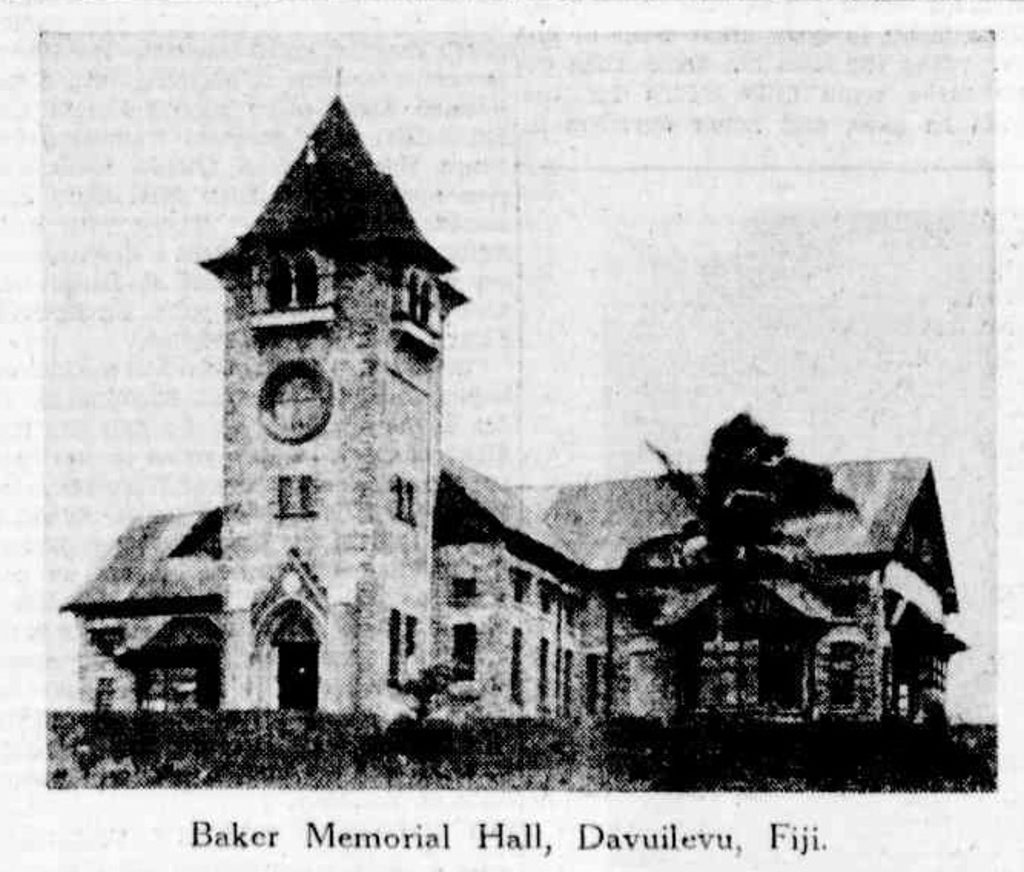
The Baker Memorial Hall in Davuilevu in 1935. Picture: PACIFIC ISLANDS MONTHLY
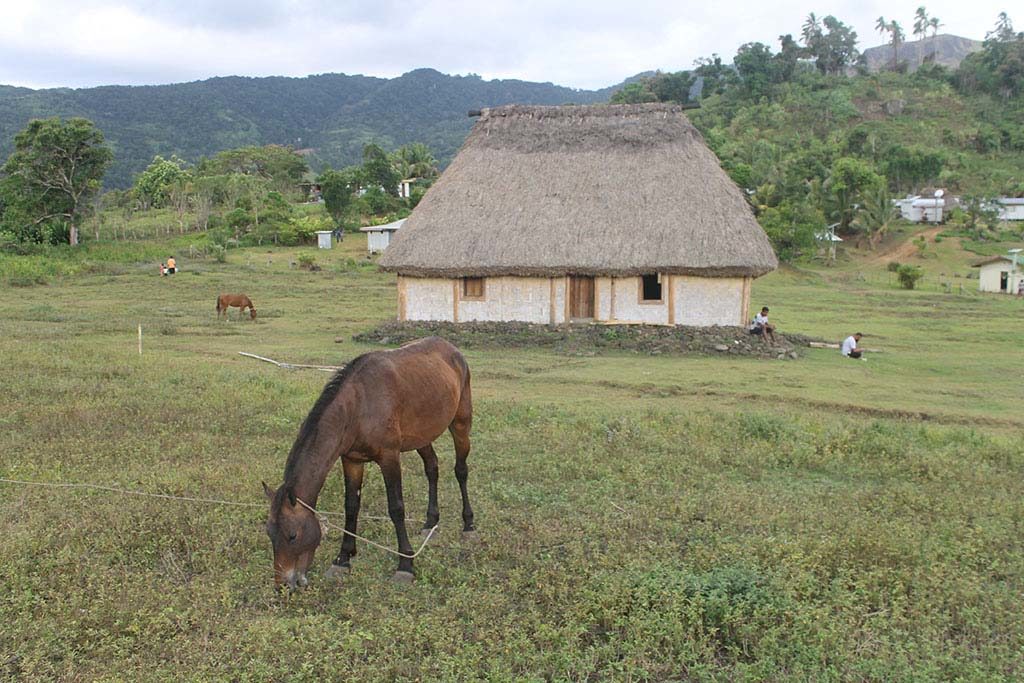
Nabutautau Village where Thomas Baker was killed. Picture: NICHOLAS HALTER / FIJIAN HISTORY
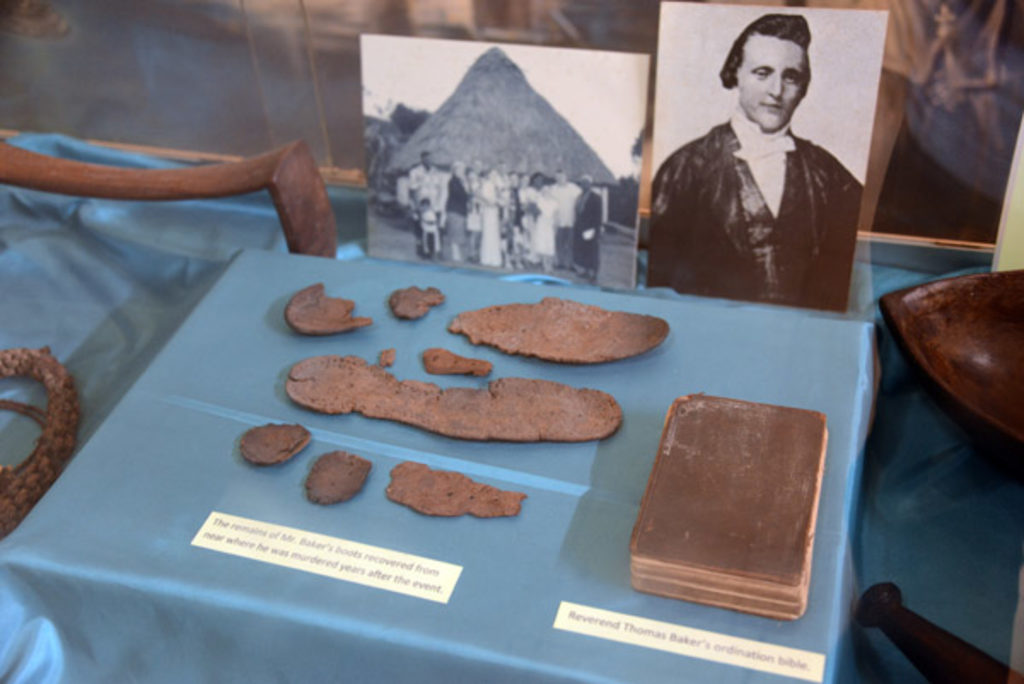
Items that belonged to Reverend Thomas Baker. Picture: PBASE.COM
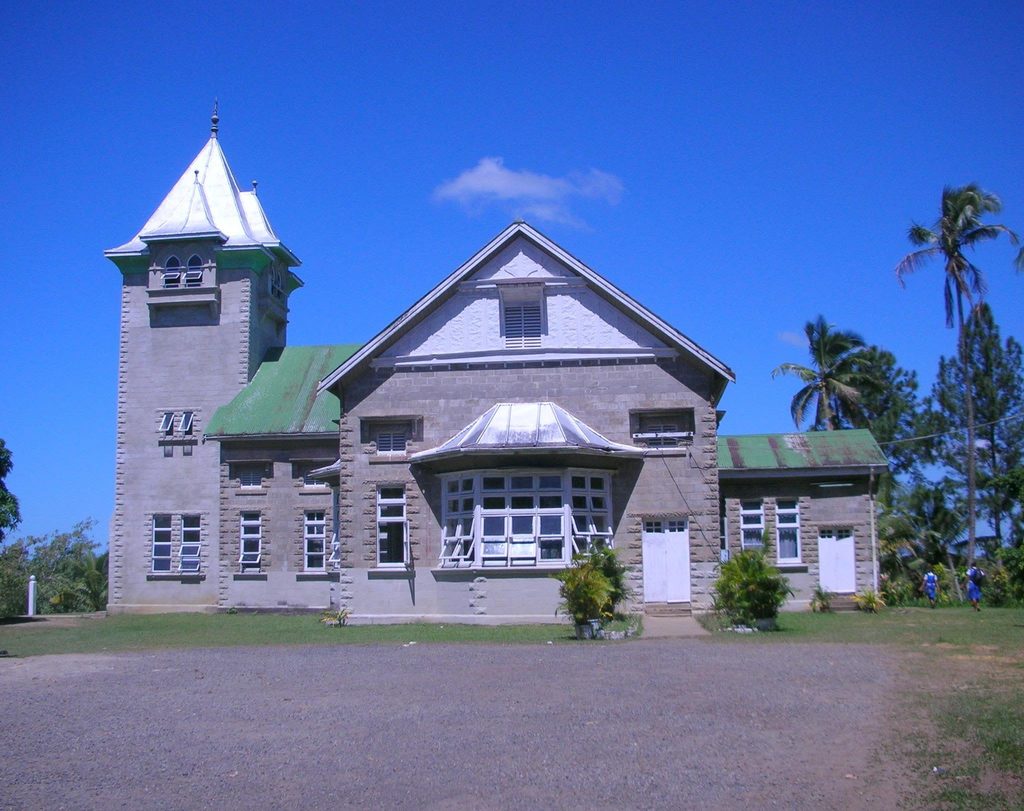
Today the Reverend Thomas Baker Hall is used by the Methodist Church for service for the theological schools and Lelean Memorial School students and teachers. Picture: FIJI MUSEUM
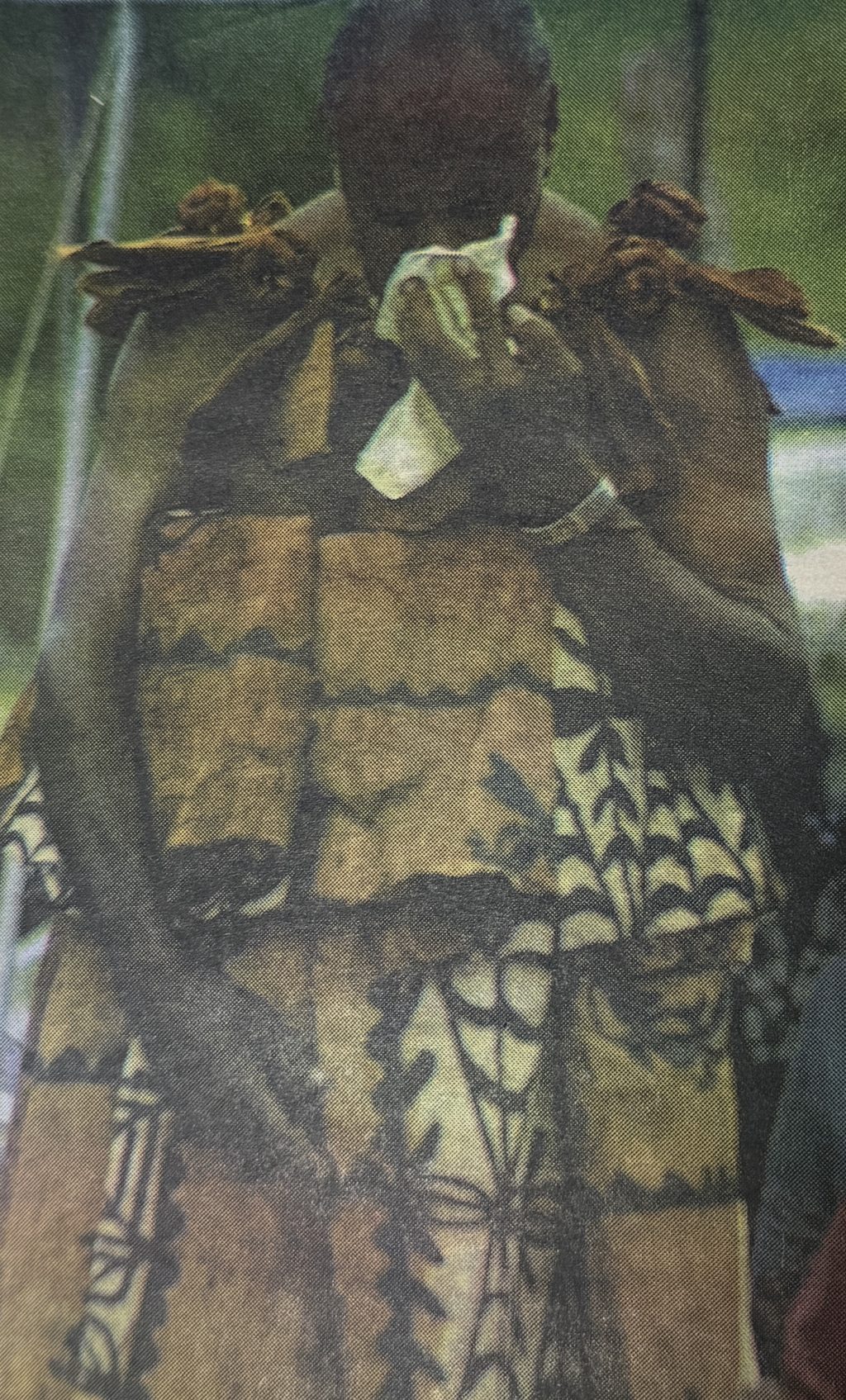
Tui Navatusila Ratu Filimoni Nawawabalavu back in 2003 when he seeks forgiveness from Reverend Baker’s family for the missionary’s death in Nabutautau. Picture: FILE
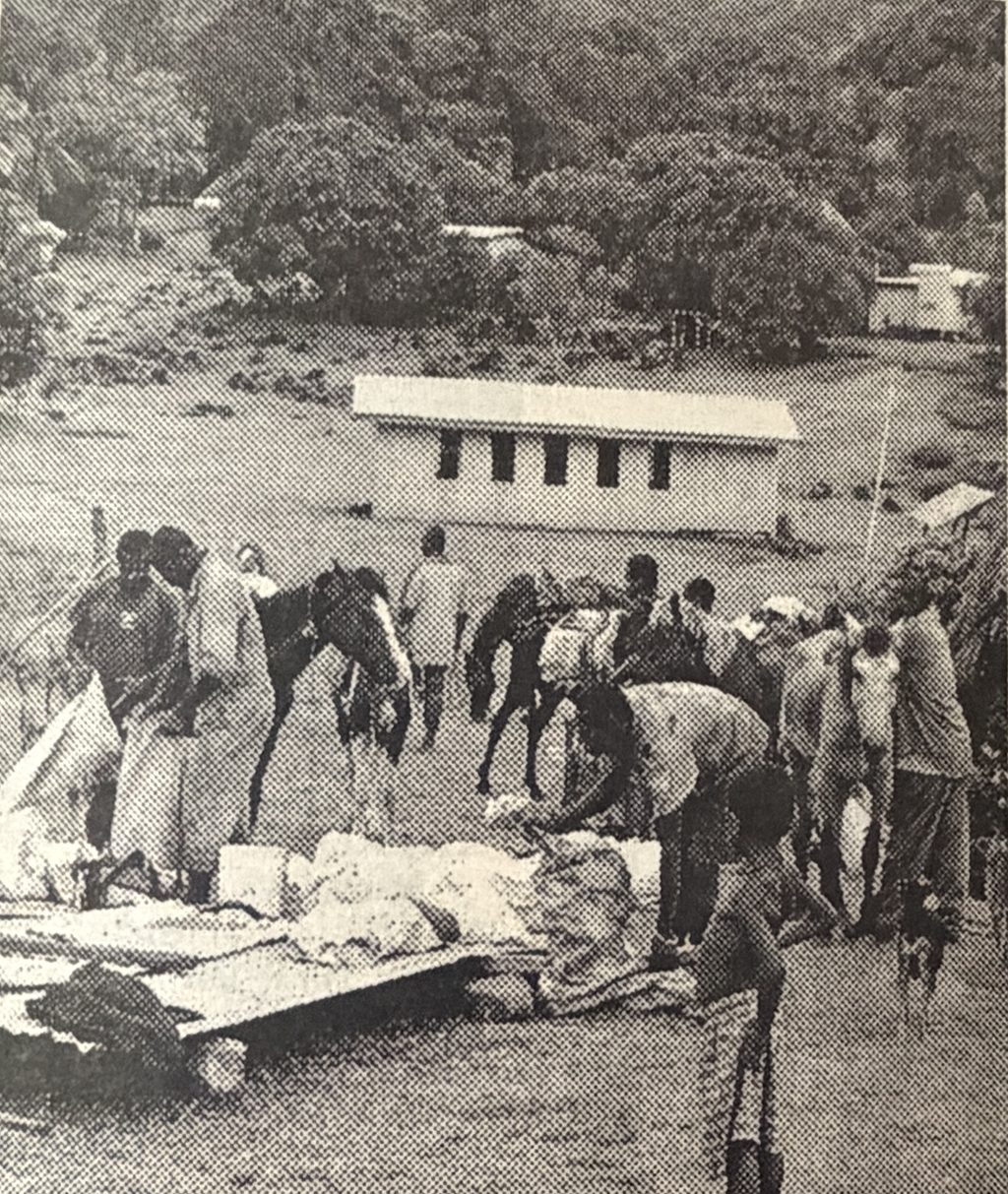
Villagers of Nabutautau in 2003. Picture: FILE