MORE than 150 years after Reverend Thomas Baker’s death, two accounts continue to shape the story of the missionary’s final journey into the mountains of Viti Levu.
One survives through the oral traditions of Navatusila, carefully preserved by generations of chiefly descendants. The other was recorded by Baker’s close friend, Methodist minister John S. Austin.
Together, they offer contrasting perspectives on one of Fiji’s most enduring historical events.
Some lives are remembered not simply for the way they ended, but for the convictions that carried them to their final moments.
For Reverend Baker, the rugged mountains of Viti Levu were more than an isolated frontier. They were home to communities he believed had yet to hear the Christian message. Despite the dangers that lay beyond the established coastal mission stations, he willingly accepted the challenge of serving in Fiji’s remote interior.
More than a century and a half after his death in 1867, Baker’s final journey continues to be retold through different narratives. While both recount the same tragic outcome, they differ in the events that led to his death, illustrating how history can be preserved through both written records and oral tradition.
One account was written by Baker’s longtime friend, Methodist minister John S. Austin, who knew him before he left Australia for Fiji. The other emerged generations later through stories carefully preserved by the descendants of the Navatusila chief associated with the incident. Although both recount Baker’s final expedition into Fiji’s mountainous interior, the oral tradition offers a perspective handed down within the community where the events unfolded.
A calling to the interior
Before Thomas Baker became one of Fiji’s best-known missionaries, those who knew him remembered him as a man deeply committed to his faith.
Among them was John.S. Austin, who reflected on their friendship in his autobiography Missionary Enterprise and Home Service. The two men had worked together in the Chippendale Circuit in Australia before Baker answered what Austin described as “the call of God to the Mission Field” and departed for Fiji.
Austin never forgot the moment news reached Australia that his friend had been killed.
“It was toward the end of the year 1867 that we received the news of the massacre of the Reverend Thomas Baker and his companions in the interior of one of the Islands of Fiji,” he wrote.
For Austin, the loss was deeply personal.
After arriving in Fiji, Baker spent several years working among coastal communities before accepting what Austin described as one of the mission’s most challenging appointments.
In 1865, he was stationed in the interior of Viti Levu, where Christianity had yet to gain a foothold.
Austin described the region as being “right on the border of what was still cannibal Fiji,” reflecting both the language and perceptions of nineteenth-century missionaries.
Although separated by hundreds of kilometres, the two friends remained in contact through letters carried by passing ships. Those exchanges, Austin recalled, revealed Baker’s unwavering commitment to his work despite the hardships of serving in such a remote region.
Choosing the harder path
Austin remembered Baker as a man who rarely chose the easier road.
Instead, he continued travelling into isolated mountain villages where Christianity had not yet reached. Austin described these expeditions as “raids on the heathen portion of his large circuit”.
By July 1867, Baker believed the time had come to venture even farther into Fiji’s mountainous interior.
He assembled a mission party comprising a native minister, two teachers and seven students. Their purpose was to carry the Christian message into distant communities beyond the established mission stations.
According to Austin, Christian chiefs warned Baker of the dangers ahead and urged him not to continue. Yet Austin believed his friend accepted those risks out of conviction rather than recklessness.
“He had a passion for the souls of the heathen, and this was shared by his brave comrades,” Austin wrote.
He said the group departed fully aware of the dangers before them.
“And so, they started, willing to die, if need be, for the sake of Him who died for them.”
Warnings on the journey
Both accounts agree that signs of danger emerged before the missionaries reached their destination.
Austin wrote that while travelling through the interior, Baker stayed in a village where a chief held a grudge against him. Rather than confronting the missionary directly, the chief allegedly sent a messenger carrying a whale’s tooth to another chief farther along the route, asking that Baker be killed.
The oral history recorded more than a century later also refers to a whale’s tooth being sent ahead following a disagreement earlier in the journey. Although the two narratives differ in many respects, this is one detail on which they broadly agree.
According to Austin, Baker and his companions arrived at another village on a Saturday afternoon. Hoping to remain for the Sabbath before continuing their work, they instead sensed hostility among their hosts.
Concerned, Baker asked the chief to provide a guide so the party could leave immediately.
The request was refused.
Instead, the chief insisted they stay overnight, assuring them a guide would be provided the following morning.
Reluctantly, the missionaries remained.
At dawn they rose, Austin wrote, and “commended themselves to God.”
Shortly afterwards, the chief appeared.
“Get ready missionaries. I will be your guide.”
Believing they were being escorted safely to the next village, Baker and his companions gathered their belongings and set off in single file, unaware they were walking towards the final chapter of their journey.
An account preserved through Navatusila
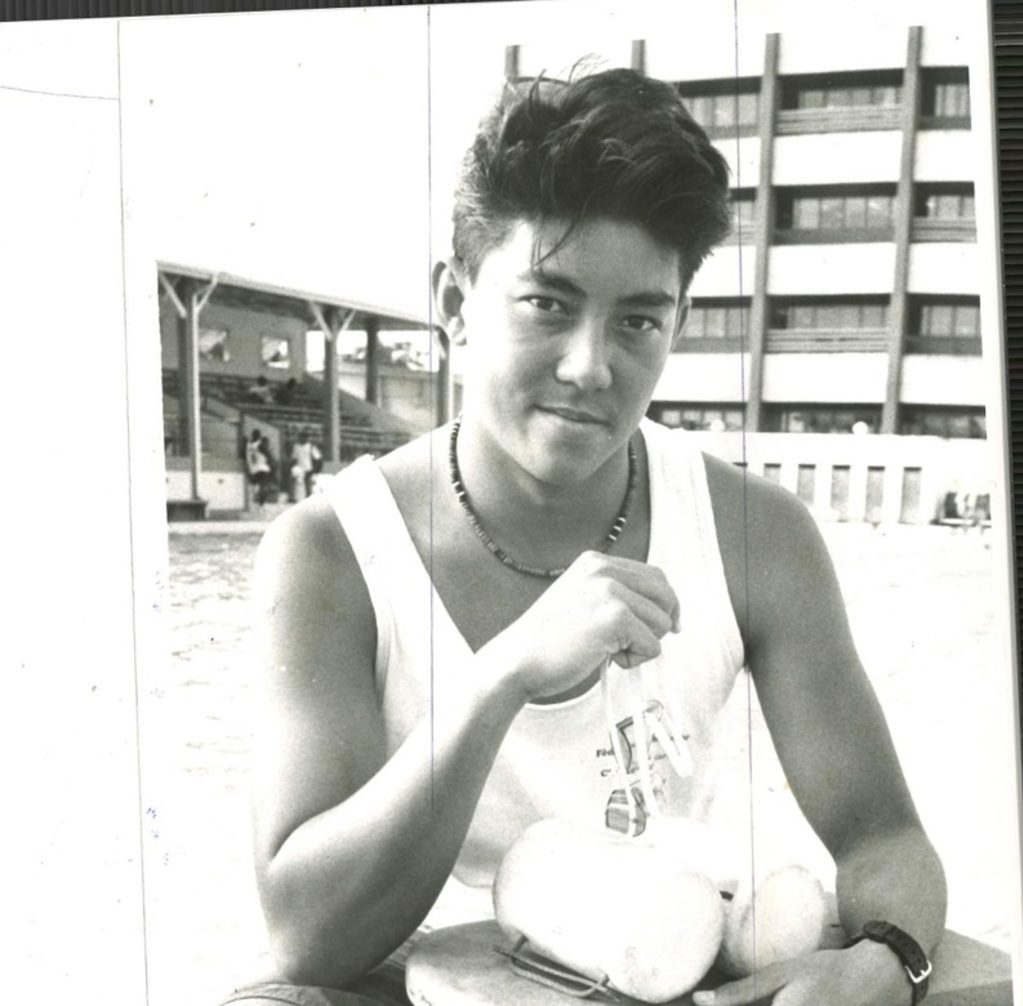
More than a century after Baker’s death, journalist Manoa Rasigatale travelled to Nubutautau in Navosa to record an oral history preserved by the chiefly family connected to the events. His account was published in Pacific Islands Monthly in March 1973.
Rather than relying on missionary records, Rasigatale interviewed Ratu Jope Nawawabalavu, the Tui Navatusila and great-great-grandson of Ratu Filimoni Nawawabalavu No. 1, who, according to the oral tradition, killed Baker.
The account had been passed from father to son over successive generations.
Like Austin’s recollections, it describes Baker’s journey into the mountains and refers to the whale’s tooth sent ahead following an earlier disagreement.
From that point, however, the oral tradition takes a different course.
According to Ratu Jope, Baker and his companions were welcomed at Delaigaganivatu, where they spent the night with Tui Navatusila.
During the evening, the chief admired Baker’s comb while the missionary groomed his hair. Baker handed it to him and promised to send another after returning to the Wesleyan headquarters at Davuilevu.
The following morning, however, Baker noticed the comb was still in the chief’s hair.
According to the oral account, he pointed to it before stepping forward to retrieve his possession.
To Baker, it was simply the return of a personal belonging.
To the chief, it carried a very different meaning.
Ratu Jope explained that touching another person’s head was considered tabu and a profound breach of custom.
The chief reportedly declared that no one had ever touched his head except his mother.
According to the oral tradition, that moment sealed Baker’s fate.
While outwardly remaining calm, the chief quietly resolved that the missionary would not leave the village alive.
Different details, the same tragic end
The Pacific Islands Monthly account differs from Austin’s recollections in several important ways.
Instead of describing the first blow falling on the student carrying the tin box, the oral history says the missionaries were escorted beyond the village by warriors carrying their luggage as a gesture of apparent goodwill.
Once they crossed a small creek outside the village boundary, the chief reportedly gave the order to attack.
The missionaries were struck down almost immediately.
The account says Baker turned after hearing the assault on his companions, stretched out his hands and cried only, “Hey…”
Before he could say more, the chief allegedly struck him with an axe.
The first blow landed on one side of his head before a second, fatal strike followed.
The oral history goes on to describe what happened after the attack, recounting how the bodies were taken back to the village and distributed among neighbouring communities.
It also recounts that Baker’s boots were cooked, although the leather was discarded. According to the article, the charred soles were later donated to the Fiji Museum.
While many of these details cannot be independently verified within the accounts themselves, together they demonstrate how different traditions have preserved the memory of Baker’s final journey.
One was recorded by a close friend writing from a missionary perspective; the other survived through generations of oral history in the community where the events unfolded.
Together, they continue to shape the historical legacy of Reverend Thomas Baker and one of Fiji’s most enduring stories.
History being the subject it is, a group’s version of events may not be the same as that held by another group. When publishing one account, it is not our intention to cause division or to disrespect other oral traditions. Those with a different version can contact us so we can publish your account of history too — Editor. Part 3 Next Week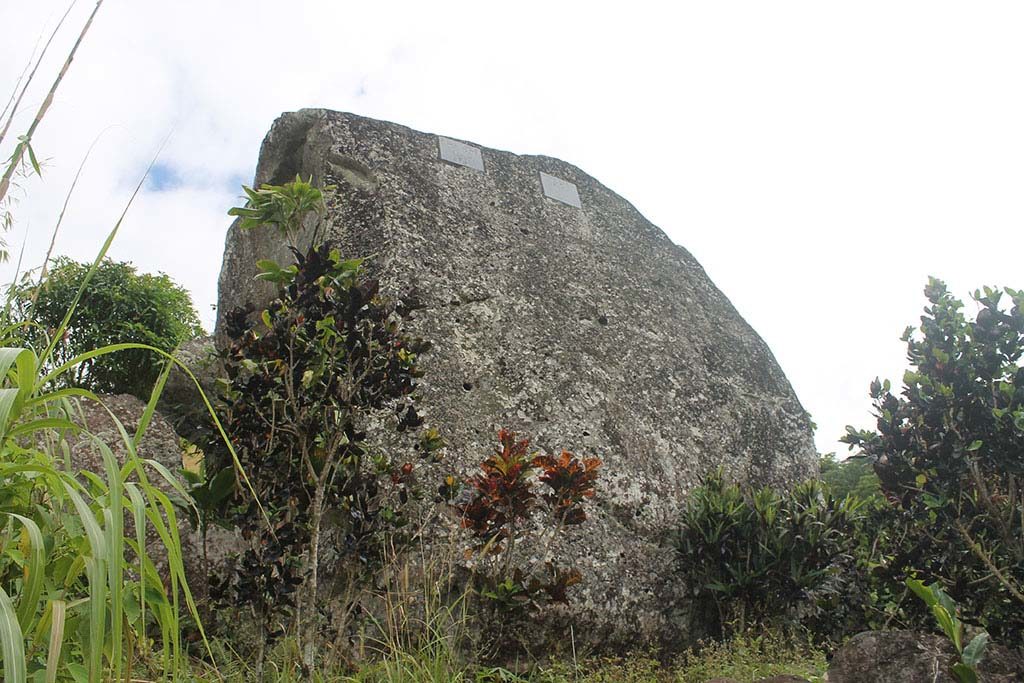
The 1905 memorial plaque on the top of the stone. Picture: NICHOLAS HALTER 2018 / FIJIAN HISTORY
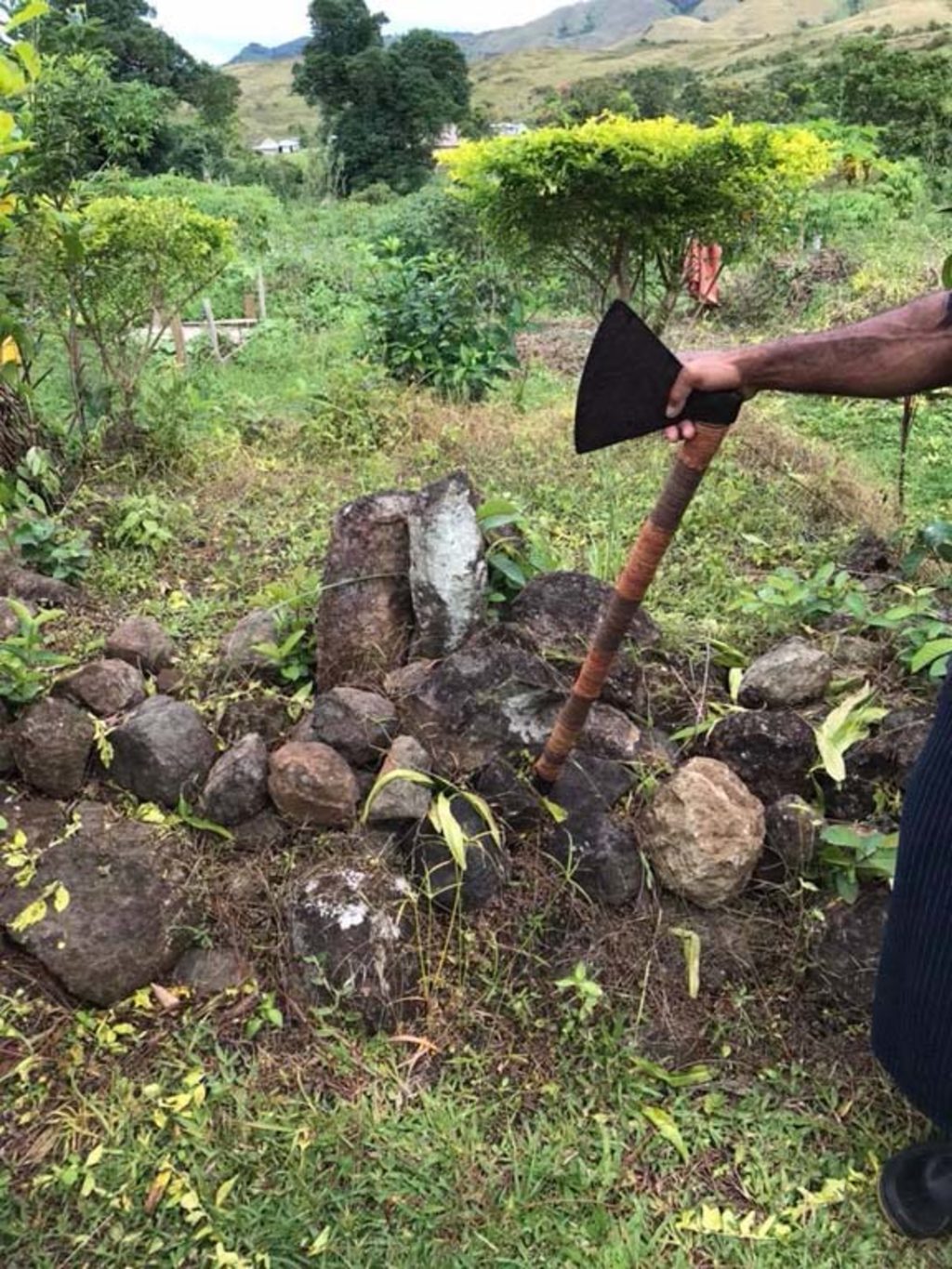
The place where Reverend Baker was killed, and the axe which killed him called the Mi Bure. Picture: MELINIA NAWADRA-CINAWILAKEBA 2018/ FIJIAN HISTORY
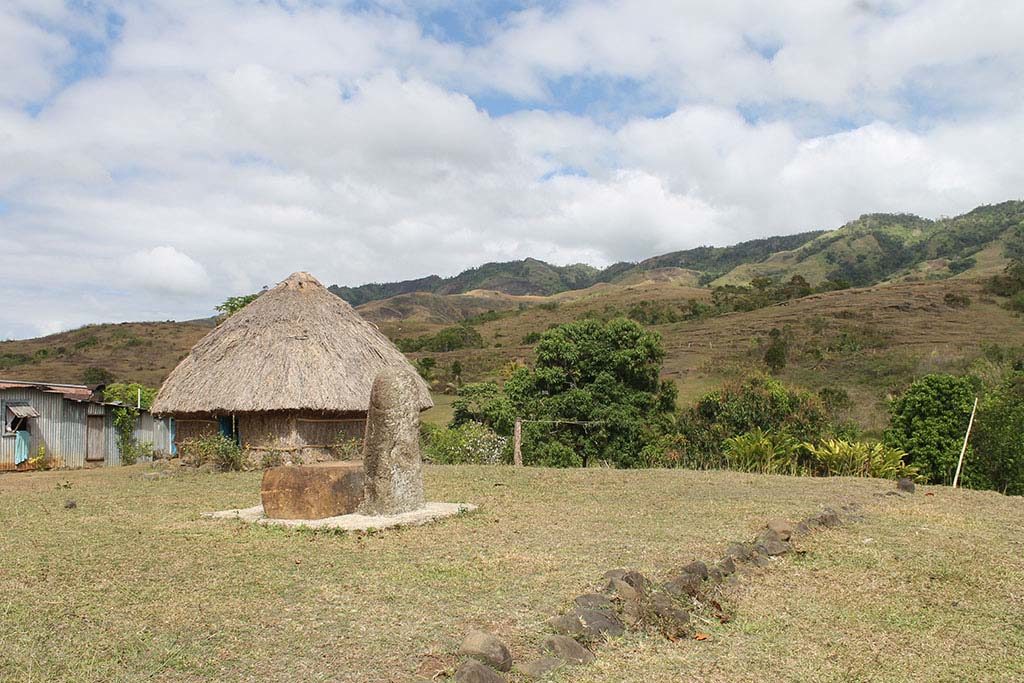
The Nabutautau installation stone (for installing chiefs). Picture: NICHOLAS HALTER 2018/ FIJIAN HISTORY
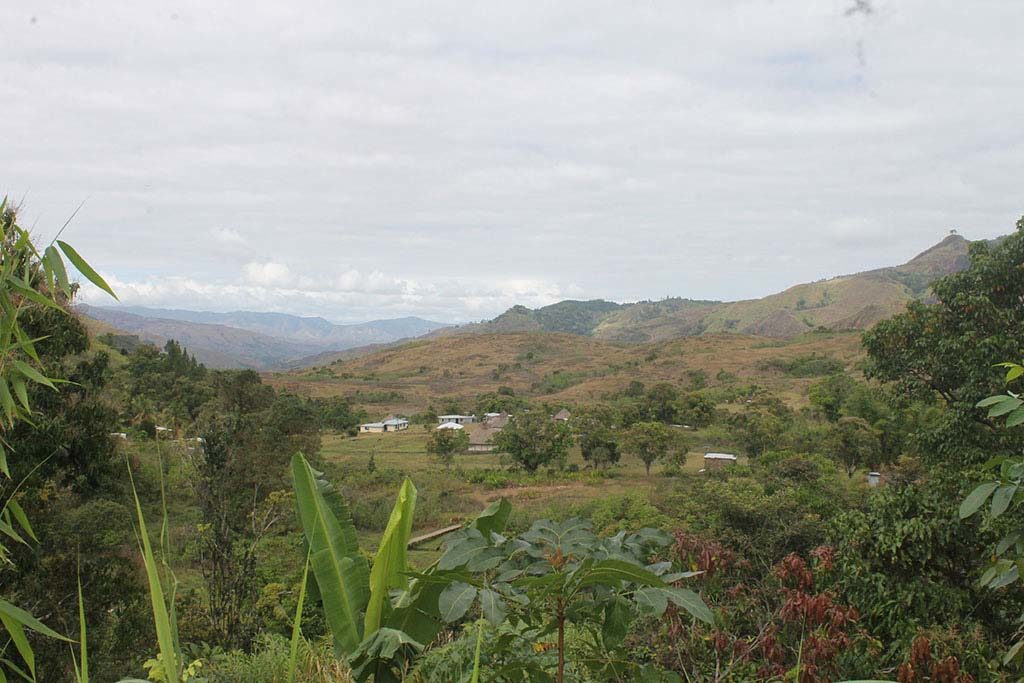
Nabutautau Village in a distance. Picture: NICHOLAS HALTER 2018 / FIJIAN HISTORY
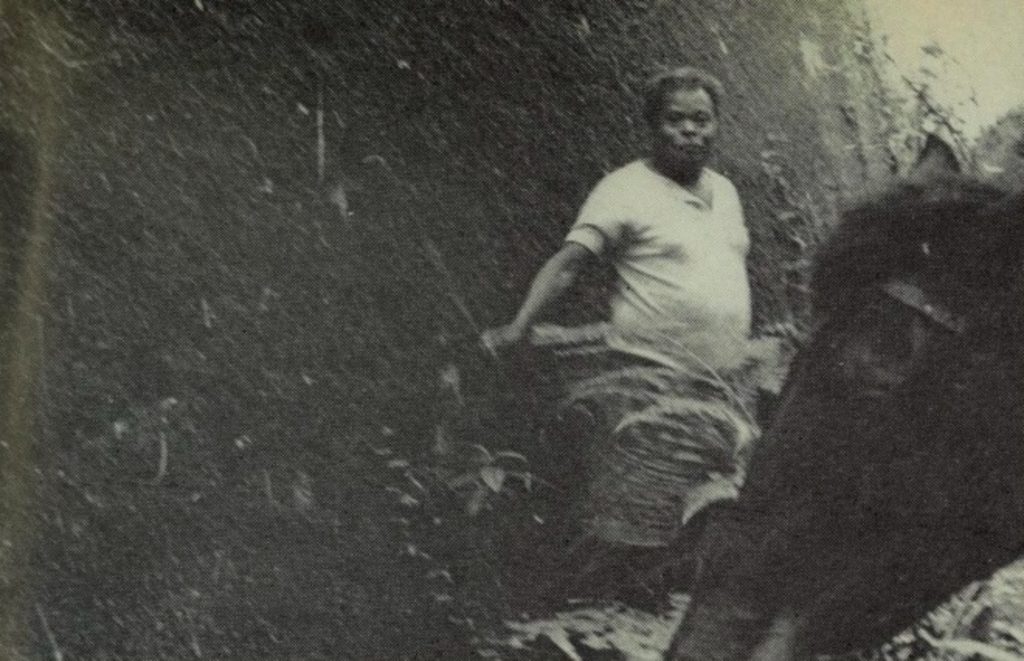
Ratu Jope stands beside one of the four great black solid rock walls which surrounded the fortress-like bure of Ratu Filimone Nawawabalavu No.1 (who killed Baker). Picture: PACIFIC ISLANDS MONTHLY/ MANOA RASIGATALE
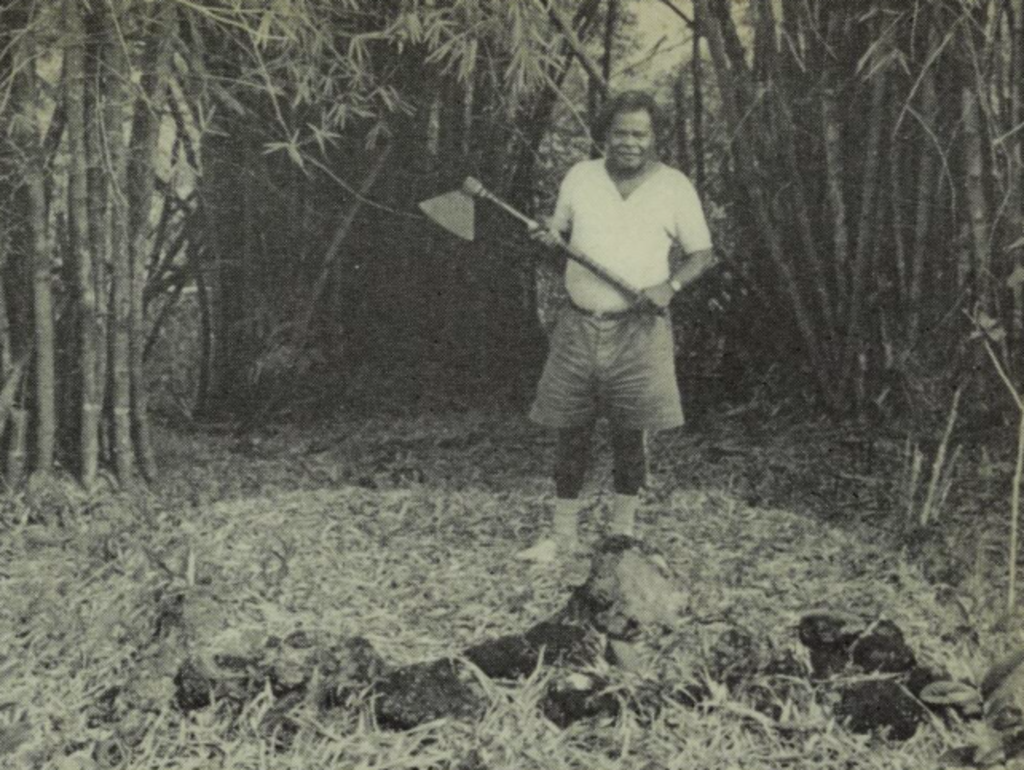
The Tui Navatusila i(1973) Ratu Jope Nawawabalavu with the axe ‘Mi Bure’ that was used by his great great-grandfather to kill Rev. Baker over 100 years ago on the sport where Ratu Jope stands. Picture: PACIFIC ISLANDS MONTHLY / MANOA RASIGATALE
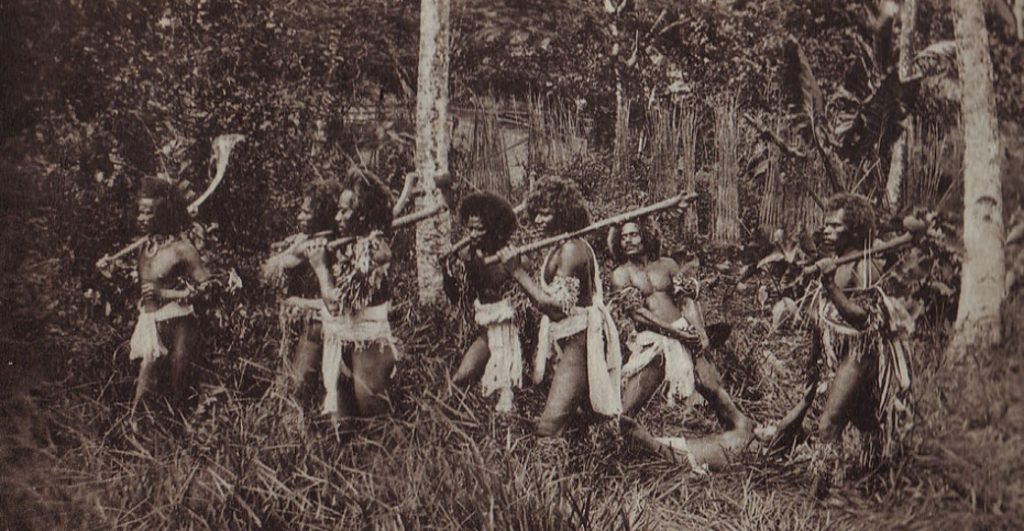
Native cannibals dragging the dead to the feast. Picture: GUS ARNOLD