ON the morning of October 12, 1835, two missionaries stood in a small boat approaching the shores of Lakeba island in Lau.
Ahead of them, nearly 200-armed men gathered on the beach, some carried muskets, others held clubs, spears, bows and arrows.
Their faces painted black and red, many had never seen a European before.
The newcomers were Reverend William Cross, an Englishman, and Reverend David Cargill, a Scotsman and graduate of the University of Aberdeen.
They had travelled from Tonga carrying a mission that would alter the course of Fiji’s history.
One hundred years later, on the same date and at the same place, thousands would gather to commemorate their arrival.
Churches would be dedicated, descendants honoured and thanksgiving services held across Fiji.
What began with two missionaries seeking permission to stay on a remote island had become one of the most significant turning points in the nation’s story.
The long wait for Fiji
Cross and Cargill did not arrive in Fiji easily.
According to the Methodist Missionary Society’s preparations for the centenary, both men undertook missionary work throughout Tonga before setting their sights on Fiji.
They reached Vavau in March 1835 intending to cross immediately, but circumstances delayed their plans. For six months they waited.
Only when the schooner Blackbird arrived were they able to continue their journey.
On October 8, 1835, they sailed from Vavau and four days later, on October 12, Lakeba came into view.
The date would later become one of the most important anniversaries in Fiji’s religious history.
First footsteps on an unfamiliar shore
David Cargill’s diary provides one of the most vivid first-hand accounts of the encounter.
As the island emerged from the sea on the morning of October 12, uncertainty hung over the expedition.
The captain possessed no chart of the harbour and had never previously visited Lakeba.
Cargill recorded: “It was therefore determined that Mr Cross and I should go ashore in the boat and visit the king of the island.”
What awaited them was intimidating.
“As we approached the beach, we saw many of the natives running hither and thither on the sand,” Cargill wrote.
Soon they found themselves facing a large gathering of armed men.
“As we drew near to the landing place, nearly 200 men, some armed with muskets – others with bayonets fastened to long sticks, some with clubs and spears, others with bow and arrows were standing about 100 feet distant from the place at which we stepped on shore.”
The missionaries attempted a greeting.
“Sa loloma kivei kemundou” (my respects to you).
No one replied.
The crowd stepped back – the strangers were objects of curiosity and uncertainty.
“They were astonished and seemed not to know what to think of us,” Cargill wrote.
The moment captured a meeting of worlds, two missionaries carrying a foreign faith stood before people whose customs and beliefs were largely unknown to them.
An audience with the king
The path from the beach led inland to the residence of Tui Nayau, the paramount chief of Lakeba.
According to Cargill, the chief initially waited in a house near the shore before returning to his main residence, located within a fortified settlement.
The missionary described the impressive defensive works surrounding the village.
“The settlement in which the king’s house stands, is surrounded by a stone wall, built without mortar; on top of the wall, a fence of reeds is erected, and the whole is surrounded by a moat nearly 100 feet wide,” he wrote.
Cross and Cargill brought gifts and explained the purpose of their visit.
The response was encouraging.
“We made known to the king the object of our visit,” Cargill wrote.
The assembled chiefs responded with a simultaneous clapping of hands.
The king questioned them closely before offering support.
“The king asked many questions, and promised to listen to instruction, to grant us a piece of ground to live on, and to extend his protection to us.”
The meeting established the foundation upon which the Methodist mission in Fiji would be built.
A sleepless first night
The missionaries returned to the vessel and brought their families ashore in a large canoe.
Their first home was not a church, mission station or permanent dwelling.
It was a canoe house on the beach.
The structure quickly became the centre of attention.
Throughout the day hundreds of curious islanders surrounded the building, even after darkness fell, visitors continued arriving.
Cargill remembered the constant interruptions.
“During the daylight, several hundreds of the natives were constantly surrounding the house, and even during the night, we were annoyed by the intrusion of a few whose curiosity was not easily satisfied.”
Seeking rest, the missionaries prepared beds on the deck of a canoe.
Before sleeping they sang hymns and prayed for divine protection.
Then came a different challenge – mosquitoes.
In one of the diary’s most human and memorable passages, Cargill described the ordeal.
“Myriads of moschettoes (mosquitoes) seemed leagued against us, and by their loud and incessant buzzing, and the frequent introduction of their sharp sting, effectually deprived us of any refreshing sleep.”
The pioneers who had crossed oceans and confronted uncertainty found themselves defeated by insects.
“Long before the break of day, we were up and looking for morn,” Cargill wrote.
Building a foothold
The next morning brought progress.
Cross and Cargill selected a site for their mission station.
The king readily granted the land and promised temporary accommodation.
Within three days, houses had been completed for the missionary families.
The work of establishing Christianity in Fiji had begun.
Less than two weeks later, on Sunday, October 25, 1835, Cargill recorded the first divine service.
The congregation gathered outdoors.
About 70 Tongans and a similar number of Fijians attended.
Among them sat the king himself.
“He listened with attention to an account of the creation of the world. He seemed much interested in the remarks,” Cargill noted.
What started as a conversation between a chief and two visitors later evolved into a religious movement.
History being the subject it is, a group’s version of events may not be the same as that held by another group. When publishing one account, it is not our intention to cause division or to disrespect other oral traditions. Those with a different version can contact us so we can publish your account of history too — Editor
Part 2 Next Week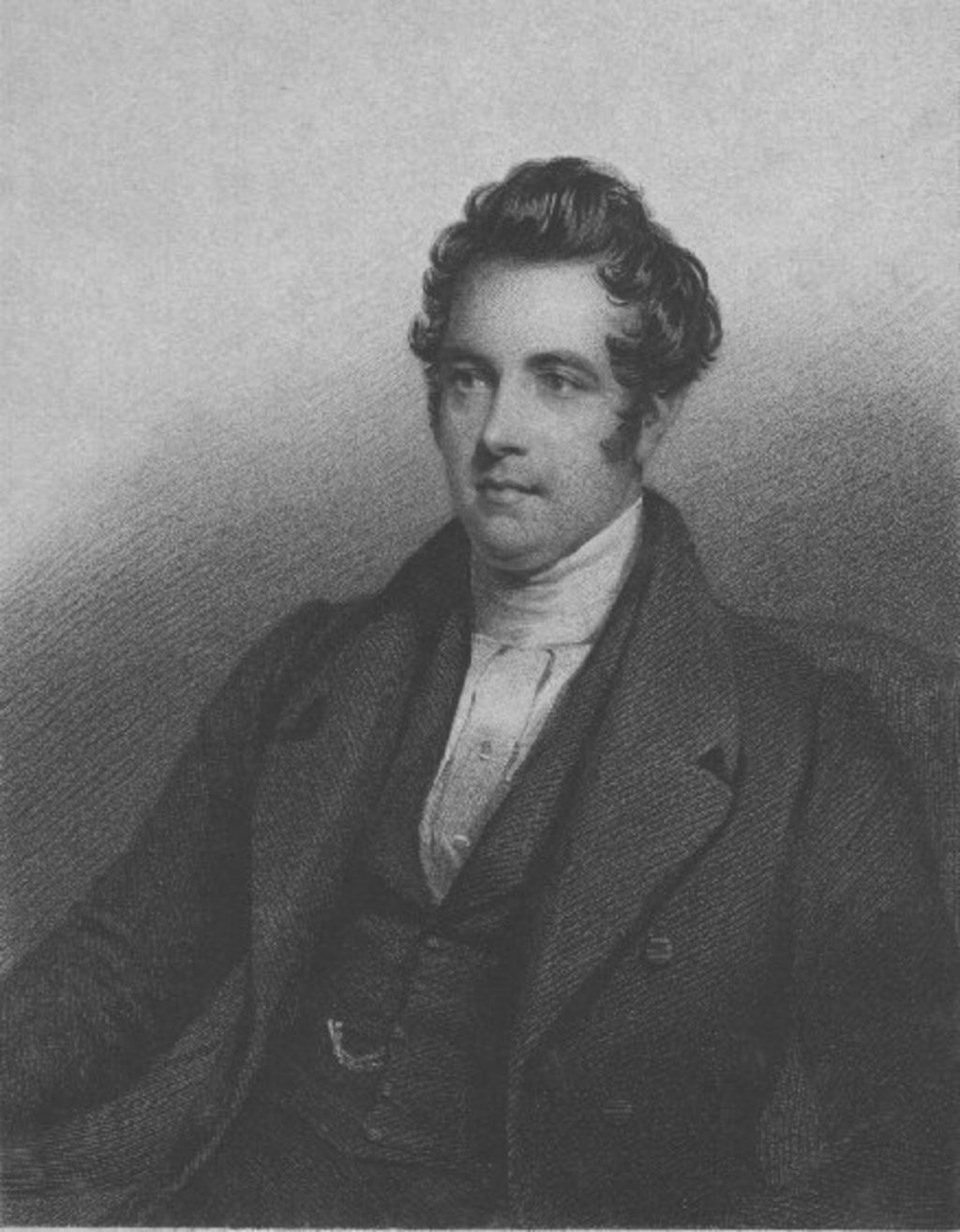
Wesleyan, Reverend David Cargill. Picture: FT FILE
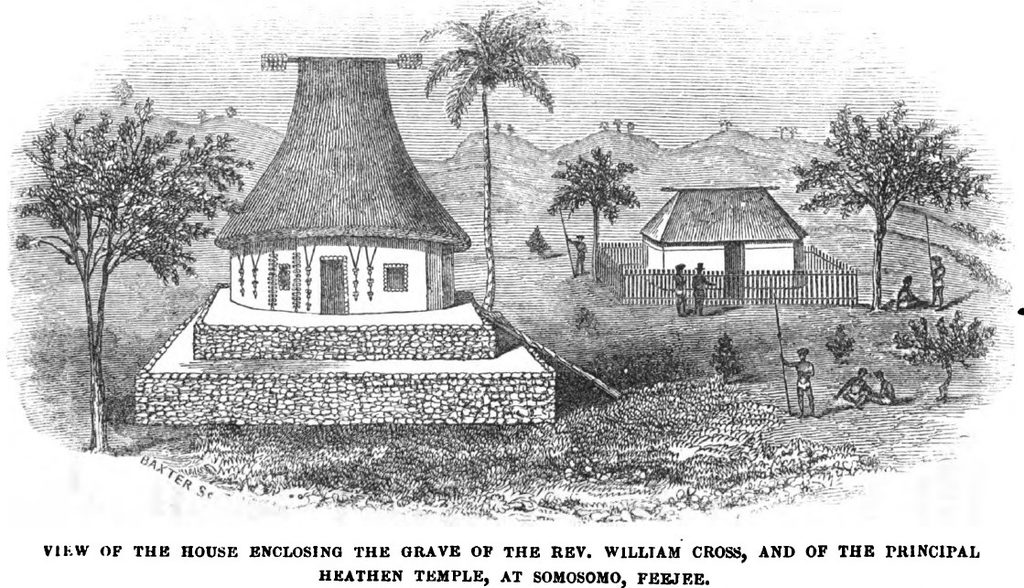
View of the house enclosing the grave of the Rev. William Cross and of the principal heathen temple at Somosomo, Fiji. Picture: COMMONS.WIKIPEMEDIA.ORG
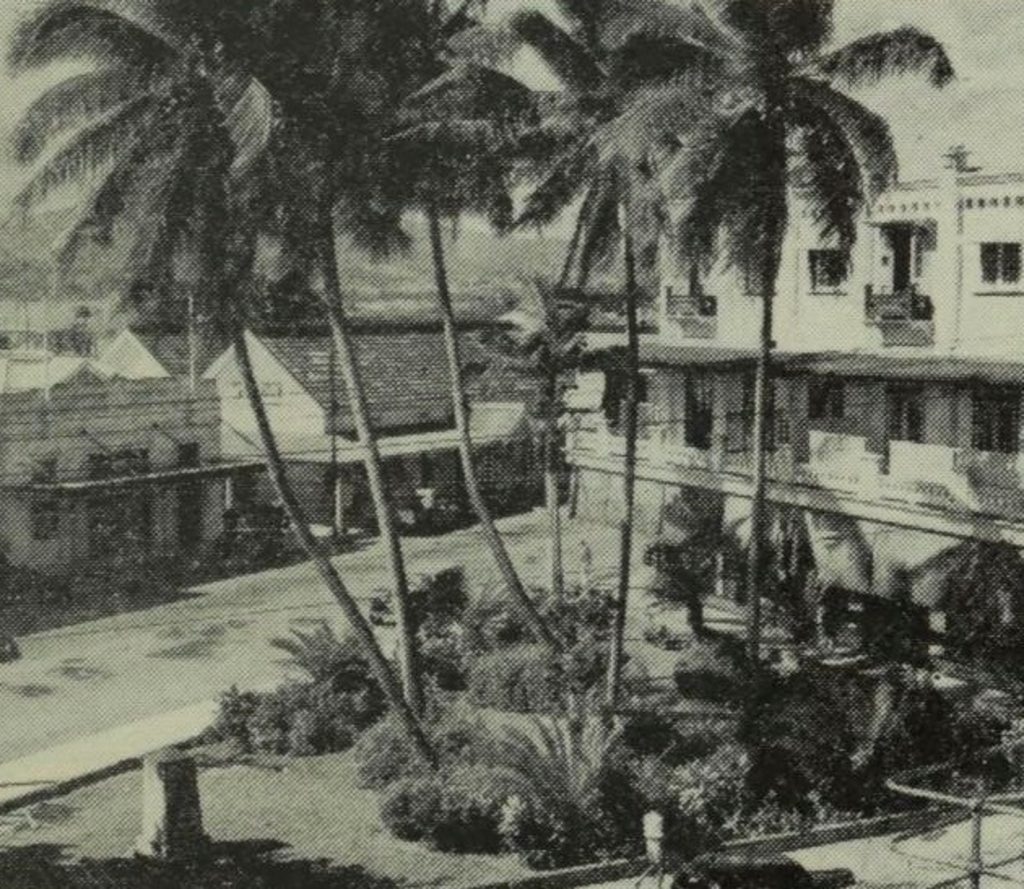
The monument to the Reverend William Cross and Reverend David Cargill still stands today, photo taken in 1950. Picture: PACIFIC ISLANDS MONTHLY
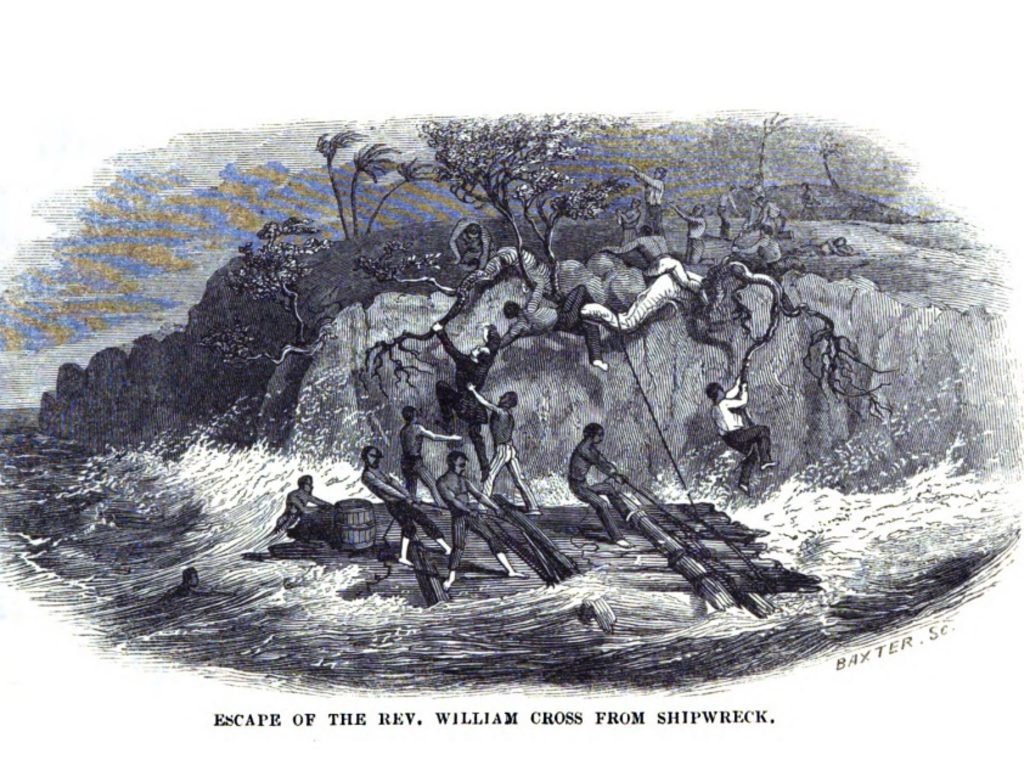
An illustration of Reverend William Cross escaping a shipwreck. His wife drowned during the incident.
Picture: THE WESLEYAN JUVENILE OFFERING
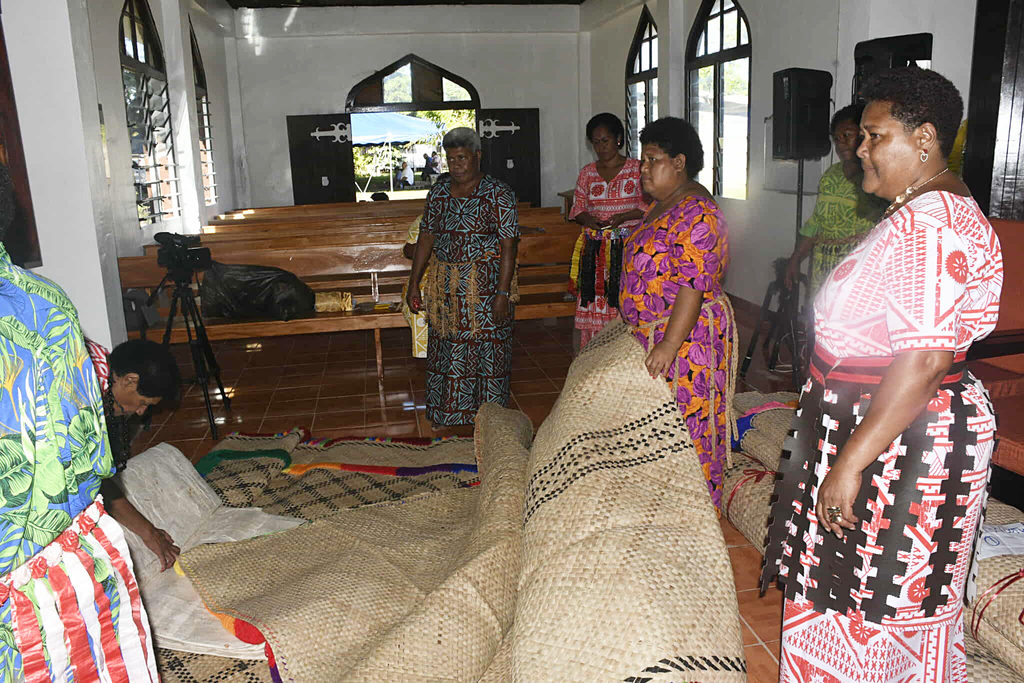
Inside the church dedicated to the memory of Reverend William Cross in Tubou village in Lakeba, Lau. Picture: JONACANI LALAKOBAU