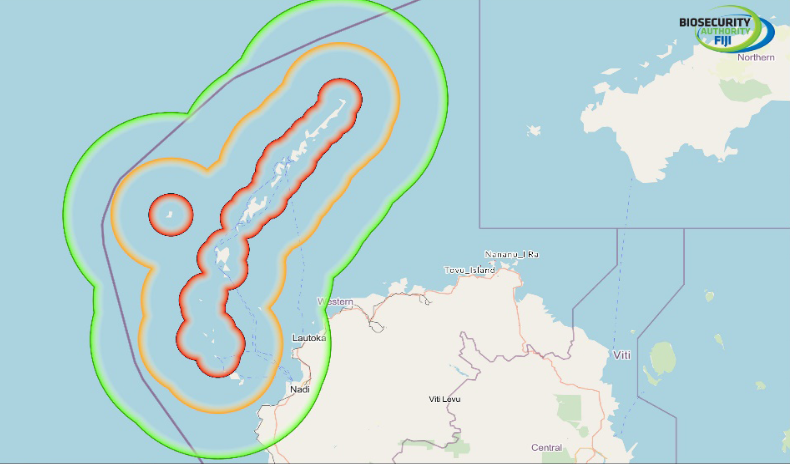
A HEFTY penalty is what villagers in Yasawa and the Mamanucas could face if they do not adhere to the restrictions of a biosecurity control to prevent the spread of a Tongan fruit fly that was detected in the two maritime groups.
The government restriction was made official in a gazette from the Ministry of Agriculture which ordered the controls be imposed on villagers travelling from Yasawa and Mamanuca to Viti Levu.
Produce that have been listed as restricted include mango, guava, papaya, breadfruit, citrus, chilli, tomato, eggplant, capsicum, cucumber, starfruit and other homegrown fruit and vegetables.
Under the Biosecurity Authority of Fiji Act 2008, anyone caught illegally transporting banned fruits or hosting materials from the Yasawa and Mamanuca groups faces immediate legal prosecution with individuals facing a fine of up to $40,000 and companies a maximum of $200,000.
Naviti district spokesperson Meciusela Vuli said villagers had been observing the restriction since the first few months of 2026.
“The Ministry of Agriculture team came to our seven villages, they carried out awareness for our people, and they put up traps for this fruit fly,” Mr Vuli said.
“Right now, we can’t take any type of fruit including uto (breadfruit), vudi (plantain), pawpaw, mangoes, moli (lemon) and vegetables.
“So, we are listening and we have been reminding our people to follow the law.”
He said while majority of villagers had been adhering to the restrictions, some had been fined.
“We had a villager whose child was carrying a piece of dawa in their bag.
“They found it at the wharf when the family arrived in Lautoka. They were fined on the spot, $1000. After that everyone feared they could be fined too so we made sure we followed what is being said.”
Mr Vuli said checkpoints had been set up at offloading points where government officers had been checking bags and produce.
Kese Village headman Rusiate Buli said livelihoods had not been adversely affected by the restrictions.
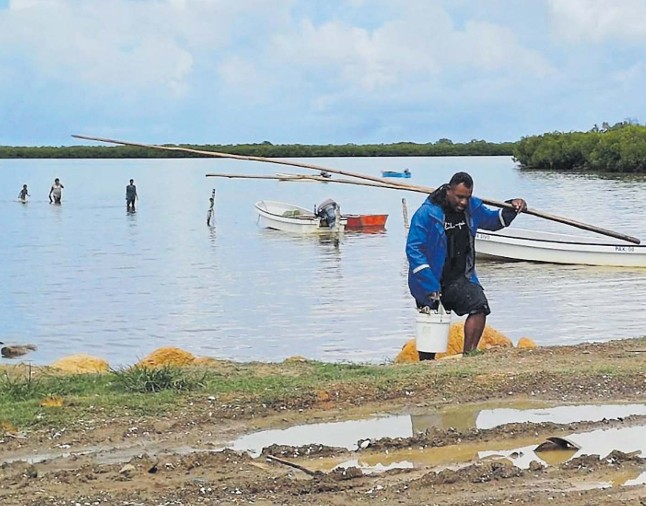
“Most of us that live on the island live off what we plant and what we get from the sea,” he said.
“A lot of us also work in the nearby resorts. What we take to Lautoka is mainly seafood to sell so we cannot say we have been affected.
“What I am seeing now is that the restriction is in a gazette. That is a law now which we have to follow or face a fine.”