Prime Minister Sitiveni Rabuka’s recent comment that he was uncomfortable with the word “Fijian” to describe all citizens of Fiji, has rekindled a long-standing debate about what the common name of all people in this country should be.
The description “Fijian” to describe all citizens is controversial and polarising, and views are mixed. The 2013 Constitution declares in the preamble “that we are all Fijians united by common and equal citizenry”. Section 5 then states “all citizens of Fiji shall be known as Fijians”.
The word “Fijian” has been in use since the 1800s (possibly even earlier) to identify and describe the first settlers of this country, who according to some anthropologists, arrived in these islands more than 3000 years ago.
Since cession, Fiji’s British colonisers have referred to the indigenous people of Fiji as “Fijians”. Screeds of laws since 1874 have reaffirmed that description. The 1970, 1990 and 1997 constitutions all drew distinctions on the basis of race.
On July 1, 2010, Ratu Epeli Nailatikau, then President of Fiji, made a new law (Fijian Affairs (Amendment Decree No 31 of 2010), with far-reaching consequences. The word “Fijian” was to be removed in any law wherever it appeared, and replaced with the word “i Taukei”.
The present Constitution of Fiji which was signed by President Nailatikau, came into effect on 7 September, 2013 It was imposed on the people of Fiji by a presidential decree — it is not the result of any approval or consensus by the people of this country, but the brainchild of two men.
Fiji did not have a Parliament at the time because the government had been unlawfully removed in a coup d’état seven years earlier. An interim administration backed by the army governed Fiji.
The Great Council of Chiefs has been resolute that the common name for the people of Fiji should not be “Fijian”. The Reeves Commission, which drafted the 1997 Constitution, felt that “Fiji islander” was an appropriate name for all citizens of Fiji.
The SDL party’s (which later morphed into the present day SODELPA) submission to Professor Yash Ghai (who was drafting a new constitution before it was trashed), was not against a common name.
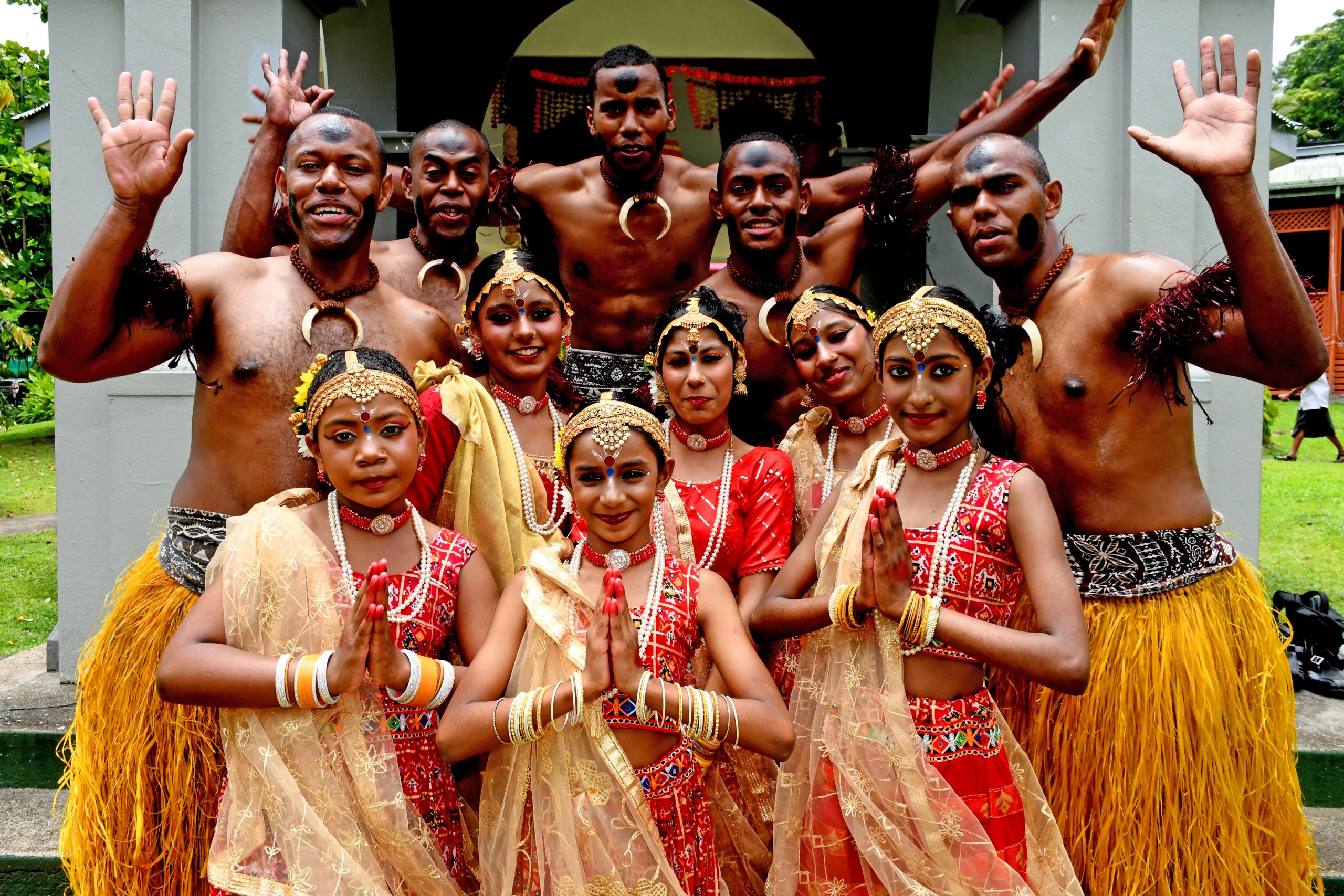
Its view was that if all citizens were to be called “Fijian”, this must be done following consultations, and with the agreement of the native Fijians and all other races in Fiji. Many Indians, Chinese and other races who live in Fiji are uncomfortable being called “Fijian” and are proud being referred to by their ethnicity.
When this matter came up in a recent discussion, a colleague said “I don’t want to be called ‘Fijian’.
I’m proud to be a Rotuman.” A significant number of people in this country do not speak the “Fijian” language, live the “Fijian” way of life, or practise “Fijian” customs or traditions (e.g. “curu i bure/kana i bure”, “matanigasau” etc.) In a speech delivered in June 2018, Mr Biman Prasad, current NFP leader and one of Fiji’s three Deputy Prime Ministers, said “Imposition of a common name does not promote common and equal citizenry.
Imposition of a common name does not promote or achieve equality, dignity and justice for our ordinary people. Imposition of a common name does not promote meritocracy in recruitment and appointment to positions, particularly in the civil service and our security forces, equal opportunities and a sense of pride and patriotism.”
The editorial comment in The Fiji Times of March 9 ,1970, on a debate on a common name on the eve of Fiji’s independence, said: “No hasty decisions can be taken on a matter of such importance as a common name in any multi-racial society.
But it is obvious that the Fijian people themselves and their leaders feel that with the approach of dominion status for Fiji, a common national name is necessary. What it should be will need a lot of thought by people of all races and at all levels of community life.”
The morning after Prime Minister’s recent statement on a referendum on the issue, one of my Indo-Fijian friends sent me a text message that said “Indians are nervous again…. just watch the next wave of migration.”
Many would argue that the word “Taukei” is not a substitute for the word “Fijian”. Nor are the words synonymous. I believe many indigenous people of Fiji feel a deep sense of loss in the “application” of the classification “Fijian” to persons of all ethnicities who have made this country their home.
The sense that this is akin to a form of cultural appropriation stems from the way the name Fijian was forced on people. This was regarded as arrogant and culturally disrespectful. They would argue that the word of and by itself is not intended to convey a sense of superiority or supremacy over other races.
The description “Fijian” has been subsumed into the identity and psyche of indigenous Fijians.
The very word connotes an entire culture with its rich traditions, protocols, values and beliefs. The 2013 Constitution boldly stated that “we, the people of Fiji…. DECLARE that we are all Fijians…”
The problem with this lofty statement is that the people of Fiji made no such declaration.
It was intellectually dishonest. The National Council for Building a Better Fiji (NCBBF) had recommended “Fijian” as the common name. Reacting to the suggestion in 2008, former parliamentarian Mick Beddoes said the NCBBF had totally ignored the views of the Fijian people.
He said “I would have thought that if this is what we want, then we should first discuss this with our indigenous people first and obtain their views and preferences.”
Just as the Maori are the tangata whenua of Aotearoa, in the same vein it could be argued that the indigenous people of Fiji have over time, acquired a proprietary right to use of the word “Fijian” to describe themselves. The issue is clearly divisive and makes some people nervous.
One can even argue that the word “ i Taukei” is unsuitable to describe “native” Fijians because it can be confused with the radical indigenous nationalist movement of the same name. But sweeping the issue under the carpet is unhelpful.
Pretending that the mere description of all citizens of this country as “Fijians”, somehow makes us all “equal” is a little simplistic. It ignores the protracted debate about what is the most appropriate and common name for all people who now call Fiji home.
The present debate about a common name for Fiji citizens is healthy. We should not feel threatened by it, but welcome the opportunity to have an honest dialogue on the issue.
Dialogue on the question should take place in a calm and respectful way. Cross cultural misunderstandings are more likely to occur when there is a failure or refusal to listen. We should not confuse the idea of ethnicity and nationality.
I believe that we can celebrate our common destiny as one people, while being proud of our different ethnic backgrounds. As someone with three grandparents who were ethnic Chinese, and a mother who was registered in the Vola ni Kawa Bula, I do not feel diminished or excluded by not being referred to as a “Fijian”.
I am proud of my Chinese heritage. Equally, I have been enriched by my “Fijian” ancestry, but I am not defined by a piece of paper.
The strong sense of belonging and affection I have for this country does not depend on what others choose to call me.
•GRAHAM LEUNG is a past president of the Fiji Law Society and a legal consultant. He has maternal links to Kadavu. The views expressed here are his alone and not necessarily shared by this newspaper.