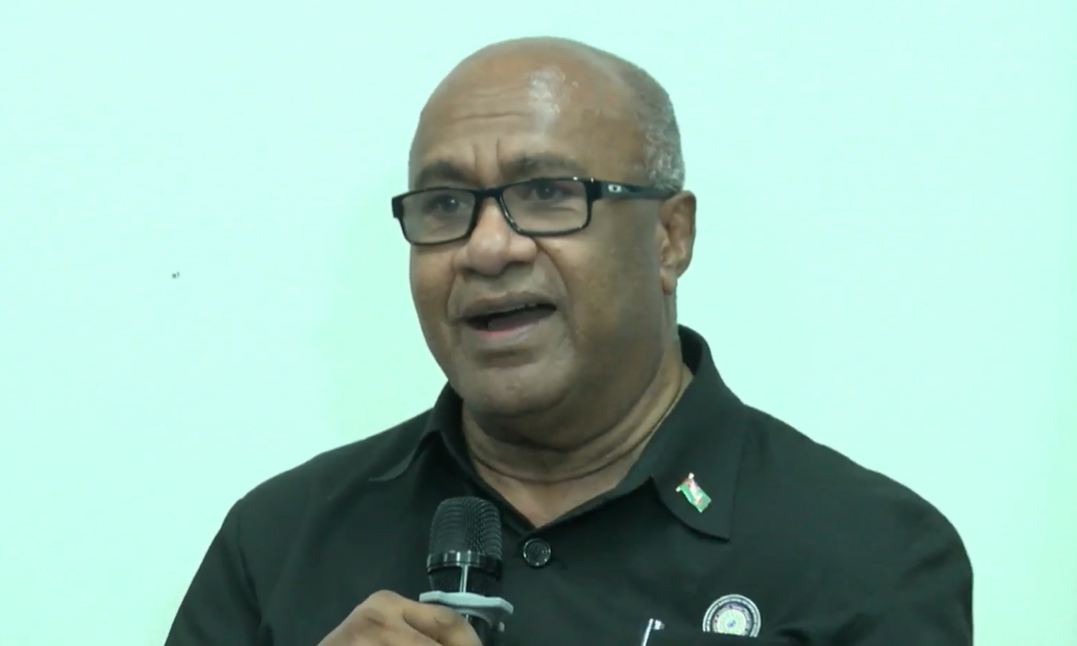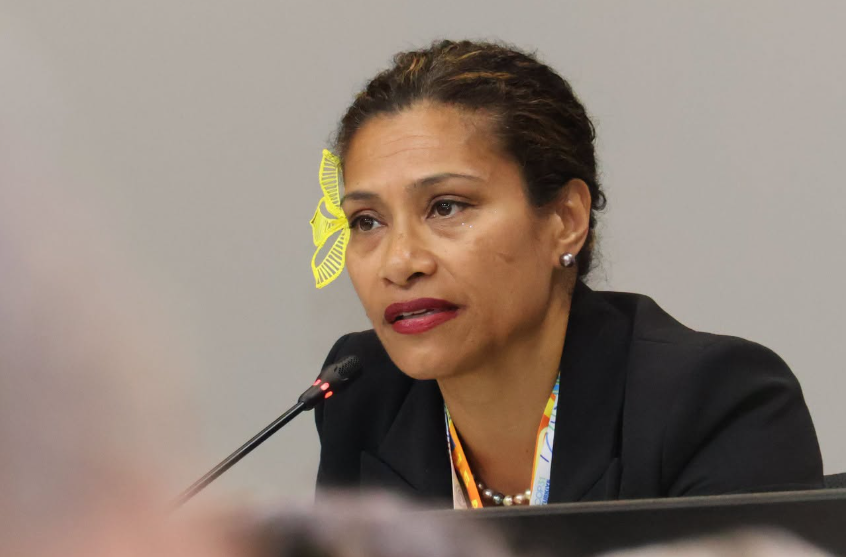
Minister for Environment and Climate Change and Pacific Small Island Developing States (PSIDS) chair Lynda Tabuya has delivered a sharp warning over the latest COP31 draft cover decision, declaring that small island nations cannot accept the text as it currently stands.
Speaking at a special ministerial meeting of the Alliance of Small Island States (AOSIS) ahead of consultations with COP31 President of Negotiations Chris Bowen, Ms Tabuya said ministers had conferred and found serious flaws in the draft.
“As it stands, we cannot accept it. This text is not a meaningful response to overshoot.”
Expressing concerns over fossil fuels, CCUS and Paragraph 36 of the 80-paragraph draft,
Ms Tabuya described the draft as “a major setback on mitigation” that “risks increasing emissions”.
Singling out Paragraph 36 as a particular concern, she argued that the text replaces hard-won commitments from the first Global Stocktake (GST) to transition away from fossil fuels with wording that, if implemented, would likely drive emissions higher and push the fossil fuel transition out of the text entirely.
Carbon capture, utilisation and storage (CCUS) was another sticking point, with the PSIDS members calling it “a hard red line”.
“If we are going to set a target for CCUS, why aren’t we doing it for transitioning away from fossil fuel? In particular, we cannot live with language on utilisation” said Ms Tabuya.
She noted that while the Intergovernmental Panel on Climate Change (IPCC) has pointed to a need for limited CCUS and carbon dioxide removal technology, utilisation is different adding bluntly,
“Utilisation isn’t about reducing emissions. It’s pushing gas into oil wells to get more oil. This is different from utilisation. We cannot accept this.”
Ms Tabuya also criticised language around electrification as implying it is clean without putting measures in place to make it so, and said the GST wording was weakened by limiting it to Nationally Determined
Contributions (NDCs) and National Adaptation Plans (NAPs) and shifting it into weak mitigation targets in Paragraph 36.
Turning to the International Court of Justice advisory opinion (ICJ-AO), Ms Tabuya said the proposed wording frames it within a broader paragraph on sea-level rise and Pacific leadership without acknowledging what the ICJ-AO actually held or what passed by consensus in the United Nations General Assembly.
“This frames the ICJ-AO as a regional rather than a universal initiative. This is unacceptable.”
She said AOSIS can put forward alternative language, and concluded by stressing the need to ensure that the special circumstances of safety for Least Developed Countries (LDCs) are included in the text.