New migration pathways to Australia, including opportunities for Fijian workers to relocate with their families, are expected to accelerate outward migration, raising concerns over Fiji’s long-term population growth and workforce sustainability.
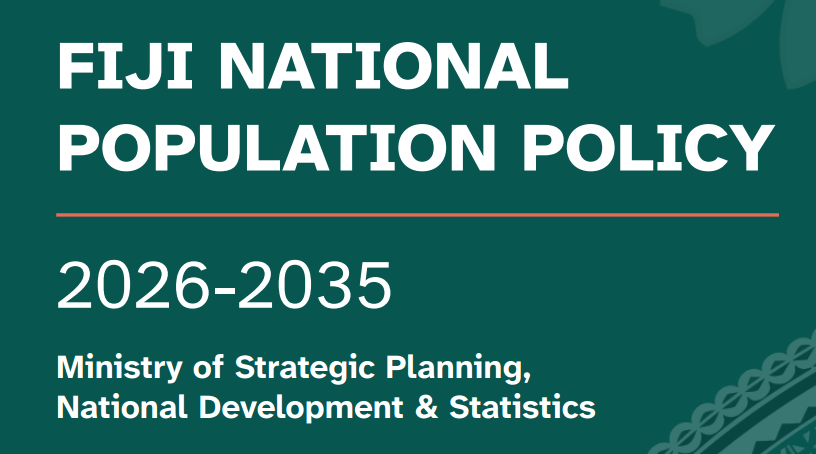
The warning is contained in the Fiji National Population Policy 2026–2035, released by the Ministry of Strategic Planning, National Development and Statistics.
The policy identifies Australia’s Pacific Engagement Visa and the Family Accompaniment Pilot under the Pacific Australia Labour Mobility (PALM) scheme as factors that could contribute to further outward migration.
“Visa categories such as the Pacific Engagement Visa and the Family Accompaniment Pilot, which allows PALM scheme long-term placements to take their families to Australia, will exacerbate out-migration in the future,” the policy states.
The warning comes as Fiji continues to record an unprecedented increase in net resident departures, with figures rising nearly tenfold over the past decade, from 4,907 in 2014 to 48,078 in 2024.
Between 2022 and 2024 alone, Fiji recorded a cumulative 136,962 net resident departures.
The policy acknowledges that overseas employment opportunities have delivered significant financial benefits to Fijian households but warns that increasing migration is placing considerable pressure on the domestic workforce.
“The significant migration of Fijians over the years is a growing concern as it is causing severe labour and skills shortages across many industries and is contributing to a projected population decline.”
The acceleration in outward migration became particularly evident in 2018, when net departures more than doubled from 10,362 in 2017 to 25,618.
The policy attributes this increase to the growing number of Fijians participating in labour mobility schemes in Australia and New Zealand, including the Seasonal Worker Programme, PALM scheme and Recognised Seasonal Employer scheme.
Recruitment under these programmes mainly targets unskilled, low-skilled and semi-skilled workers.
However, migration continues to generate substantial economic benefits for Fiji, with remittances reaching $1.32 billion in 2024, a six per cent increase from the previous year.
The increase was attributed to labour mobility schemes, increased migration and the use of digital wallets to transfer money.
The expansion of overseas migration opportunities presents a growing demographic dilemma for Fiji — balancing the financial benefits of overseas employment against domestic labour shortages and the prospect of a shrinking population.
As migration pathways increasingly extend beyond individual workers to their families, Fiji faces the challenge of retaining its workforce while safeguarding its long-term population and economic sustainability.