THE current water emergency starkly reminds us that Fiji’s infrastructure development is struggling to keep pace with both current demand and future growth.
Rain on a hotel roof does not fill a dam. Our friends at the Fiji Meteorological Service often make this point: Rain can fall in some places and still be the wrong rain, because it isn’t falling over the catchments and dams that supply our water and power. Operators know the difference, and the numbers explain why.
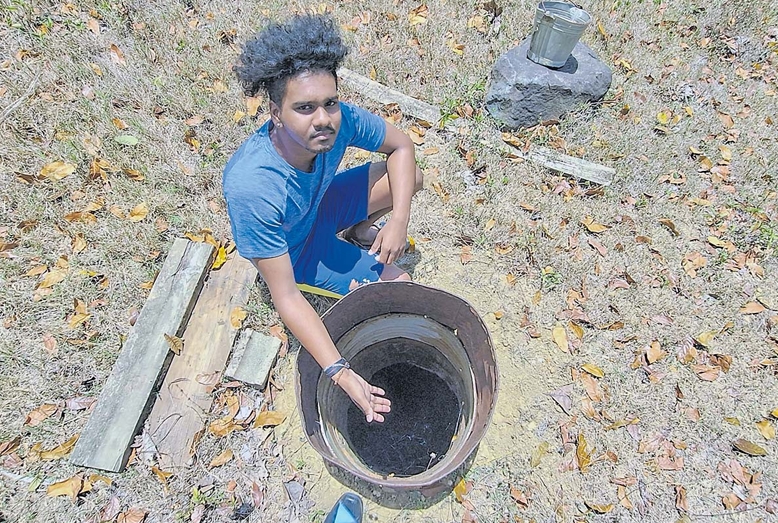
As of November 1, 19 of the Water Authority’s 44 operational water sources had reached critical levels, up from seven in mid-September. Around 24,600 people are on intermittent supply or relying on water carting.
The Western Division, where so many of our resorts sit, recorded very little rain through September and October. The share of critical sources could keep climbing if dry conditions persist. Energy Fiji Ltd (EFL) has also warned that its hydro dams could be forced to shut down by the end of January, or earlier, if the dry weather continues.
Shortages are not a certainty, but the risk is no longer theoretical.
That is why FHTA began urging members to prepare for El Niño as early as May: To review backup equipment, strengthen contingency plans, build resilience into critical operations, increase already established water-saving initiatives that form a significant part of many operators’ sustainability efforts, engage guests more actively in conservation measures, and work closely with suppliers, communities and local authorities to manage potential disruptions.
These proactive steps were intended not only to safeguard business continuity, but also to reduce pressure on shared water resources and demonstrate that the tourism industry was prepared to play its part in supporting national resilience during a period of heightened climate risk.
Water and power are one story in a resort. Cooling, refrigeration and food safety, laundry, kitchens, pools, sanitation and water pumps all depend on them, and pumps need electricity to move the water we are trying to save. Operators relying on generators face extra fuel, servicing and maintenance costs on top of their normal bills, and higher tariffs would add more.
Businesses will absorb what they can for as long as they can, but if pressure lasts, costs eventually reach pricing. How much, and how soon, depends on how long and how severe things get and what a business can realistically carry.
How ready is the industry? It varies. Some operators have invested in generators, solar and other alternative energy systems, while smaller businesses often have limited capacity because these solutions are costly and generators require fuel, servicing and spare parts.
Power and water conservation efforts have been under way across the industry for months, with guests actively involved in supporting these measures.
What is not widely appreciated is that these water and energy-saving initiatives are not only drought-response measures; they are practised every day as part of the tourism industry’s broader commitment to sustainability, operational efficiency and cost management.
Reducing water and electricity consumption lowers operating costs, helps businesses remain competitive, reduces pressure on national infrastructure and supports environmental goals at the same time.
From linen and towel reuse programs to water-efficient fixtures, energy management systems, rainwater harvesting and investments in renewable energy, many tourism businesses have embedded conservation into their day-to-day operations because it makes both environmental and commercial sense.
The El Niño threat simply elevated the importance of these practices, requiring operators to intensify efforts and seek even greater co-operation from guests, staff and communities to help preserve finite resources during a period of increased pressure.
Conservation has a ceiling, though. A hotel can fix leaks, switch off lights and ask guests to reuse towels, and all of it helps, but it cannot replace planning and investment.
Resilience cannot rest on businesses simply using less or buying their own way out. It needs support for infrastructure resilience and more accessible investment in alternative energy and water storage, so a small operator in the islands has options closer to those of a large resort.
EFL has said that if dry conditions persist, customers with standby generators may be asked to help generate power so that water at Monasavu and Nadarivatu is conserved.
That is a reasonable request in principle, but it raises practical questions about fuel, servicing and who carries the cost, and operators need clear information early to plan around it.
This requires improved co-ordination. Government, EFL and the Water Authority need to share timely information on reserves, generation capacity and potential supply disruptions, alongside clear contingency plans for managing demand.
Operators cannot plan around information they hear secondhand, and a business that knows early can adjust its fuel supply, schedule maintenance and speak honestly to its guests.
Operators carry their share too. This is the time to review backup power, fuel availability, water storage, maintenance and efficiency, well before anything goes wrong.
But a good plan inside one hotel is not enough, because the same catchments and dams serve households, farms and villages.
What the country needs is a co-ordinated approach across Government, the utilities and the private sector, backed by infrastructure investment and practical solutions before the situation deteriorates, not after.
All of this sits inside a bigger and happier picture. Strong visitor numbers are good for the national airline, for tourism businesses and for tax collections. But growth brings demand, and demand lands on infrastructure.
Around 800 additional rooms are expected to open next year. Each one needs water, power and reliable systems behind it, so supply pressure will rise even after this dry season ends.
The thread is simple. The empty catchments, the generators running in the back-of-house, and the new rooms due to open next year are one story.
Government’s ambitions to grow tourism and diversify the economy must be matched by infrastructure that can carry the demand loads.
Water security, dependable power and resilient systems must be priorities, not afterthoughts, if growth is to be sustainable and benefit the wider economy.
The current water emergency is not simply a consequence of drought. It is a warning that Fiji’s infrastructure capacity is no longer keeping pace with the demands of a growing nation and an economy increasingly sustained by tourism’s earnings, investment, employment and extensive local supply chains.