
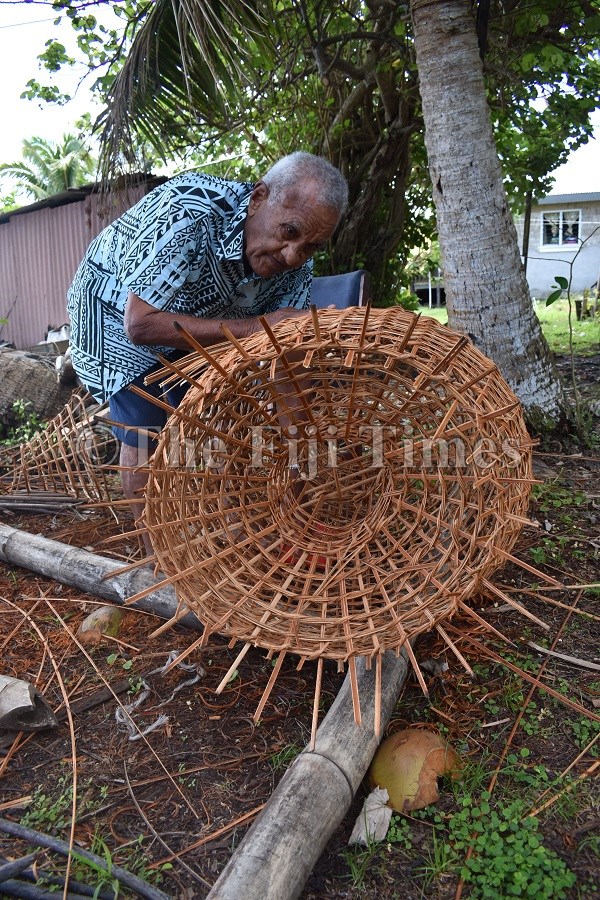
TRADITIONAL iTaukei fish traps called wea have the ability to catch 100 average sized sabutu (lethrinus mahsena), says Bauan wea maker Jemesa Ratumaitavuki.
The 87-year-old is the last of the Lasakau clan who knows how to make the traditional fish traps.
He said in his youth he would produce sizable traps in a day or two, but nowadays he managed to make one in a week.
Mr Ratumaitavuki said there were different sized wea used for different occasions.
He said the wea was environmentally friendly and encouraged sustainable fishing because it ensured that fish were not caught unnecessarily.
Mr Ratumaitavuki said gathering raw materials to make a wea required travel to mangrove swamps to select the tender mangrove stalks.
He said slender stalks which measured about a metre or more in length were then split in four and one of these parts was used as binding to hold the structure together.
He said this was known as itali or kolokolo.
Mr Ratumaitavuki said reeds were then woven into the shape of a barrel complete with a small door-like structure.
He said this was where the fish would enter the trap which was filled with bait.
During the making of the wea, he said women were not allowed to see the production process because it was considered bad luck.
He said in the past, a certain kind of seaweed known as kukusau and dairo (Fijian sandfish) were used as bait — they were placed in the wea to attract fish.
He said the two organisms were now scarce because of overharvesting and fuel spills from boat engines.

