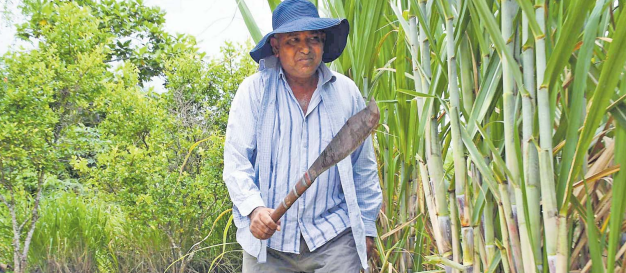
Fiji’s sugar industry did not survive because the economics remained healthy. It survived because the farmer absorbed the losses. Beneath the green cane fields lies an industry sustained for years through debt write-offs, government guarantees, unpaid labour and political rescue packages while the grower himself quietly subsidised the system. Ministers promised revival. Executives promised reform. Yet debt deepened, rail systems collapsed and productivity declined. Research previously published by this writer showed many small cane farmers effectively operate at annual losses estimated between $10,000 and $15,000 once unpaid family labour and real operating costs are honestly accounted for. The uncomfortable implication is profound: The hidden subsidy keeping Fiji sugar alive was often the farmer himself.
The minister’s statement
When Sugar Minister Tomasi Tunabuna declared this week that Fiji’s sugar industry was “not dead”, he was technically correct. Cane is still harvested and mills continue operating. But survival alone is no measure of economic health. The deeper question is what kind of industry remains after decades of decline, debt accumulation and institutional deterioration. The grower today carries rising harvesting costs, labour shortages, delayed payments and continuing uncertainty while the wider system survives through government support and repeated financial intervention. The industry still functions administratively. Whether it remains commercially sustainable for the ordinary farmer is a far harder question.
The arithmetic of decline
Sugar once stood among Fiji’s dominant economic sectors, historically contributing heavily to export earnings, employment and national income during the industry’s peak decades. Today, however, sugar’s relative contribution to GDP and foreign exchange has contracted sharply as production declined and tourism, remittances and service industries expanded around it. The Fiji Sugar Corporation’s own reports reveal the scale of deterioration. FSC debt reportedly expanded from around $7million in 2006 to approximately $443million by 2024 while Government eventually approved a debt write-off exceeding $200million to stabilise the corporation financially. At the same time, sugarcane production has fallen dramatically from historical highs once exceeding 4 million tonnes to near 1.4 million tonnes today.
The farmer as subsidy
The greatest hidden truth inside Fiji sugar is that the farmer increasingly became the financial shock absorber for the entire industry. Cane cutters demanded advances amid labour shortages. Lorry operators required upfront payment. Contractors priced aggressively during harvesting peaks while mills, transport systems and institutional structures continued operating continuously through the production cycle. Yet the grower himself often waited up to 18 months through the FSC payment structure to discover whether anything meaningful remained after deductions. Research by this writer previously demonstrated that many small farmers effectively subsidised the industry through unpaid family labour and hidden annual losses estimated between $10,000 and $15,000. Others in the system were paid in real time. The farmer carried the delayed risk.
Trapped on the land
For many growers, leaving cane farming is not a normal commercial decision. Most do not own the land they farm, and cane contracts remain closely tied to lease security and continued occupation. Mr Tunabuna himself confirmed this week that valid leases remain necessary for retaining contracts to supply cane and that once leases are not renewed, growers lose their contracts. Although Government reports progress on lease renewals in some regions, thousands remain within renewal windows over coming years, and uncertainty continues hanging over many families. That insecurity helps explain why farmers continue producing cane despite worsening economics. Leaving the industry may also mean risking displacement from land occupied by families for generations.
Executive excess
The contrast between farmer hardship and executive remuneration became increasingly difficult for growers to ignore. Former sugar minister Charan Jeath Singh stated in Parliament that former FSC chief executive Abdul Khan’s remuneration package was understood to have approached $840,000 annually during years of worsening industry decline. Farmers who survived through unpaid labour, rollover debt and personal sacrifice struggled to understand how such executive packages remained possible inside a corporation dependent on government guarantees and debt relief. Many growers increasingly perceived a widening disconnect between administrative management structures and the physical realities confronting the cane belt. The people carrying the greatest operational risk inside the industry often appeared to receive the weakest economic protection.
The death of rail
One of the industry’s greatest structural failures was the gradual collapse of the railway system that once formed the logistical backbone of Fiji sugar. Rail transport historically kept delivery costs manageable for smaller growers and reduced dependence on expensive contractor cartage. But as rail infrastructure deteriorated and road-based transport increasingly replaced it, more operational costs shifted directly onto the farmer. Fuel prices, contractor dependency and transport inefficiencies progressively eroded already fragile farm economics. Many growers argue that once rail declined, small-scale cane farming became commercially unsustainable in many areas. Yet despite years of warning signs, infrastructure deterioration continued while the wider institutional structure remained largely intact.
Broken promises
Successive governments, ministers, boards and executives all arrived promising reform, diversification and revitalisation. Yet the same pattern persisted: Ageing mills, declining cane supply, mounting debt and repeated financial rescues. While growers battled drainage failures, labour shortages and deteriorating soils, many increasingly believed administrative structures within the industry had become insulated from realities in the fields. During field visits over many years, farmers would often remark bitterly that “if they ever got out of their air-conditioned offices, then they would understand how the farms and the industry are really suffering”. Beneath the frustration lay a deeper perception that institutional continuity and political management had increasingly replaced meaningful structural reform.
The girmit echo
The deeper tragedy confronting Fiji sugar cannot be separated entirely from the historical structure of the Girmit system itself. Indentured labourers cleared the cane lands under conditions of hardship, dependency and limited economic power. More than a century later, echoes of that insecurity remain visible across the cane belt where many farming families still operate on leased land they do not own while carrying rolled-over deductions and uncertain futures. Ownership changed from colonial corporations to state control, but many growers argue that aspects of the old plantation governance mentality survived structurally through centralised decision-making, administrative insulation and weak protection for the producer at the bottom of the chain.
Managed decline
My own father died poor after a lifetime in cane farming, like thousands of growers whose labour sustained Fiji sugar long after the economics stopped making sense. Entire generations remained loyal to the industry believing the next season, the next government or the next reform package might finally restore dignity and security to rural life. Instead, many watched debts deepen, infrastructure decay and institutional inefficiency become normalised while repeated government rescues delayed genuine reform. Fiji sugar is not dead. Dead industries are buried. Fiji sugar survives on political life support while the farmer continues carrying the burden beneath it. The real question is no longer whether the industry survives, but how much longer the grower himself still can.