More than 400 households will benefit from upgrades now underway across informal settlements as part of the Fiji Resilient Informal Settlement Programme, a major climate-adaptation initiative extended to 2027.
Thousands of residents living in high-risk communities are expected to gain from strengthened disaster preparedness and improved infrastructure.
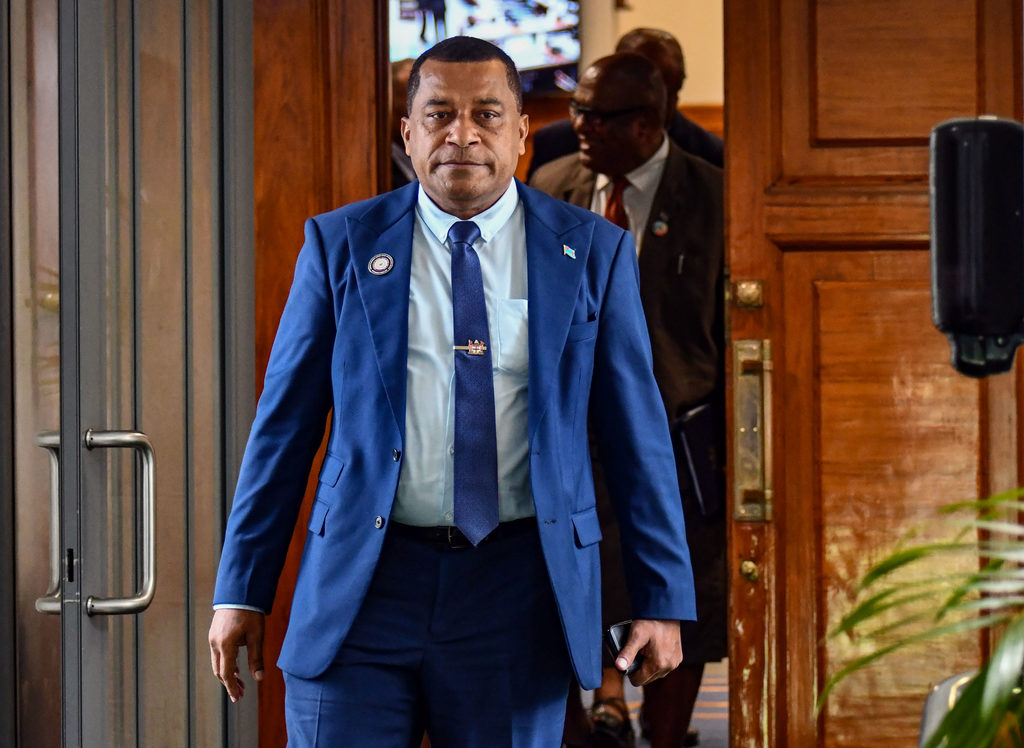
Minister for Housing Maciu Nalumisa told Parliament the Transform the Settlements program, delivered in partnership with UN-Habitat, was central to national efforts to reduce climate-change impacts.
“This program supports our national efforts to mitigate the impacts of climate change and reduce disaster risks in vulnerable urban communities,” he said.
The program was first launched in 2018 under an agreement with New Zealand and has since been expanded.
“Under the latest amendment, it will run until May 2027 at no additional cost to Government.”
The minister confirmed the budget remains at $US2.48million.
Work is underway across 16 settlements through three core components. Capacity building, delivered with the University of the South Pacific, includes placing urban planners and resilience officers in local councils and running community-based training on preparedness and sustainable livelihoods.
“Infrastructure development continues in Dreketi Place and Nawaka, where improvements to drainage, access routes and community facilities are being rolled out.
“Evacuation centres are under construction in Wakanisila and Qoqo, Jittu Estate, along with an elevated footpath designed to address prolonged flooding.
“Further upgrades will follow in Veisari, Wailekutu and Wainibuku, including road works, a community hall, a dispensary and an evacuation centre.
“Footpaths, food-storage facilities and water-take points are also being installed in Wailea, Nanuku and Namara,” he said.
Mr Nalumisa said the program was “a lifeline for vulnerable communities”, adding that stronger institutions and resilient infrastructure would support long-term safety and adaptation.