
Low-fat diets, high-fat diets, seed oils, anti-inflammatory fats, essential fats… while doing your own research about nutrition, I’m sure you must have heard a lot about fats.
The information out there might be a bit confusing though, with so much conflicting advice and people swearing by the miracle approach they found.
So, today we’ll be talking about fat, starting from the basics.
What are fats and why do they have such a bad reputation?
Fats are a type of macronutrient, which means a nutrient we eat in large quantities daily, together with carbohydrates and protein.
In terms of weight gain, eating a large quantity of fat is often one of the main causes why we tend to put on weight.
And this is not surprising, as eating 1 g of fat provides 9 kcal, more than double the amount produced by 1 g of protein or carbohydrates.
And because we put on weight when we eat more calories than we burn in our daily activities, eating a large quantity of high-calorie foods like fried or fatty foods is often one of the main causes of weight gain.
Does it make a difference which type of fat you eat?
However, even though we speak about fats as a single group, it contains different types of fat, some of which are more beneficial than others.
The types of fat that are generally considered more harmful are, in descending order, trans fats, saturated fats, and cholesterol.
In fact, their excessive consumption can raise your level of blood cholesterol, increase the risk of NCDs such as heart disease, type 2 diabetes, or certain types of cancer, and create inflammation.
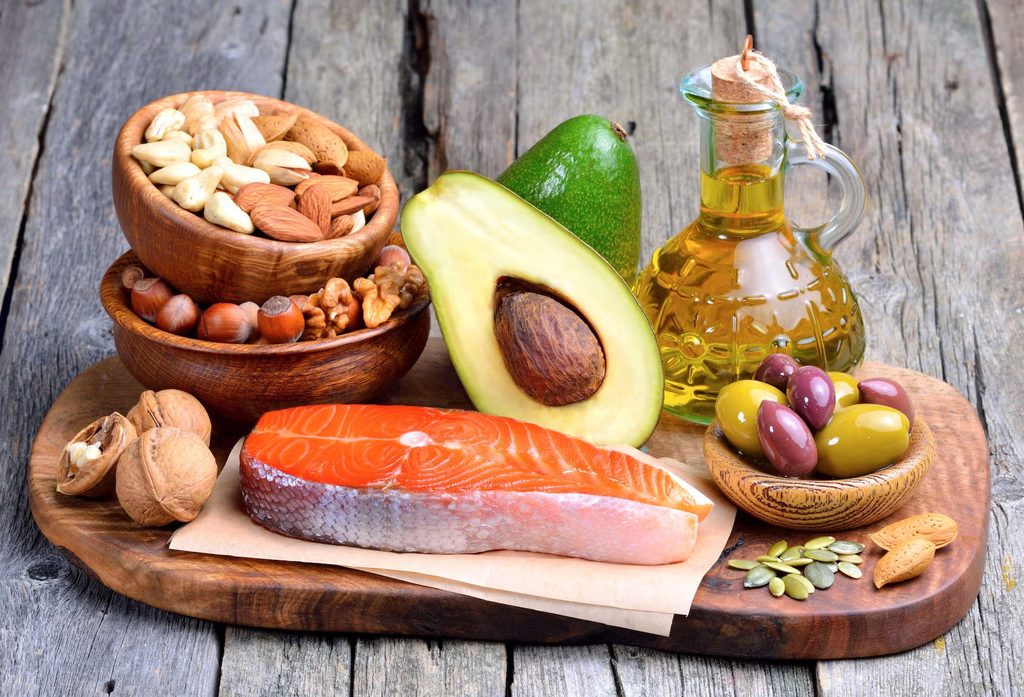
On the other hand, monounsaturated fats from avocados and olive oil for example, are considered beneficial in moderate quantities, in particular for the health of your heart and to prevent and manage type 2 diabetes. Polyunsaturated fats, found in particular in nuts and seeds, are also considered protective since they are anti-inflammatory and their regular consumption helps prevent heart disease and cognitive decline.
Notably, including good sources of Omega-3 and Omega-6 fatty acids in your daily diet is highly recommended because these are the only two types of fat that are essential.
This means that your body cannot produce them on its own, and you therefore have to get them through your food.
In particular, you should check your consumption of Omega-3s as a group to ensure you intentionally include reliable sources in your routine, as the number of sources is limited. These include: walnuts, flax or chia seeds, seaweed, fish products, and soy.
Omega-6s, on the other hand, are more common, as they are found in nuts, seeds, and many types of oils.
Should you reduce the amount of fat you eat? If you tend to eat large quantities of high-fat foods, like fried foods, cakes, industrially baked goods, ready meals, or store-bought sauces, then the answer is yes—reducing the total amount of fat is definitely necessary in this case.
However, eliminating or restricting fat too much from your diet is not necessary and not suitable. You should try and focus on the more beneficial types of fats (Omega-3s, Omega-6s, polyunsaturated and monounsaturated fats) and reduce the other types like saturated fats and dietary cholesterol.
However, here again, saturated fats and cholesterol play key roles in our body, so the aim is not necessarily to eliminate them, but to reduce their consumption mainly by eating less fried and processed foods.
Trans fats, on the other hand, are a different story. They provide no health benefits and should be avoided as much as possible.
Choosing sources such as olive oil can be part of a balanced approach to dietary fats.
Picture: www.brownhealth.org

Rethinking fat, balance Is key
Picture: medicinenet.com




