Sugarcane farmers across Fiji are being warned to prepare for prolonged dry spells and increasing pressure on crop production as a strong El Niño event is forecast to intensify and continue into early 2027.
The Fiji Sugarcane Rainfall Outlook, issued on October 16 by the Fiji Meteorological Service and Sugar Research Institute of Fiji (SRIF), warns that the ongoing El Niño event could reach the very strong category.
The outlook indicates that suppressed rainfall will persist across major sugarcane-growing areas during October, November and December.
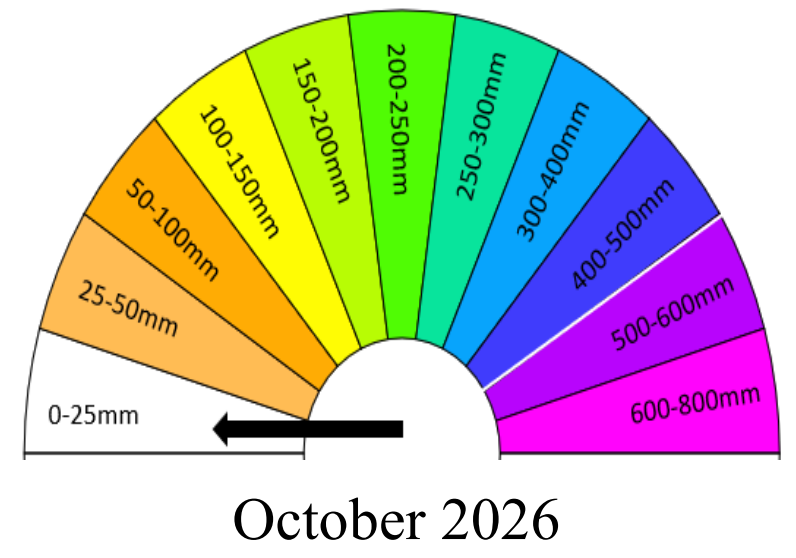
For October, there is a 75 per cent chance of receiving at least 0–25 millimetres of rainfall in sugarcane-growing areas from Sigatoka to Tavua, while Rakiraki and Vanua Levu are expected to receive at least 25–50 millimetres.
Rainfall is expected to remain suppressed in November, with a 75 per cent chance of at least 25–50 millimetres from Olosara to Penang and 50–100 millimetres in Dobuilevu and across Vanua Levu.
Dry conditions are also forecast for December, with at least 25–50 millimetres expected from Olosara to Tavua and 50–100 millimetres in Rakiraki and Vanua Levu.
For the three-month period from November 2026 to January 2027, the outlook indicates a 75 per cent chance of receiving at least 200–300 millimetres across sugarcane-growing areas from Olosara to Tavua.
Higher rainfall totals of 300–400 millimetres are forecast for Penang and areas from Seaqaqa to SRIF Batanikama, while Dobuilevu, Wainikoro and Vunivutu could receive 400–500 millimetres.
The advisory warns that El Niño conditions in Fiji are commonly associated with reduced rainfall, increasing the risk of prolonged dry spells, declining water availability and stress on crops and livestock.
Farmers are being urged to prioritise soil moisture conservation through trash blanketing and mulching, while avoiding unnecessary cultivation that exposes soil moisture.
SRIF has also advised growers to avoid burning standing cane and green trash after harvesting and to maintain firebreaks to reduce the risk of plantation fires.
Non-essential new planting should be delayed until clearer rainfall signals emerge, while farmers in the driest areas between Sigatoka and Tavua have been advised to postpone single-dose fertiliser applications until rainfall improves.
The institute also warned that hot and dry conditions could encourage outbreaks of aphids, mealybugs, scale insects and armyworms.
Farmers have been advised to inspect fields twice weekly and treat affected areas early to prevent pests from spreading.
Major pest outbreaks, diseases and unusual crop conditions should be reported to SRIF on 8921839.
The next sugarcane rainfall outlook is scheduled for October 30.