
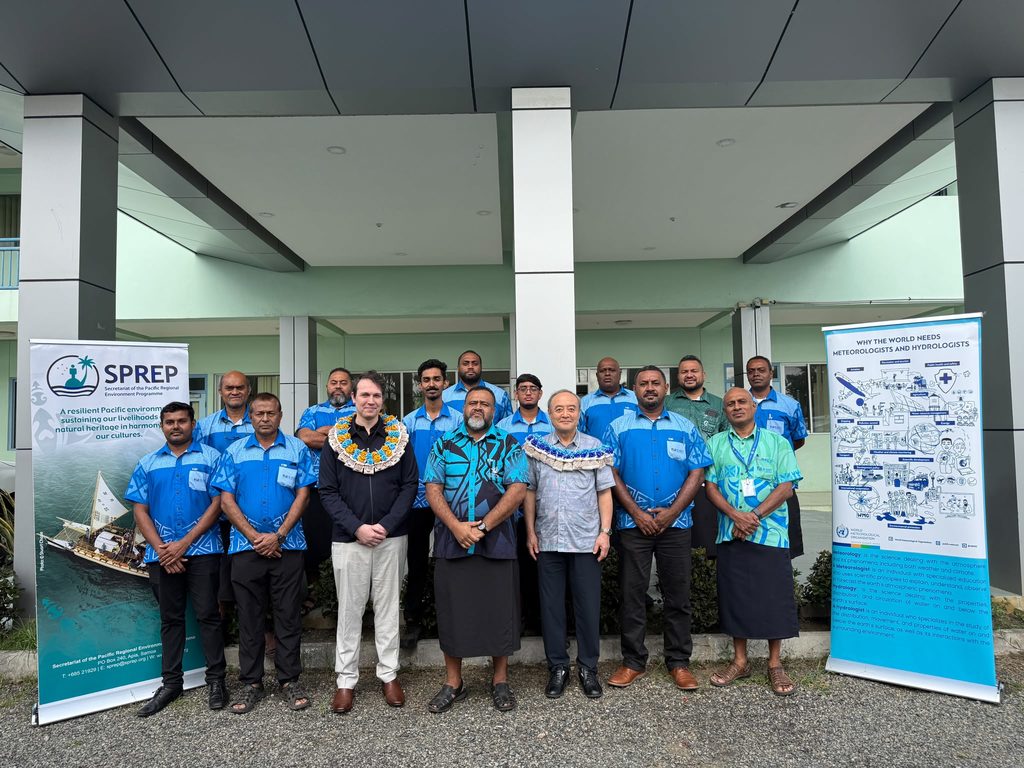
Fiji is on track to become the Pacific’s regional centre for the calibration of meteorological instruments, a move expected to strengthen the accuracy of weather forecasting and severe weather warnings across the region.
Staff of the Fiji Meteorological Service (FMS) are undertaking specialised training in Suva aimed at securing accreditation under the internationally recognised ISO/IEC 17025:2017 standard for testing and calibration laboratories.
Speaking during the training at the Fiji Meteorological Services office in Vatuwaqa, FMS’ principal technical officer Harish Pratap said the accreditation process would ensure meteorological equipment used in Fiji and the wider Pacific met internationally accepted standards.
Mr Pratap said accurate calibration was critical because weather data collected by instruments was fed into global forecasting models used to predict tropical cyclones, severe weather events and other meteorological phenomena.
“If your equipment is not calibrated, it will not be guaranteed that whatever data is coming out from that equipment or device is correct,” he said.
“And this data is fed into global models. If you put in wrong data, the model will definitely read something else.”
Mr Pratap said Fiji was in the process of addressing a longstanding gap in regional calibration services, noting that specialist calibration expertise had previously been limited.
The training, supported by the Weather Ready Pacific Programme and conducted by the Australian National Association of Testing Authorities (NATA), is preparing FMS staff to meet the requirements of the ISO standard before undergoing an external audit by an Australian accreditation body.
Mr Pratap said Fiji had initially sought accreditation for atmospheric pressure calibration, a key component of weather monitoring systems.
Once accredited, the service intends to expand into other areas, including temperature sensor calibration.
The accreditation process is expected to support the establishment of a regional instrument centre at FMS’ new $27million headquarters currently under construction with funding from the Japanese Government.
The facility will also house a regional training centre, complementing Fiji’s existing role as a Regional Specialised Meteorological Centre.
He said FMS aimed to submit its accreditation documentation by the end of August, with an external audit to follow.
If successful, Fiji could receive accreditation from NATA by early next year, after which the service would formally seek recognition from the World Meteorological Organization as a regional instrument centre for the Pacific.
The training program involves nine participants, including seven officers from Nadi, and is being delivered by an Australian specialist in laboratory accreditation standards.

