
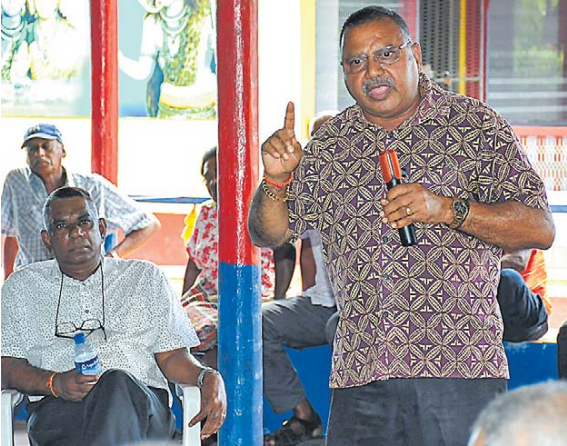
RAKIRAKI businessman and large-scale sugarcane farmer George Shiu Raj says many farmers are deeply disappointed with the allocations made in the 2026-2027 National Budget, labelling it insufficient to support the everyday realities of the nation’s growers.
The Ministry of Agriculture, Waterways and Sugar Industry has been allocated a total funding of $221million, with $96.3m earmarked for interim support for the sugar sector.
The Government announced it would maintain its guaranteed price of $85 per tonne for the 2026 season. With a forecast price of $57 per tonne, $41.6m has been set aside to cater for a top-up payment of approximately $28 per tonne.
An additional $30m is designated for sectoral support, covering fertiliser and weedicide subsidies, cartage subsidies, upgrades to cane access roads, cane planting grants, farm mechanisation, farm incentive programs, and assistance for new farmers. Furthermore, the Government has allocated around $18m to cover the scheduled repayment of a $US32.7m $F73.95m) loan taken by the Fiji Sugar Corporation (FSC) from the EXIM Bank of India in 2005.
“Our biggest concern is that they did not increase the guaranteed price from $85 to $110,” Mr Raj said.
“There are auditors, financial controllers, and finance people sitting in the Government, yet they ignored the clear request from the farmers and the National Farmers Union for a $110 price.”
Mr Raj highlighted the heavy logistical and financial burdens faced by farmers delivering cane from regions across the country, including Sigatoka, Nalawa in Ra, and Seqaqa in Vanua Levu.
“We are quite upset because, at the end of the day, farmers are left with only $15 to $20 in profit.
“With an average of 11,000 farmers producing between 150 to 200 tonnes of cane, that equates to a meager $3000 to $4000 in income to live on for 17 months.”
Mr Raj said farmers were the backbone of the industry.
“The submissions from our brothers and sisters from Tavua to Sigatoka seem to have been lost. Any increase in operational costs becomes a direct burden to the farmers, who are just trying to look after their children and put food on the table.”
Mr Raj questioned the government’s financial priorities, suggesting that an additional $18m injection could easily solve the pricing crisis.
“Where is the transparency and accountability of the Government? You are the Government of the day under a democracy, for the people, of the people, and by the people. If up to 300,000 people rely on the sugar industry, they shouldn’t have to suffer like this.”
Shifting his criticism to the management of the Fiji Sugar Corporation, Mr Raj claimed the statutory body was bloated and inefficient.
“The problem is the FSC; they cannot run the mills effectively. There are tonnes of people sitting in the main office drawing high salaries, while our drivers are left sleeping at the mills for two or three days, sometimes without food being provided to them.
“The Government must introduce a supplementary budget of $18million. People need a fair return to harvest their cane, simple as that.”
Mr Raj clarified that growers were not seeking confrontation, but rather fair compensation for their labour.
“We do not believe in boycotts, and we do not believe in strikes, we have planted the cane, and we want to send it to the mills, but the dollar that belongs to the farmers must be given to them. Why is the Government trying to make a fool out of 11,000 farmers.
Mr Raj detailed the restrictive, delayed payment structure that forces farmers to wait nearly a year and a half for their total returns.
“During the first cane payment, many places receive nothing due to overdrafts. Six weeks later, the second payment arrives, but it is heavily absorbed by fertiliser costs and land rent.
“The March payment is eaten up by further fertiliser deductions, followed by a wait for the May payment, and finally the October payment. People are waiting 17 months, while the staff sitting at the FSC receive their wages every two weeks.”

