THE Fiji Council of Social Services (FCOSS) has strengthened its disaster response capability with the installation of a new solar photovoltaic (PV) system at its Suva headquarters, providing a reliable source of electricity during power outages.
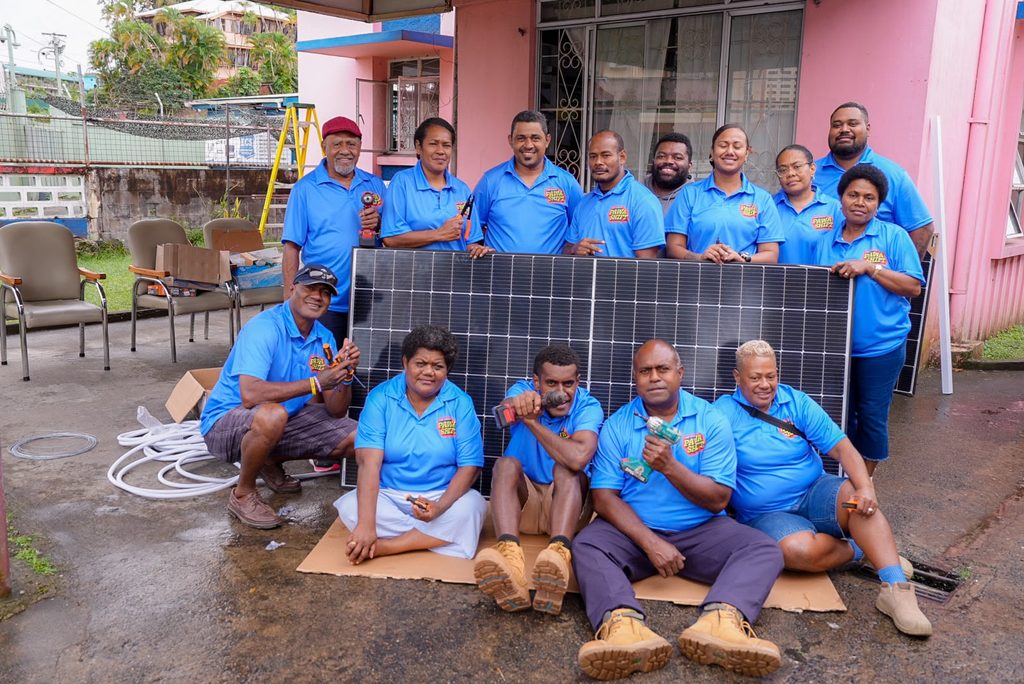
The installation was completed by members of the Fiji Solar Scholars program, a group of community leaders trained in basic solar PV technology, who also conducted a two-day training session for FCOSS staff members from July 30 to 31 to ensure they could operate and maintain the system.
The renewable energy system is expected to reduce electricity costs while enabling the organisation to continue coordinating disaster response and recovery efforts during emergencies when power supplies are disrupted.
FCOSS executive director Vani Catanasiga said maintaining operations during disasters were critical because many vulnerable communities depended on the organisation to relay information to authorities.
“We wanted to ensure that our capacity for disaster coordination during disaster responses would be fully intact even in times when power supply was not in place,” she said.
“We wanted to ensure that we continue to support communities at risk, communities at the frontlines, and many of them rely on us to convey information to authorities like the Disaster Management Office.”
Ms Catanasiga said the organisation previously lacked the technical expertise and networks needed to establish such a system.
She said the project would also help ease electricity costs while exposing staff members and volunteers to renewable energy solutions.
“Having seen what communities struggle with in terms of energy prices, and the volatility of market prices, it is important to provide this not only to staff of FCOSS, but also to volunteers,” she said.
350.org Pacific and Caribbean program lead Fenton Lutunatabua said the initiative demonstrated how decentralised renewable energy could strengthen community resilience.
“Every Fijian knows what it’s like to live through a cyclone and pray that the power stays on,” he said.
“This is about giving emergency energy to those that help our communities after a disaster, and eventually seeing it replicated out into the vulnerable communities that need it most.”
He said distributed solar energy had the potential to address the high cost of living, energy poverty and disaster response needs while supporting efforts to transition away from fossil fuels.