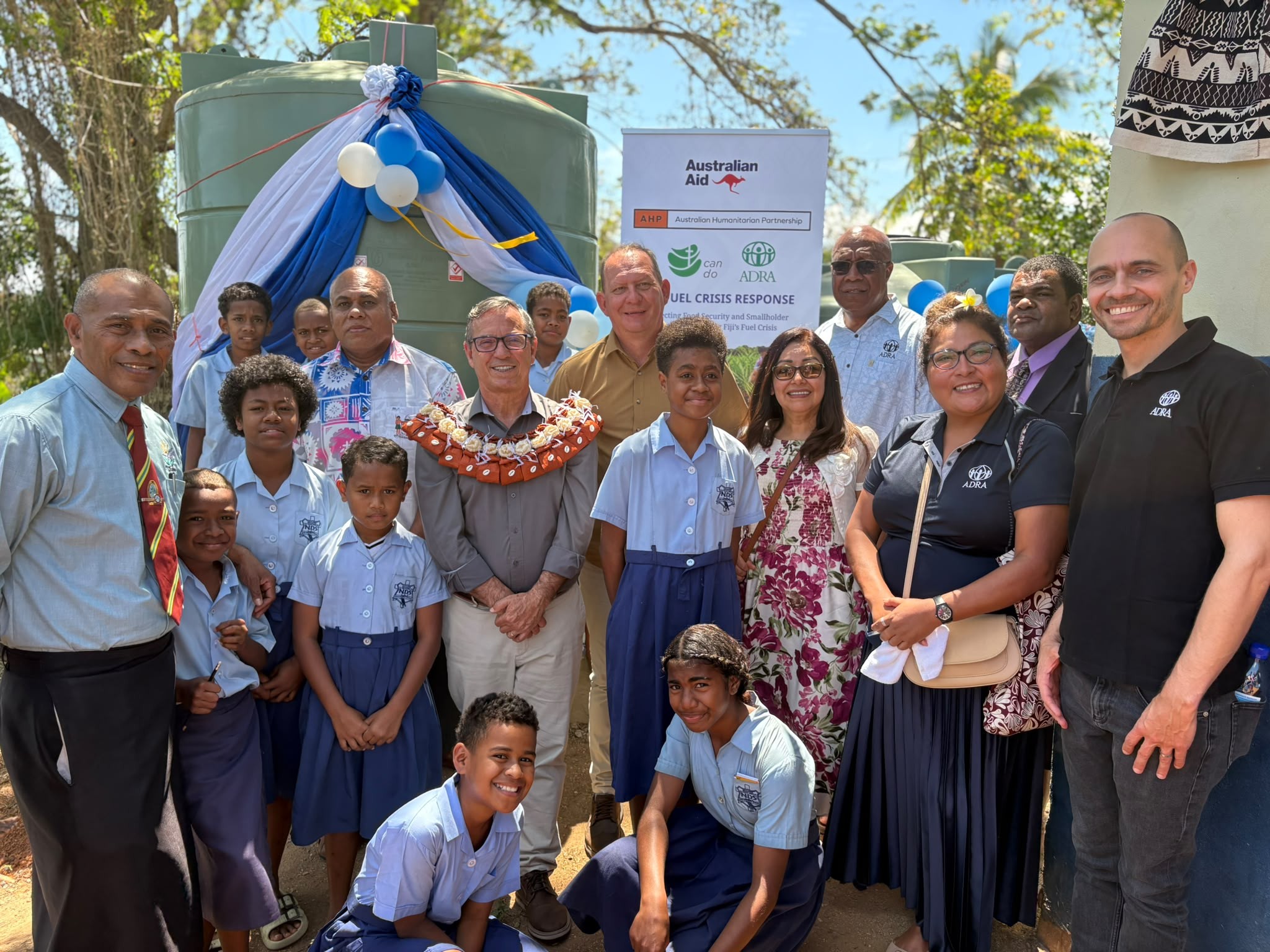
NADI District School students will not have to worry about water cuts following the delivery of water tanks by ADRA International through the Indo-Pacific Response Flexible Fund (IPRFF) Fiji Fuel Crisis Response initiative.
The tanks are anticipated to assist the school maintain a consistent water supply amidst a prolonged dry spell that is affecting water sources in the Western Division.
Speaking at the handover this week, ADRA International president Paulo Lopes highlighted the importance of collaboration in addressing community challenges.
“When we have a challenge, what do we do? We look for ways to solve it,” he said.
He said sustainable solutions were achieved through partnership, bringing together government, schools, churches, communities and development partners.
“You see the importance of partnership. We have the government, we have the community working together to bring a solution to a problem.”
Mr Lopes also acknowledged the support of the Australian government for the financial support towards IPRFF Fiji Fuel Crisis Response.
According to ADRA, the IPRFF Fiji Fuel Crisis Response aims to support affected population across Fiji through activities focused on food security, livelihoods and water access.
The support includes the installation, replacement or retrofitting of water tanks at agreed sites to support local food production and reduce reliance on fuel-powered water access systems.
Apart from improving water access, the initiative also provides support for vulnerable households through agricultural input packages, practical training to establish or restore home gardens and small-scale food production, and cash and voucher assistance for approximately 300 smallholder farmers to help sustain agricultural operations and meet priority livelihood needs amid rising fuel costs.