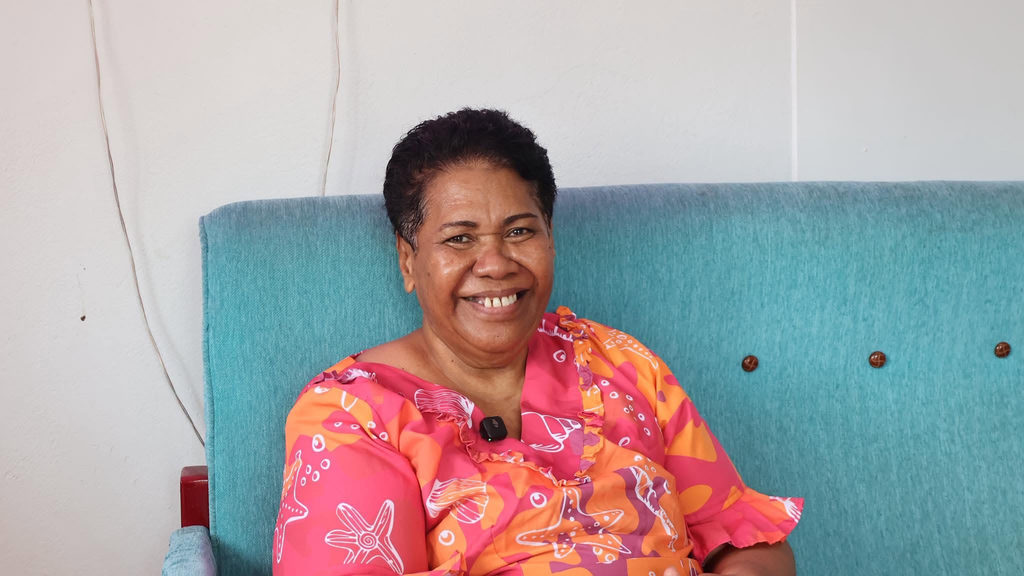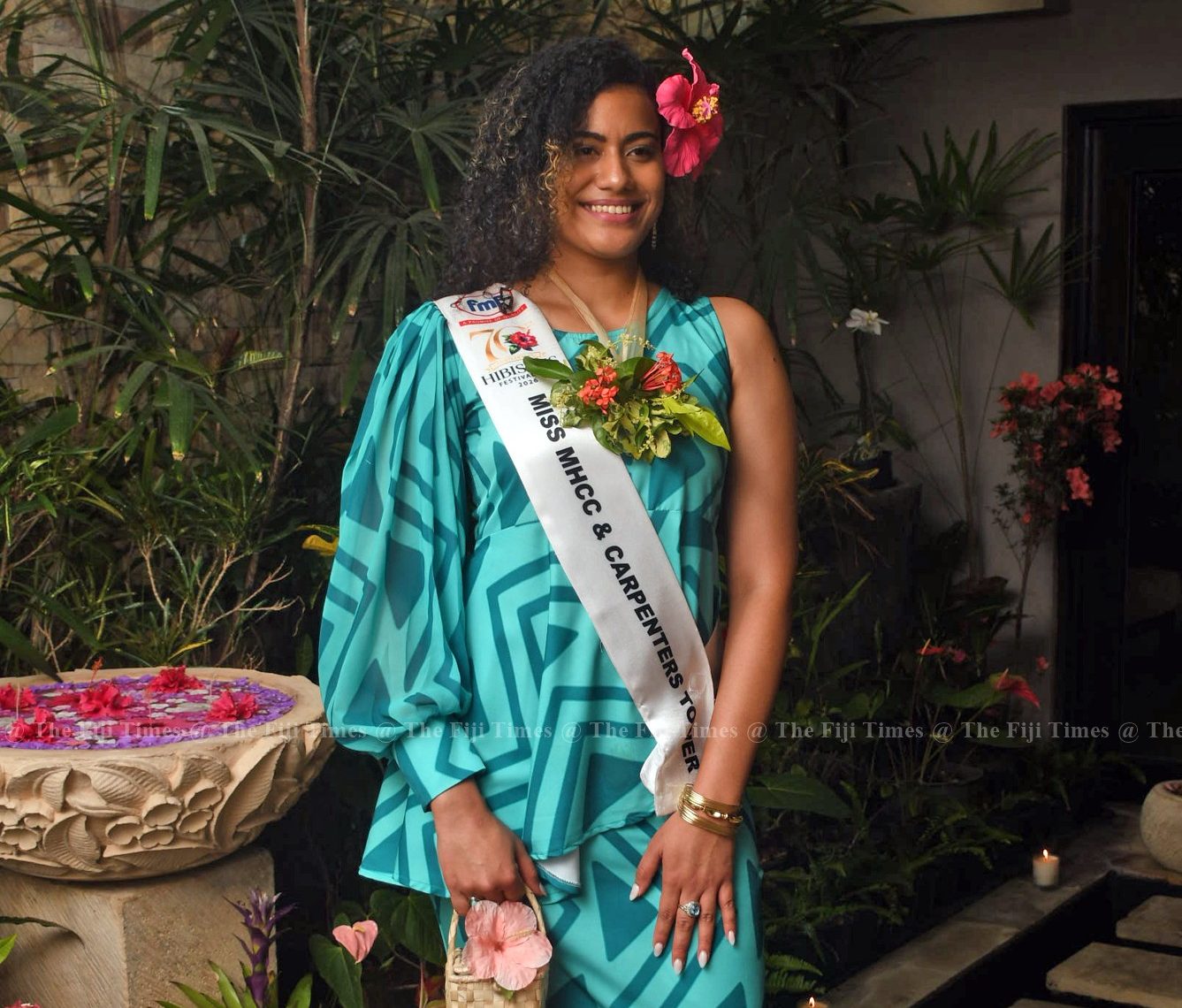
SALA Korosaya wants to build a village before a girl needs one.
At this week’s FMF Hibiscus Festival private judging event, the Miss MHCC & Carpenters Towers contestant confronted troubling iTaukei statistics with a six-week cultural mentorship pilot.
Three out of every four people in Fiji’s prisons are iTaukei.
About 90 per cent of new HIV diagnoses recorded in 2025 were among iTaukei people, while young people aged 15 to 29 accounted for about 60 per cent of new infections.
And of 1279 teenage pregnancies recorded between 2018 and 2021, 1,057 involved iTaukei girls, with the majority recorded in the Central Division.
For Sala, the statistics are uncomfortable – but avoiding them is worse.
“We are most imprisoned, most infected, most pregnant before we were ready,” the Miss MHCC & Carpenters Towers contestant said.
“That is my people, and I am not going to stand here and talk around it.”
She told the judges she intended to use the $5000 on a project she calls YAVU – a six-week cultural connection and mentorship program designed for 20 iTaukei young women aged 16 to 22.
She made it clear she was not presenting YAVU as a cure for Fiji’s social problems.
Instead, she is asking whether young women can be given stronger connections to culture, community and trusted adults before problems become crises.
She wants a young woman to know that before the statistics ever have a chance to define her, there is a village around her — and somewhere solid to stand.
Her idea came from an unexpected place: the pageant itself.
When Sala decided to enter, a group of people rallied around her — artisans, choreographers, coaches, designers, stylists and volunteers, including people who have worked with Hibiscus queens, national queens and Pacific queens.
What struck her was what happened after the pageants ended.
“They do not leave afterwards.
“The girls they prepared 10 years ago still call them. That team becomes a village around a young woman for the rest of her life.”
She then asked the question.
“Why does a girl only get that village if she enters a pageant?”
YAVU is her attempt to answer it.
The name refers to the raised foundation of an ancestral house — the structure beneath the house that remains.
“The house can fall. YAVU stays, and it still tells you who you are.”
The program would use culture as the entry point rather than presenting participants with a conventional social intervention.
Over six weeks, the young women would learn meke, language, values and weaving while developing relationships with peers and older women.
Each participant would have a buddy, while every four girls would have a Matua – an older woman expected to remain connected to them beyond the program.
Sala is equally clear about the boundaries.
“A mentor is not a counsellor.”
Professional referral pathways would therefore form part of the programme for participants requiring specialist support.
The cohort would also be deliberately mixed.
Ten places would be reserved for young women from higher-risk communities, while another 10 would be offered to girls from more settled homes who have never learned a meke.
She does not want to create a room full of young women labelled “at risk”.
“If I fill a room only with girls at risk, I have told every single one of them what I think she is. I will not do that.”
She wants the programme to build relationships across social and economic lines.
At the end of six weeks, the participants would complete an icoco, a large woven mat created collectively by the group.
All 20 girls would stand on it during their final performance.
For Sala, that image captures the entire project.
The girls would not simply be learning about their cultural foundation.
They would be standing on something they made together.
Sala also measured success beyond the final performance.
Attendance will be tracked, along with cultural learning, participants’ sense of belonging, trusted relationships and whether young women remain connected with their Matua six months after the pilot.
That last measure matters most to her.
“It is not six weeks. It is six years.”
The pilot is scheduled to begin on October 10 – Fiji Day – a deliberate choice for a project centred on identity, belonging and foundation.
And Sala insists YAVU is bigger than her pageant campaign.
“If I am not Miss Hibiscus, this still happens.
“Because the idea was never mine alone.”