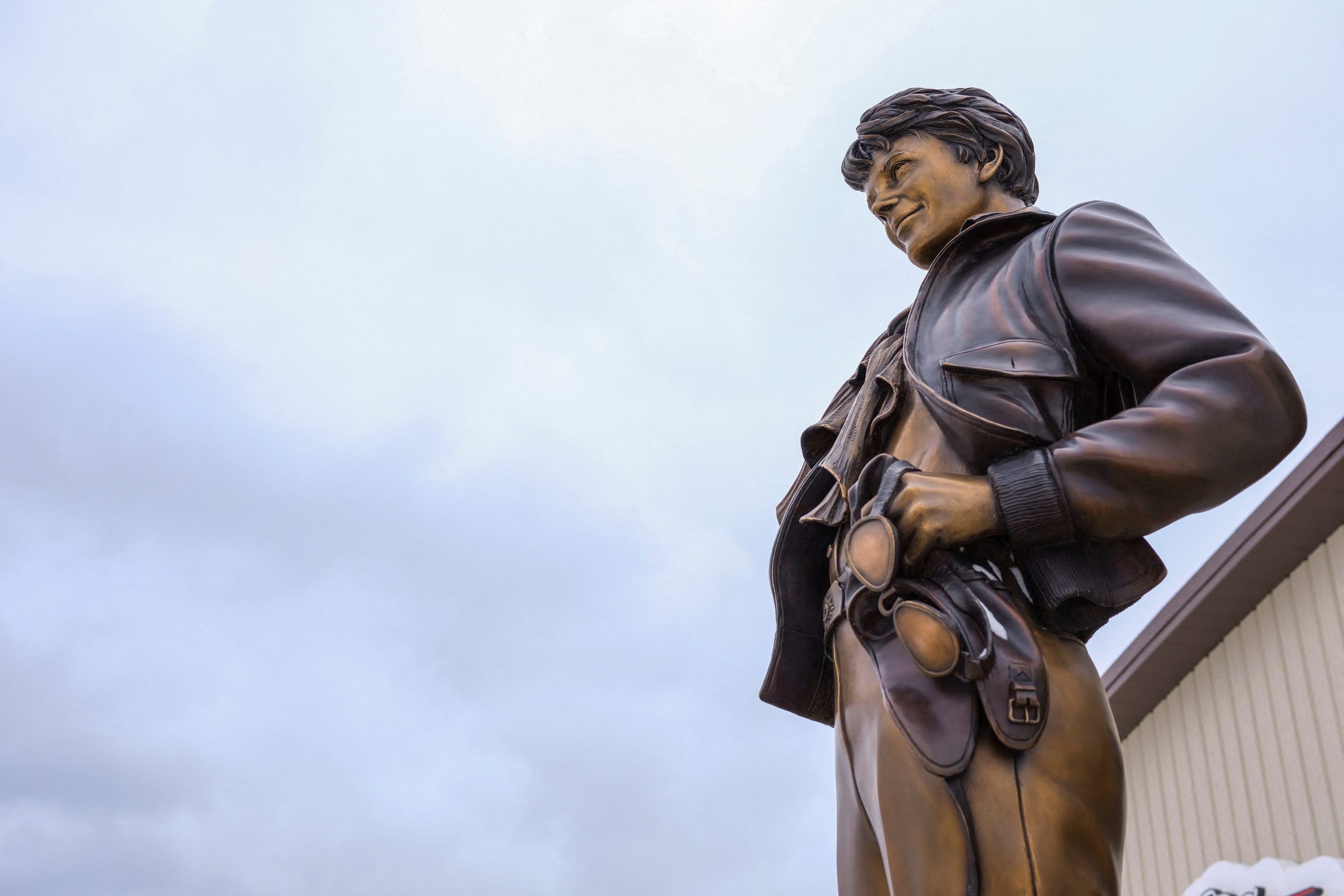
A team of American marine archaeologists searching for the wreckage of legendary aviator Amelia Earhart’s aircraft has made a stopover in Fiji ahead of an expedition to a remote Pacific island where they believe the plane may have crashed nearly 90 years ago.
According to Reuters, Purdue University general counsel and expedition member Steve Schultz was in Fiji last week conducting advance preparations for the mission to Nikumaroro, an uninhabited island in Kiribati’s Phoenix Islands.
The expedition aims to investigate a submerged object detected in satellite imagery in 2020, which researchers believe could be Earhart’s twin-engine Lockheed Electra 10-E aircraft.
The team departed Los Angeles earlier this month and is expected to arrive at Nikumaroro on Tuesday, October 13.
“This would be solving one of the great mysteries in aviation history, certainly one of the great mysteries of the 20th century,” Schultz told Reuters.
Earhart disappeared in July 1937 alongside navigator Fred Noonan while attempting to become the first woman to fly around the world.
The official US position has long been that their aircraft ran out of fuel and crashed into the Pacific Ocean near Howland Island.
However, some researchers believe Earhart and Noonan landed on or near Nikumaroro, where they eventually died as castaways.
The $900,000 expedition, backed by Purdue University, involves 17 people and will spend five days examining the island and its surrounding lagoon.
Expedition leader Richard Pettigrew said discovering Earhart’s aircraft would be a historic breakthrough.
“Finding Amelia Earhart’s Electra aircraft would be the discovery of a lifetime,” he said.
However, the mission has attracted scepticism from veteran Earhart researcher Ric Gillespie, who has conducted numerous expeditions to the island.
Gillespie believes the object identified in satellite imagery is a fallen pandanus tree rather than aircraft wreckage.
“It’s a tree. People see what they want to see,” he told Reuters.
Previous searches, including a 2019 expedition led by Titanic wreck discoverer Robert Ballard, failed to locate the aircraft.
Schultz said any discovery would require further permission from the Kiribati Government before wreckage could be recovered.
The expedition is expected to return to Kiribati’s capital, Tarawa, following its investigation.