No two first phone calls are the same. I’ve had calls from women moments after a positive pregnancy test — somehow afraid, without knowing why. I’ve also had mums call me a week before their fourth child was due, having only just discovered this kind of support even exists.
But no matter the stage, one thing is always true: they’ve just realised this is a journey like no other. And it begins the moment they learn they’re pregnant. The gentle countdown happens in the background, whether they take action or not. The good news is, you can prepare for it — and experienced perinatal support is available, if you’re willing to invest in yourself, your family, and your future.
After that first call, I like to meet the family in person or online, to connect as people first, before we start this very special journey together. From there, we determine where guidance is needed most. Every family’s needs are different — some want the full package, from pregnancy through to postpartum, while others need something more specific. So the support is never one-size-fits-all.
Experienced mums who have already had children often carry a confidence in themselves and know exactly where they need support — in their pursuit of a better pregnancy journey, a better birth outcome, a stronger recovery, and a better breast or bottle feeding experience, for her and baby. Based on what she’s already been through, we work together toward the outcomes she’s hoping for.
No two families are the same
Not everyone has grown up around newborns, or even toddlers. Many fall pregnant with no experience at all in raising a child — some never had the opportunity, for reasons of their own, and others never imagined themselves as parents until suddenly, they were expecting. Even those who did grow up around children may want to wait to pursue other things first before starting a family.
Pregnancy doesn’t always wait for readiness, or for choice. This is particularly true for teenage parents, who often find themselves navigating education options, family expectations, and their own growing-up, all while adjusting to a brand-new reality. But unexpected pregnancies can happen to any family, at any age, in any situation — and every family deserves the same depth of support to get to the other side better, regardless of how the experience unfolds.
I remember, many years ago, a friend was asked — a week before her wedding — if she couldn’t wait to have children right away. “Oh, goodness, no!” she replied. “I don’t think I’ll be a good mum. Besides, I don’t think I like children, so that’s not something I’ll be doing any time soon.” A month later, I answered the phone to her almost in tears. “I’m pregnant,” she said. She remains one of the most amazing mums I know and admire — a natural from her first baby, and throughout all her children and grandchildren since. Readiness and capability, it turns out, are not the same thing.
Many women echo similar sentiments: “I have no idea if I’ll be a good mum. I don’t even know where to begin. I’m completely lost and overwhelmed. How will I navigate another child and a new job?” Those are exactly the moments where experienced support makes the biggest difference — informing, educating, and providing physical and emotional support, so you’re never alone through this vulnerable and varied journey, no matter how prepared you feel.
A week in this work
A quiet week doesn’t mean an empty one. If it’s an office day for me, I’m busy with admin, organising things at home ahead of an upcoming birth, and planning a schedule that rarely looks the same two days running. Some days I’m out in the field, visiting families around the country; other days I’m on video calls with clients elsewhere in Fiji, the Pacific, or further abroad — running an online class, a virtual breastfeeding session, or talking through a specific question. I also spend a lot of time on research and study — even after many years of experience, there’s always something new to discover, and we owe it to the families we serve to keep learning.
My work is demanding in a unique way. I might plan an 8-to-5 day, only for someone to unexpectedly go into labour, meaning a quick switch of gears and the next twenty-four hours spent at the hospital. So I miss a lot of important moments — family milestones, catching up with extended relatives and friends — which matters deeply to me. But just like anyone else with a demanding job, these are the necessary sacrifices to be made when you’re fortunate to do the work you’re passionate about.
And then there’s the traffic, always throwing a spanner in the works. As a mobile service, I’m constantly driving between homes and the hospital, on top of school runs, meetings, and client visits — so a lot of my time in Suva is spent sitting still in a car, when I could be doing something useful instead. It affects meal prep too; we have to be a highly organised family, because the moment one thing changes, everything else gets thrown to the wind. My children’s sporting events and training usually only happen on the quieter days.
Being on call creates a kind of readiness — running on adrenaline the moment the phone rings, but calm underneath, because you’re organised and you’ve done this before. I put myself on standby two weeks before any client’s due date, in case labour starts early. By the time the call comes, there’s nothing left to scramble for. The waiting is already done. What matters is the same for each of us: that we show up, no matter what.
Preparing for the day itself
We prepare for labour and birth the same way athletes prepare for a full day of competition. Months ahead of the due date, we meet regularly for pregnancy classes, ensuring mum and dad attend their antenatal clinics and are in touch with their doctors, so that mum and her family are prepared every step of the way.
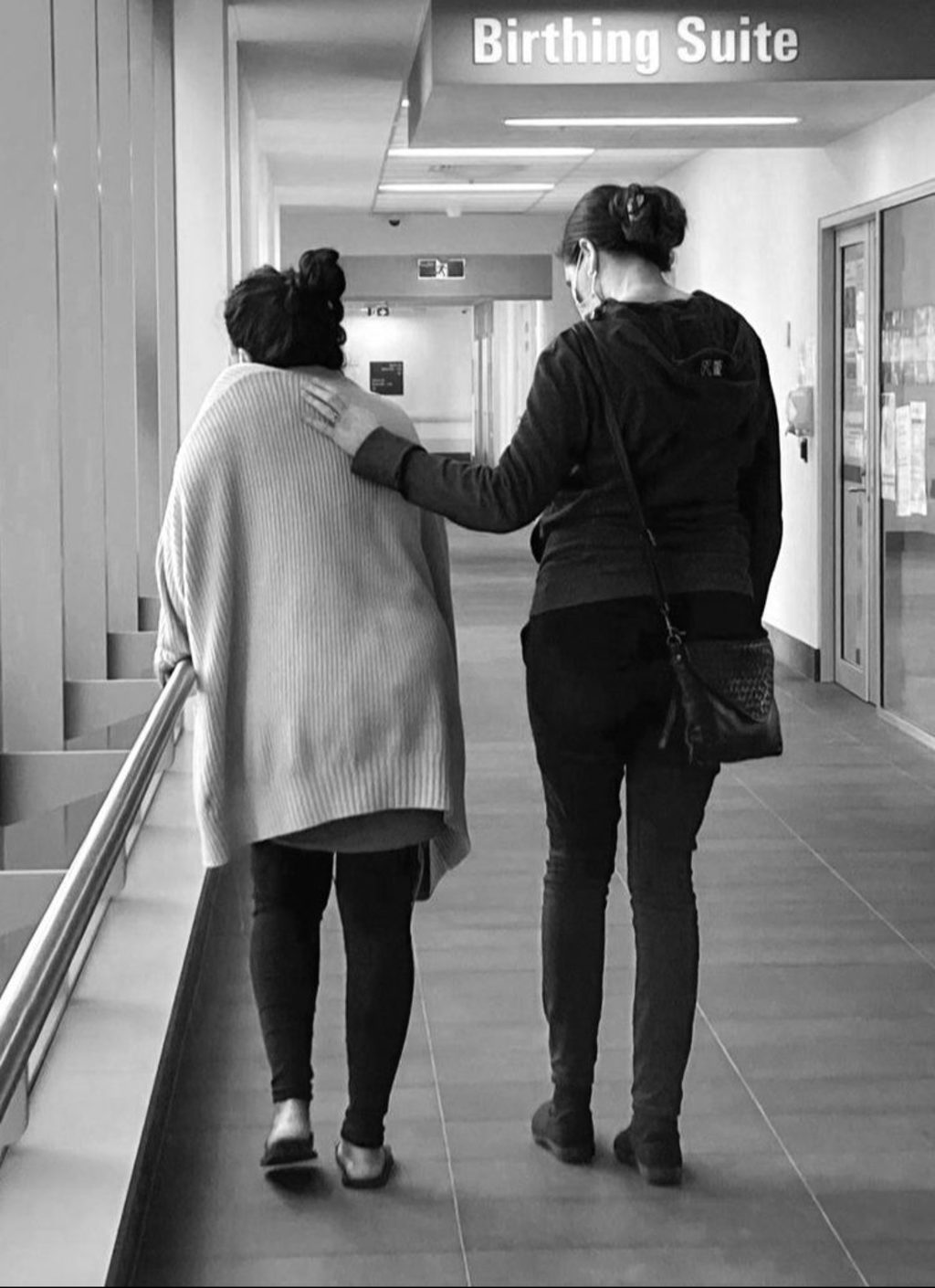
By the time mum is in labour, despite the initial panic of realising it’s begun, it’s not just chaos that ensues — there’s an element of calm too, because of the preparation done during pregnancy. The couple knows exactly what to do, because we’ve been over it all together. We head toward the hospital as a team — on D-day, my role is as their birth companion. Once we arrive, we’re in the care of the hospital team, and the next chapter begins.
Long births aren’t very common for me, though I’ve had a few. Most fall somewhere between fifteen and seventeen hours — often because clients want to get to hospital early, or their doctors instruct them to come in as soon as labour begins. So when they go, I go too.
I remember finishing one particular birth after nearly thirty hours as her companion. My plan was always to leave my car at the hospital and catch a cab home past the twelve-hour mark — there’s ample parking and security, and it’s simply the responsible thing to do. But preparing well is key to functioning after a long birth. I prepare weeks ahead: hydrating well, eating nourishing meals, resting at night, taking more breaks to actively relax, and praying as part of my preparation. I organise my own family for that week and the one after, and make sure my bag is packed with everything I need.
Usually, following a birth, I wash up and change, then drive myself home — only if it’s safe, and only if I feel energised and alert; it helps if it’s a quiet Sunday evening or the early hours of a cool morning. Other times, I catch a cab, or a client’s family member kindly offers to drive me, so I can collect my car the next day.
Whichever way I make it home, I reflect with immense gratitude on every birth I attend, giving thanks to the Almighty for what I’ve just been able to witness. Each birth holds its own depth of sacredness — I’m grateful for the safe delivery of baby, for the outcome for mum and dad, for everything that worked out, and for everything we overcame together. I give thanks for the help I found when it mattered most — those who answered their phones, the doctors and nurses, everyone who helped me be there fully for the family I had the honour of serving as their birth companion. And always, in the back of my mind, I have gratitude for my own family, for taking care of everything at home so I can do this work.
Still, after twenty-six years, my mum still calls to say, “Deb, you need to come home and rest. Have you had dinner? How are you feeling?” Or my children or husband will relay, “Bubu (grandmother in the iTaukei language) said you need to come home and have a rest.”
When I get home, I’m still running on adrenaline, so sleep is hours away — after all, I’ve just witnessed something incredible. My ritual is to check in on my family and spend a little time with them first. I might have dinner, or put the kettle on for a cuppa. It’s strange, really — I’m not one to watch a gory movie, all guts and exploding brains. But I can stand alongside a birthing mum through everything that comes with it, then wash up and sit down for a meal, somehow. Perhaps because I know she and baby are in safe hands.
This isn’t a job you can do if your own energy is depleted, if you’re trying to multi-task, or if you’re distracted. Families deserve someone who looks after themselves too, so that when it matters most, you can give them everything you have.
Beyond the birth
Our hospitals offer good breastfeeding support and postnatal care, so I leave the couple in their capable hands, checking in with mum and dad along the way. Once they’re home, we give them time together as a family first. Every new baby creates a new family dynamic, even for baby’s siblings. So we let the family have a little time to be just them, adjusting to their new groove. Then our breastfeeding work and postpartum recovery begin.
Breastfeeding support varies widely, and we revisit techniques often — with every new baby, or when a mum stops due to exhaustion and wants to start again. Breast milk deserves its own conversation entirely — another article, perhaps — but for now, I will say this: it’s worth understanding breastfeeding fully, from technique to the remarkable way this process works within a woman’s body. Breastfeeding challenges are also very real, and completely outside a mum’s control. Some mums need to supplement with formula because of their situation or circumstances, and we work to establish both, helping each family find what works for them. For those who cannot breastfeed at all, formula feeding deserves just as much attention — finding the right formula for baby, and knowing that a good latch matters just as much with a bottle as at the breast. We meet each family where they are, and keep them encouraged until they find the right path for them.
There are so many aspects of my support journey with families and single mums that keep things interesting. It’s always fun to discover new ways of bathing a baby without upsetting them, quicker ways to get tricky clothing on or off, changing a nappy without waking a sleeping bub, and trialling the variety of viral social media trends parents want to try.
While social media can be overwhelming, I’m glad to see it making once-difficult conversations feel normal, and people seeking out the information they need. Let the discussion take place — but make sure you check your sources are legitimate, get the correct facts, and talk to your doctor to verify anything medical. It’s always worth the extra step.
And for the dads out there who show up for their wives, working just as hard to learn as much as she does — I salute you. Keep being present, active husbands and fathers. It matters more than you know.
Whether you’re expecting, about to give birth, or finding your feet with breastfeeding or postpartum life — you don’t have to do it alone. Find me on Facebook at Pacific Doula Services Pte Ltd.
DEBRA STRONG is a Suva-based doula who runs Pacific Doula Servicas Pte Ltd. She has been providing pregnancy, birth and postpartum care for the women of Fiji for more than 25 years
An expectant couple talks through different scenarios in a typical pregnancy session with a doula. Picture:flourishcommunitycare.com