Political office-holders would continue to play a dominant role in Fiji’s Constitutional Offices Commission, despite the Constitution Review Commission recommending an overhaul aimed at reducing political influence over appointments to key State institutions.
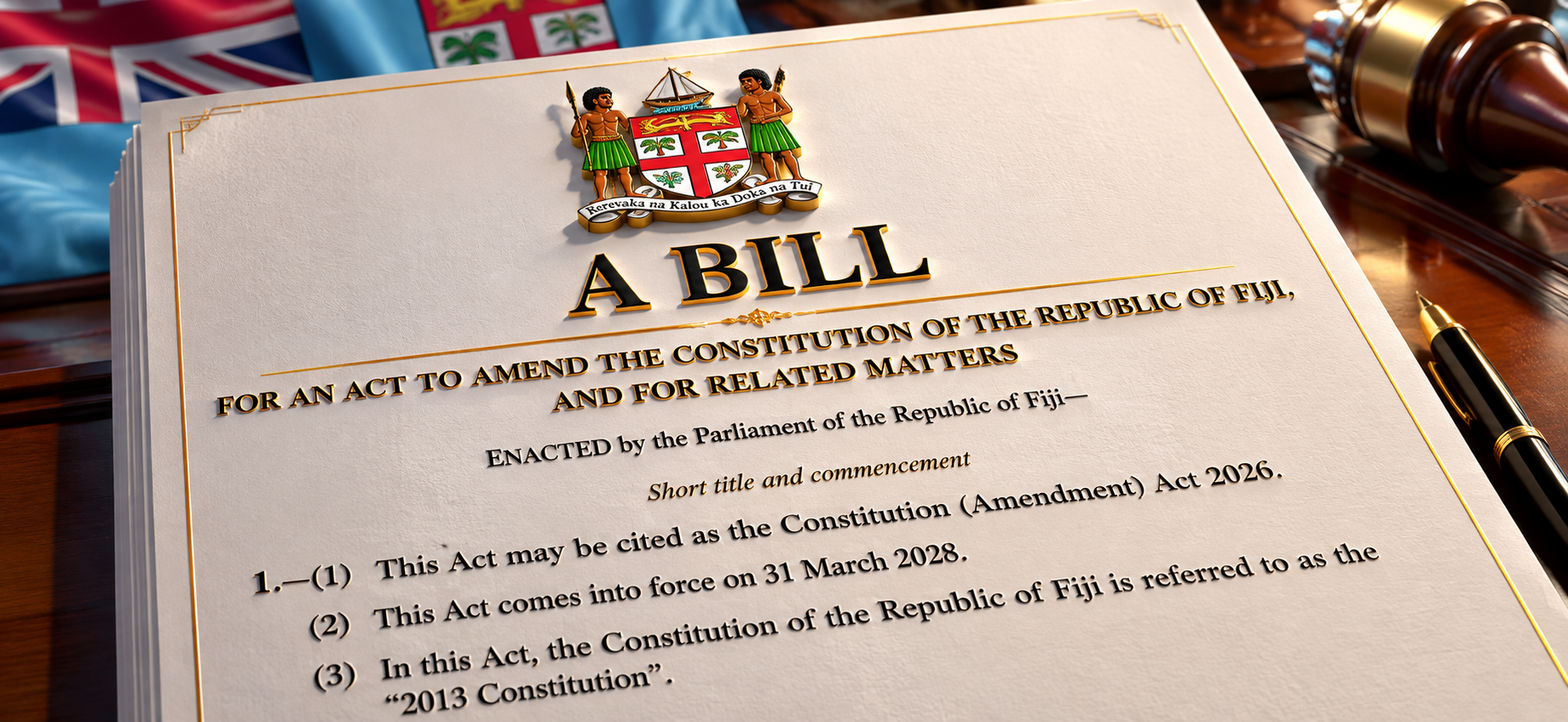
Under section 179 of the Constitution (Amendment) Bill 2026, the Prime Minister would chair the six-member Commission, with the Leader of the Opposition and Attorney-General also serving as members.
The remaining three members would be presidential appointees — two appointed on the advice of the Prime Minister and one on the advice of the Opposition Leader.
This differs substantially from the CRC’s recommended model. The Commission proposed restructuring the COC to enable it to appoint and oversee independent institutions “free from interference.” Its preferred approach would have shifted the appointment process towards non-political institutions, including representatives linked to the University of the South Pacific, Fiji Council of Social Services and Fiji Medical Association.
The issue is significant because the COC would advise the President on appointments to some of Fiji’s most powerful independent and constitutional offices.
These include the Electoral Commission, Supervisor of Elections, Public Service Commission, Commissioner of Police, Corrections Commissioner, RFMF Commander, Auditor-General, Reserve Bank Governor and Ombudsman.
It would also advise on appointments to the Human Rights and Anti-Discrimination Commission and the Secretaries-General of both Houses of Parliament.
The Bill provides that just three members — the Prime Minister as chair and two others — would constitute a quorum.
Cabinet has said the Bill reflects Government’s positions following consideration of the CRC recommendations, including their governance, legal and implementation implications.