
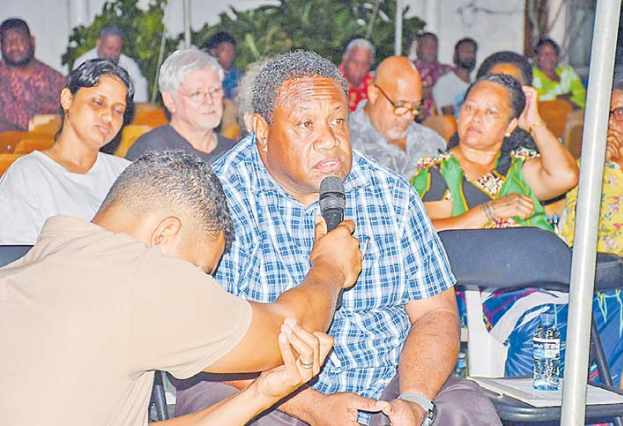
INVESTORS could be deterred by the waste-to-energy proposal, landowners have warned.
Tokatoka Waidigi representative and Viseisei villager Akili Masi said the proposed $1.4billion development could undermine investor confidence in the area, particularly with other large-scale projects planned nearby.
Speaking at the Waste-to-Energy consultation in Wairabetia, Lautoka, he said the group strongly opposed the proposal in its current form.
“I rise to oppose the proposed Waste-to-Energy factory,” he said.
“Our position is based on a simple but critical truth — if this factory is approved it will deter our main investors from proceeding with two main projects.”
He said they included a proposed $550million international rugby stadium and a $3b Saweni Bay boutique resort.
“These developments are not ordinary projects — they represent international recognition, thousands of jobs, and prosperity for our people.
“To place a heavy industrial facility opposite such world-class investment risks undermining investors’ confidence, devaluing opportunities and damaging the reputation as a premier destination.”
Mr Masi stressed that the landowners were not opposed to development.
“We are not against progress — we welcome development that uplifts our people and protects our heritage.
“Therefore, we respectfully urge that this proposal be reconsidered in the interest of sustainable development and the dignity of our land and heritage.”
He also raised concerns about environmental impacts, directing questions to Environment Ministry permanent secretary Sivendra Michael regarding emissions and long-term effects along the Vuda and Saweni corridor.
In response, Dr Michael said the project remained under review.
“As shown by the EIA report, baseline assessments have been conducted covering carbon, air pollution, marine biological assessments and so forth,” Dr Michael said.
“At this stage it is still under review, so we are assessing the baseline data provided prior to the development of the actual facility or technology.
“To answer your question, it is nearly impossible at this stage given the specifications of the technology — what it will entail is not yet in place.”

