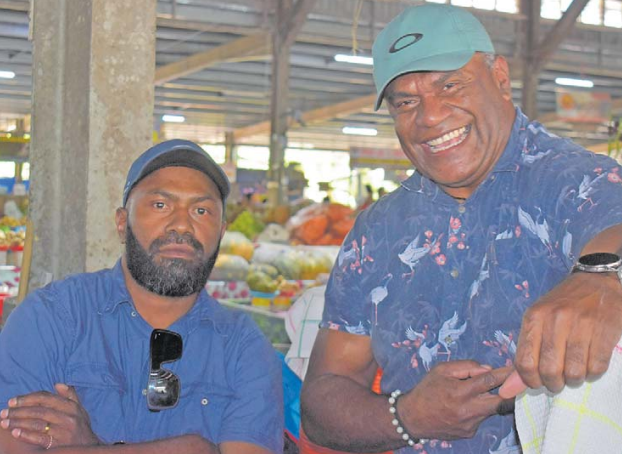
AT the Nausori Market, Manasa Daunakamakama is on a mission to reconnect Fijians with a tradition he believes has been allowed to fade with time.
The 56-year-old former athlete turned businessman operates Wild Boar Health Fiji, a stall specialising in traditional Fijian herbal drinks, particularly warusi.
Assisted by his brother, Autiko Daunakamakama, he hopes to encourage more people to rediscover the place of wai vaka Viti in everyday life.
Originally from the chiefly island of Bau, with maternal links to Viria in Naitasiri, Mr Daunakamakama says traditional herbal preparations were once an ordinary part of growing up in iTaukei communities.
“This is a practice that we have forgotten as indigenous Fijians,” he said.
He recalls a time when households had a vulo wai, a traditional herbal concoctions filter found in village kitchens, long before refrigerators became commonplace.
These everyday practices reflected a deeper relationship between indigenous Fijians and the natural resources around them.
Through his business, Mr Daunakamakama wants to revive that connection, particularly among younger generations who may be less familiar with traditional herbal preparations.
He makes an important distinction between herbal supplements and medicines, explaining that he sees wai vaka Viti as a complement to food rather than something reserved for when a person falls ill.
“We should not get mixed up in thinking about wai vaka Viti, warusi being one, as medicines,” he said.
His vision is for Wild Boar Health Fiji to become a point of reference for people across Rewa, Naitasiri and Tailevu who want to learn more about traditional Fijian herbal practices.
Some customers already stop at his stall early in the morning for a glass before heading to work, a routine he hopes more people will embrace.
He also raises concerns about the excessive consumption of yaqona, acknowledging its cultural significance while questioning whether Fijians have forgotten its true purpose in the traditional system.
Mr Daunakamakama believes that his business is about keeping traditional knowledge alive and encourage Fijians to take a renewed interest in their cultural heritage.
Full story in
The Sunday Times