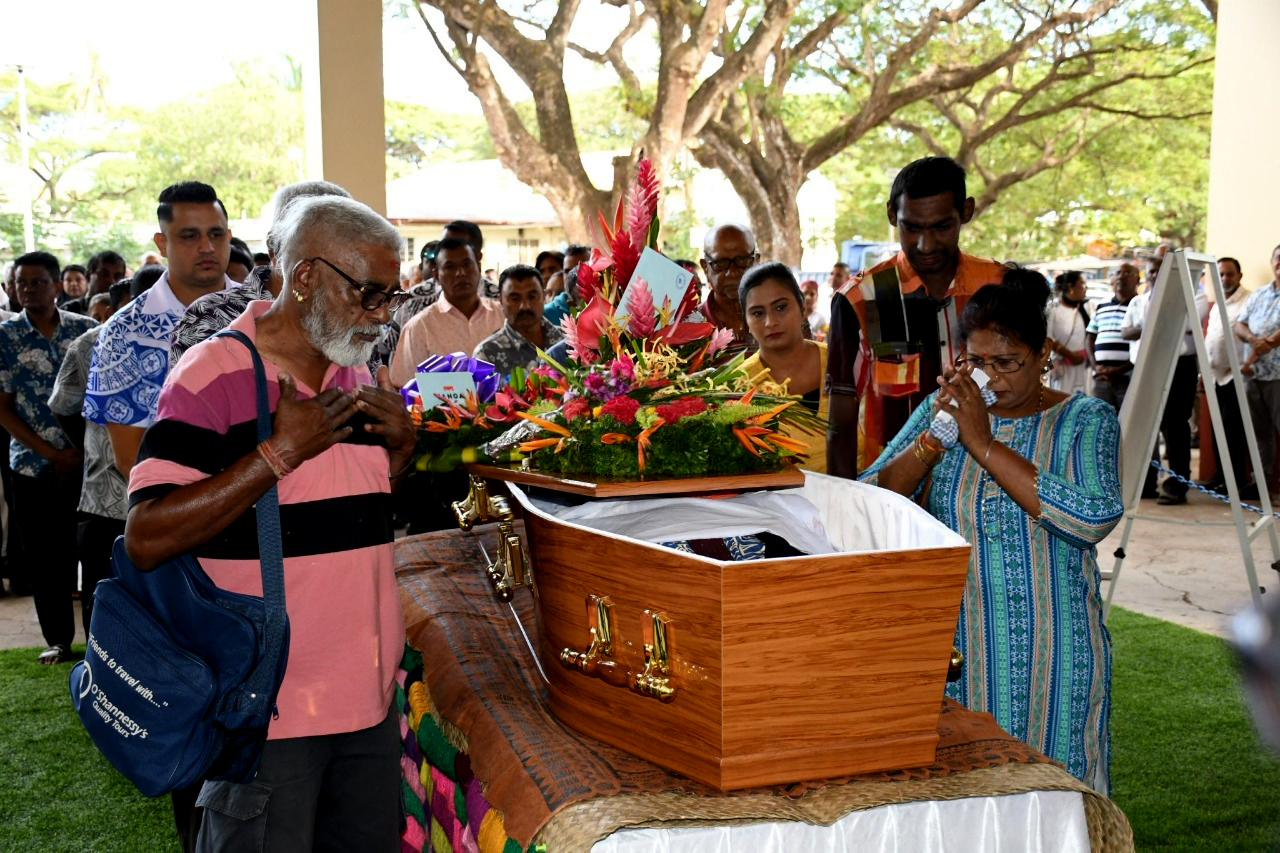
THE grog bowl is still being passed around at two in the morning. The prayers ended hours ago. Somewhere inside the house, I imagine a daughter who has just lost her mother washing plates, counting what remains in the kitchen and wondering how she will manage another evening. Tomorrow, people will arrive again. And somebody will expect to be fed.
I cannot get that picture out of my mind, particularly after my aunt recently lost her mother in Fiji. She and the other daughters took responsibility for the funeral arrangements, as families do. My aunt was fortunate to have the means to meet those expenses. I keep thinking about the daughter who does not, and the elderly parent who dies leaving little more than unpaid bills and a lifetime of love.
My parents, living in New Zealand, have funeral cover included in their life insurance. We have been able to discuss arrangements that many Fiji Indian families would rather avoid. Death is still treated as an invitation to bad luck when mentioned at the dinner table. Yet silence will not pay for a coffin, settle an estate or protect a surviving spouse whose name is nowhere on the documents.
I grew up knowing how much our mourning traditions mean to people. In many North Indian Hindu families, observances extend across 13 days; in South Indian traditions, they may last 16, though practices differ. The Gita-path, the bhajan, the presence of relatives and neighbours can bring genuine comfort. I would hate to see that tenderness disappear, but I have watched men arrive only after the prayers, drink grog until two or three in the morning and leave the household to clean up.
Someone buys the flour, rice, oil and vegetables. Someone cooks after spending the day exhausted by grief. Often it is the women, the very people who have lost a mother or father, who are expected to keep serving. When did consoling a family begin to include demanding their hospitality? How many people around that grog bowl have thought to ask what the evening has cost?
There will be families who happily feed everyone, and that generosity should remain their choice. There are also families who borrow, stretch their wages or quietly worry about what others will say if the food runs short. We speak proudly about respect for the dead while making it difficult for the living to say, “we cannot afford this”. A prayer does not become less sincere because supper is simple, or because the visitors go home at a reasonable hour.
The harder conversation starts before anyone dies. In our communities, parents can spend decades saving for a house, a piece of land or their children’s education, only to hand over control of their own money when they retire. Some do this willingly, believing their children will care for them. Others may feel pressured by the unspoken bargain that a good parent gives everything and a good child will somehow repay it. What protection remains if that bargain is broken?
In 2025, Fiji’s Human Rights and Anti-Discrimination Commission warned about older people suffering mistreatment after transferring property to their children. It reported a complaint involving an 87-year-old woman allegedly assaulted and made homeless by her own children. I struggle to imagine what it feels like to have raised a family, then discover that the home you helped build is no longer a place where you are welcome. For all our speeches about respecting our elders, whose side are we on when money enters the room?
The figures are unsettling too. Cases of obtaining financial advantage by deception involving people aged 60 and over rose from 29 in 2024 to 54 in 2025, according to figures reported by Fiji’s government. These are recorded cases, not a count of every elder harmed. Some parents will never report a son who takes their pension, or a niece who pressures them for their savings. Reporting may mean losing the person who brings groceries or takes them to the clinic.
We sometimes mistake obedience for love. An elderly father should not have to surrender his bank card to prove he trusts his son. A widow should not need permission to spend the money she earned. Helping somebody read a statement, visit a bank or receive a pension is care; deciding they no longer deserve a say is control. An older person’s slower walk or unfamiliarity with a phone does not cancel decades of judgement.
There are risks beyond the family, too. Some elders keep cash hidden at home because it is familiar, or because a bank feels distant and confusing. Fraudsters can exploit that isolation with frighteningly convincing calls and messages, including AI-generated voices pretending to be someone they know. We ought to sit beside our parents and explain scams without making them feel foolish. The answer to vulnerability cannot be to take away every remaining piece of independence.
Then there is the will nobody wants to mention. In Fiji Indian households, asking a parent about inheritance may be mistaken for waiting impatiently for their death. So papers remain unsigned, promises stay verbal, and after the funeral siblings begin arguing about who was told what. The Fiji Public Trustee offers estate planning services, yet families need encouragement to seek independent legal advice before signing away their assets. Planning for death is an act of responsibility towards people who will have to live with its consequences.
Religious organisations could make room for these conversations alongside their regular gatherings. Banks and welfare officers could explain pension safeguards and fraud in language elders understand, including Fiji Hindi. Families could agree that funeral visitors contribute food or money rather than expecting to be entertained. These are modest changes, but they ask something uncomfortable of us: To give up conveniences we have come to expect from older people and grieving households.
Recent marriage figures add another reason to think ahead. Fiji recorded 9483 marriages in 2016 and 6470 in 2024, according to official statistics. That decline does not tell us who will marry or have children in future, but it should challenge our assumption that a spouse or grown children will always be available. Even when children exist, they may live overseas, struggle financially or be unwilling to help. Ageing safely cannot depend on having produced the right family.
One day, if we are fortunate, we will be the ones asking for a lift to the bank or help with a form. I think of my parents, and of all the mothers and fathers in Fiji who spent their strongest years making life easier for everyone else. They deserve to keep their choices, their savings and the keys to their own homes for as long as possible. They deserve company without conditions, care without humiliation and a funeral that does not bankrupt those left behind.
I began with a daughter washing plates while the grog bowl circulates late into the night. Perhaps the most important question is not whether she has served everyone enough, but whether anyone has stopped to serve her. And while our elders are still here to answer, perhaps we should ask them something we have avoided for generations: Are you safe with us? Or have we made you afraid to tell us the truth?