I didn’t ask for a free ride, I only asked you to show me a real good time.
I never asked for the rainfall …” as sung by Ariana Grande and Lady Gaga in 2020.
Considering the tropical climate of Fiji, many public transport commuters get wet in the rain on a daily basis.
There could be various reasons for this, but one contributing factor cannot be ruled out, and that is the tapping of the bus card when boarding the bus.
I accept that digital ticketing can have benefits, but increased digitalisation should not be confused with improved public transport.
I personally prefer the old system. I would board the bus and pay the driver when the weather was favourable. When the weather was not favourable, passengers could board the bus, take a seat, and the driver or checker would collect the bus fares from commuters once the bus was full.
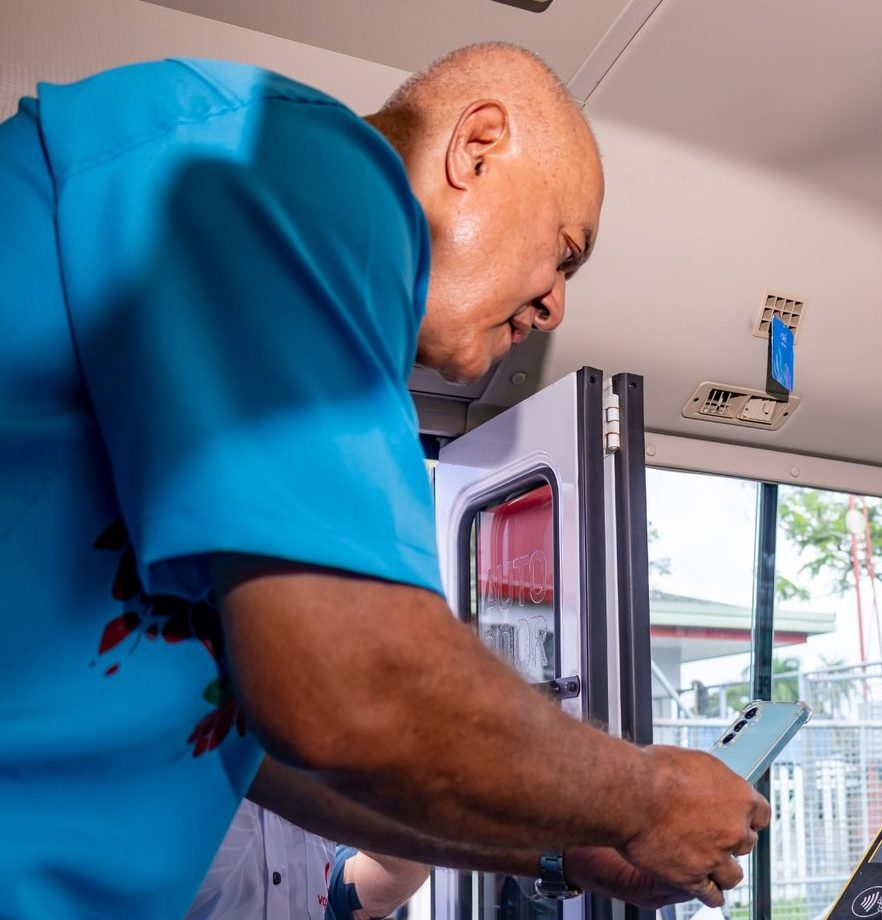
With the new QR payment, which takes just a few seconds extra, the boarding process could be slowed down.
Not forgetting that, in order to make a payment through the eTransport app, passengers need to have sufficient funds in their digital wallet. They can now top up through MPAiSA, MyCash or bank transfers, but this still adds another step to the payment process.
Here too, there is a chance of crowding and people getting wet in unfavourable weather. When it is raining heavily, every additional step in the boarding process matters. For most, it feels like holding their breath underwater.
This brings me to my main point. I often sit and wonder about the change that the people of Fiji were promised during the 2022 General Election campaign.
As stated in The Fiji Times on June 7, 2025, Vodafone Fiji has continued to push its new products and services in the transport industry, but where is the change?
The bus card or digital payment system was an initiative of the FijiFirst Government, which I now feel is being reinforced by the Coalition Government.
Also stated in The Fiji Times on May 31, 2025, Prime Minister Sitiveni Rabuka has been outspoken in his criticism of the current eTicketing rollout.
In 2017, in his capacity as the then leader of SODELPA, he called the situation a “disaster” for families, particularly those in rural areas, and emphasised the lack of adequate consultation before the introduction of the system.
So my question is, when was the last consultation conducted? And was the consultation adequate enough to determine whether the new QR code payment system is a feasible decision, particularly given Fiji’s tropical climate?
We all understand that Vodafone Fiji is not a non profit organisation. Its business role is to make a profit.
The last that I know, Vodafone Fiji received about 4.5 per cent of every transaction, which was later reduced to 3.5 per cent. This basically means that if $5000 in fares were processed, a 3.5 per cent commission would amount to $175.
But what is the current commission arrangement, and how much does the system generate today?
The last such disclosure was made in 2021, and I have not seen any subsequent disclosure.
Again, my question is:
n What existing problem is the current system solving for the passenger; and
n how do we measure whether it is succeeding?
We may bring it back once we have better roads, smokeless buses and after a thorough public referendum.This would also mean passengers pay less for their travel.
Consultation structures now exist. New technology exists. New cards exist. Mobile applications exist. QR payment has now been introduced.
But what about the passenger’s experience?
This is where I believe the conversation needs to go beyond technology.
We also notice buses catching fire. There is a lack of buses for commuters in certain areas, school students are sometimes seen standing on bus steps, and we cannot forget the rush to board buses during peak periods.
Something needs to be done.
For the ordinary passenger, public transport is not simply about how a fare is paid. It is about getting to work, getting children home from school, getting home after a long day and being able to travel safely and comfortably.
Since Vodafone has in the past rewarded customers for using the eTicketing mode of payment and replaced the cards with new ones, I think it is high time that the company, Government and other stakeholders also became part of the wider conversation about safer buses, improved road conditions and greater comfort for the people of Fiji.
Digital technology can certainly be part of the solution. I have no issue with progress or with making payment easier.
But progress should also be felt by the person sitting at the bus stop in the rain, the student waiting to get home, the elderly passenger trying to board a crowded bus and the worker who depends on public transport every day.
These are the people who should be at the centre of the conversation.
After all, a transport system is not only about cards, machines and applications. It is about people.
After all the changes, upgrades, consultations and promises, is the ordinary passenger actually experiencing a better public transport system?
If change is measured by new cards, new machines and new apps, then we have certainly changed. But if change is measured by safer buses, shorter waits, better roads, less overcrowding and a more comfortable journey, have we really changed?
n KRISHNEEL NAIR, a citizen of Fiji, takes full ownership of the opinions expressed herein. The views expressed herein do not necessarily reflect the views of this newspaper.