Last week the President of the Fiji Law Society, Graham Leung, gave the Special Committee on the Constitution (Amendment) Bill an answer that I hope the country will hear. The Society accepts the Supreme Court’s opinion on the immunities already granted for past events. It opposes, without qualification, any immunity for anyone who stages a coup in the future or tries to change the Constitution by unconstitutional means. And it insists that the military must always be subordinate to the civilian government the people elect. In Mr Leung’s words, the army is not and should never be the final arbiter of what is right for this country. That authority belongs to Parliament.
Every lawyer in Fiji should support that submission. So should every citizen who has lived through the last four decades.
A position he has paid for
MR Leung is not a late convert. In the years after December 2006 he wrote that the profession’s response had been “supine and insufficient”. He once wrote: “Posterity will judge Fiji’s lawyers – and whether or not, in the country’s hour of need, they stood up for the rule of law.”
In February 2008 he told a special general meeting of the profession that all coups were wrong and illegal. A few days later he found himself on a travel ban. The Society’s submission is the same principle put into constitutional form, by someone who stood by it when it was costly to do so.
Immunity has been the currency of every coup
Fiji’s pattern is familiar. Soldiers remove an elected government, a decree indemnifies everyone involved, and the indemnity is carried into the next constitution. As the Constitution Review Commission observed, constitutional immunity began after 1987 and was retained in the 1990, 1997 and 2013 Constitutions.
Immunity has never been an afterthought to our coups. It has been the bargaining chip at the centre of them.
The late historian Brij Lal, in Another Way (1998), recounts how the Deuba talks of September 1987 brought Ratu Mara and Dr Bavadra within sight of a negotiated settlement.
Lieutenant Colonel Rabuka was not at the table; had he been, Lal writes, “he might even have been able to extract some assurance of immunity for himself and his co-conspirators.” Instead, on 25 September 1987, he staged his second coup and the Deuba Accord was dead.
Even the 1997 Constitution, the product of the Reeves Commission and a unanimous Parliament, carried the old immunity forward as the price of compromise. The message stayed in place: in Fiji, those who overthrow a government by force can expect, in time, to be forgiven by law.
The lesson George Speight learned
George Speight showed how that message had been received. For fifty-six days in 2000 he held the Prime Minister and members of his Government hostage in Parliament, with amnesty at the top of his demands. He got it, in the Muanikau Accord and an Immunity Decree. The amnesty did not last. The military arrested him for failing to return its weapons, and the courts held that the immunity could not protect those who had broken its conditions. Brij Lal named what had happened without euphemism: Fiji had “failed the ultimate test of democracy: to survive a change of government.”
Chandrika Prasad and the courage of an ordinary man
What rescued the rule of law in 2000 was not a politician or a soldier. It was a farmer. Chandrika Prasad had been driven from his home, and the military had purported to abrogate the 1997 Constitution. On 4 July 2000, with the help of the Fiji Human Rights Commission, Mr Prasad filed proceedings in the High Court at Lautoka, a short drive from where I write this. He asked a simple question: had the Constitution really ceased to exist because men with guns said so?
Justice Gates held that it had not. On 1 March 2001 a Court of Appeal of four judges unanimously agreed.
Necessity, the Court said, authorises temporary measures to meet a sudden crisis; it does not authorise permanent changes to a written constitution, let alone its complete abrogation. In 2002 Speight pleaded guilty to treason. For once, a coup-maker’s faith in the precedent of 1987 was misplaced, and the law worked.
The coup to end all coups
The coup of 5 December 2006 was presented as the cure. Its leader promised to end Fiji’s “coup culture”. Yet the military had fiercely opposed the Qarase government’s Reconciliation, Tolerance and Unity Bill partly because its amnesty provisions for those involved in 2000 would entrench that very culture. Within weeks of seizing power, the new regime was providing immunity for the commander and his men.
Brij Lal saw where this was heading. The military’s claim, he wrote in The 2006 Military Takeover in Fiji (2009), amounted to “putting the colonels and commodores in charge of the nation to prevent future coups.”
He was proved right. On 9 April 2009 the Court of Appeal in Qarase v Bainimarama held that the removal of the elected government had been unlawful.
The next day the 1997 Constitution was abrogated and the judges were removed from office. In the 2013 Constitution, immunity was entrenched in Chapter 10 beyond the reach of ordinary amendment. The coup that was to end all coups ended with the most comprehensive immunity of them all.
Why the line must be drawn now
The Supreme Court’s advisory opinion of August 2025 made constitutional reform achievable at last,. For the sake of stability it left the existing immunities in Chapter 10 where they were. The Law Society has taken the responsible course.
It does not ask the country to reopen every wound at once. It asks that the wound not be inflicted again.
That distinction is the strength of the submission. Accepting the immunities of the past keeps the peace. Promising the same for the future would invite another coup.
Every grant of immunity has taught the same lesson: succeed, and you will be forgiven. The Bill keeps the existing immunity. It must also make clear that whoever tries next will not be let off.
A soldier’s courage
The most remarkable voice in this debate has come from an unexpected quarter. When the Commander of the Republic of Fiji Military Forces, Major General Ro Jone Kalouniwai, appeared before the Constitution Review Commission in July, he did what no commander before him had done.On behalf of the institution behind the coups of 1987 and 2006, he called for the immunity provisions to be removed from the Constitution.
When I read that in the newspaper, I read it twice to make sure. With no one looking, I jumped up and clicked my heels as if I’d won the lottery.
I would be honoured to shake his hand. The immunity clauses had long been defended as the price of keeping the barracks content.
Now the barracks itself wanted them gone.
He told the Commission that the RFMF envisioned a Fiji where the military is “a symbol of humble service rather than a shadow of intervention.”
He was candid about the price: seeking that accountability, he said, “places officers and soldiers, including our own, at legal risk.” He went further than the Law Society, which accepts the immunities already granted.
It is one thing for lawyers and civil society to call for accountability; quite another for the commander to give up the protection his own officers have relied upon for almost forty years. Major General Kalouniwai has spoken as a soldier who understands that an army’s honour lies in its service to the people and its obedience to the law, not in its guns.
In 2008 Brij Lal wrote that “Fiji’s coup culture could end only if the military, and especially its commander, decided to end it.” Eighteen years later, a commander has said that it must. When the commander of the military and the President of the Law Society arrive at the same place, Parliament should take the hint.
What the Constitution should say
The law should make it clear that anyone involved in overthrowing an elected government or unlawfully changing the Constitution cannot be granted immunity, amnesty or a pardon, however it is framed. It should place such offences beyond the prerogative of mercy, and provide that no future instrument purporting to grant such immunity shall have any effect. And it should restate, in words no commander can misunderstand, that the military is subject to the authority of the elected civilian government and has no role in deciding who governs.
Chandrika Prasad did not have a constitutional clause to protect him. He had a lawyer, a courtroom in Lautoka and the nerve to ask a question everyone else was pretending not to hear.
The Fiji Law Society has given the right answer. Parliament should write it into the Constitution and the people should endorse it at the referendum. Coups in this country must end up in a courtroom like every other serious crime.
n AZEEM SAHU KHAN is a barrister and solicitor who has practised in Fiji since 2001. The views expressed are his own and do not reflect the views of this newspaper.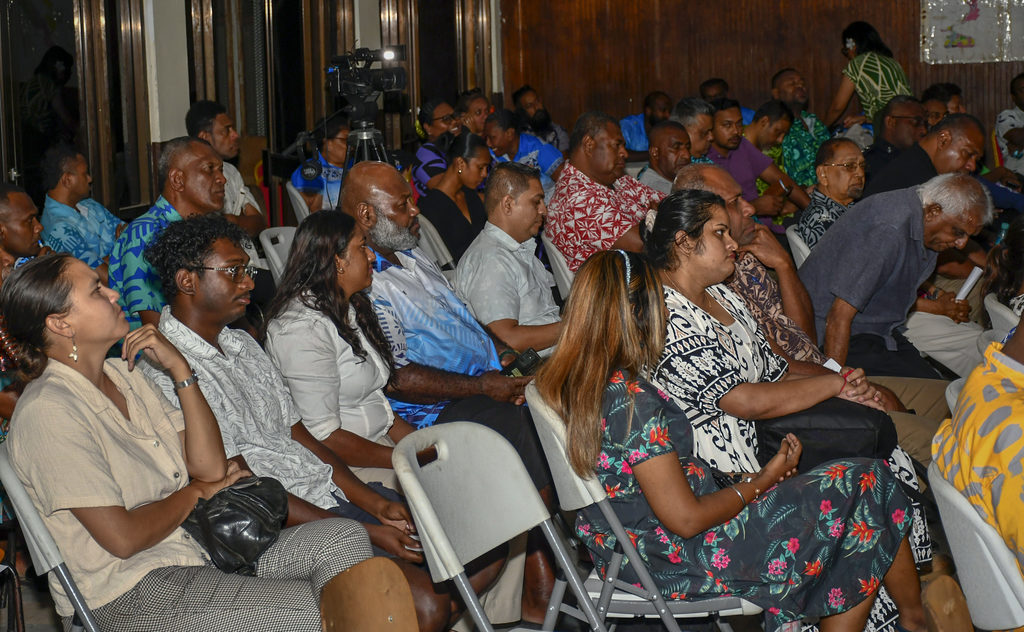
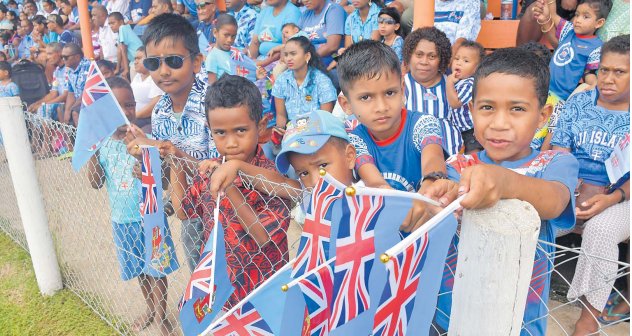
Members of the public during a consultation at Nadi Civic Centre. Picture: BALJEET SINGH
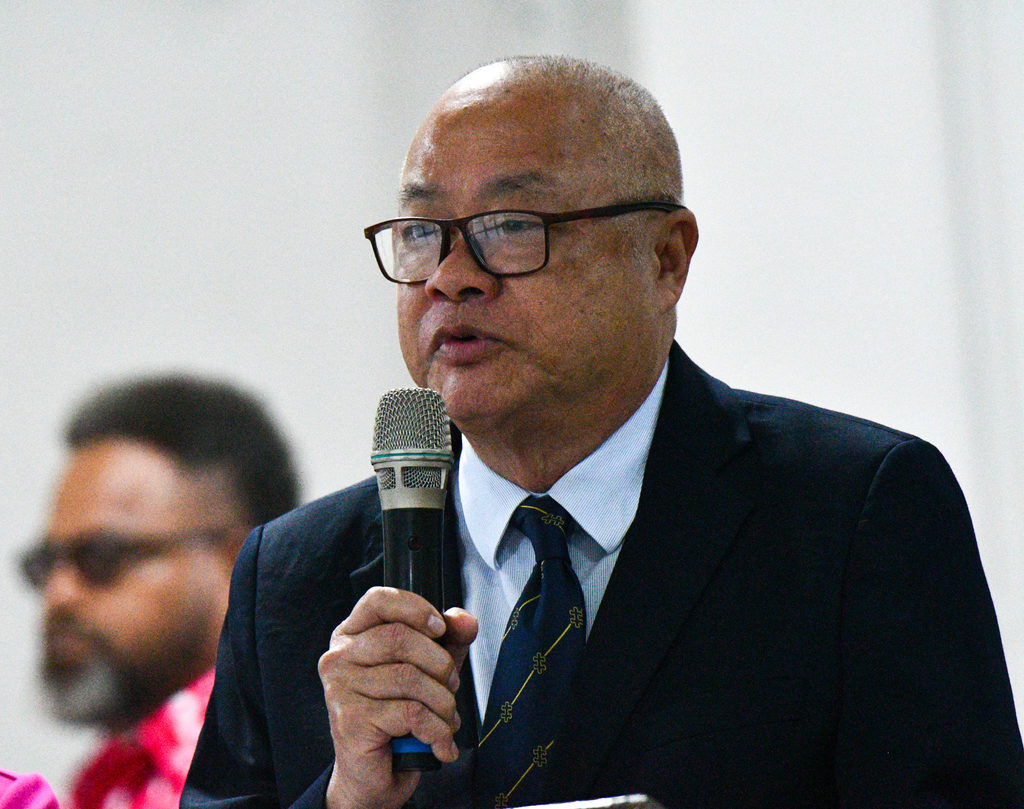
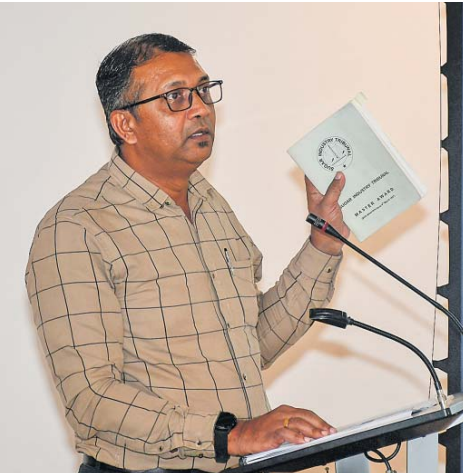
Graham leung makes a submission during the public consultation on the Constitution (Amendment) Bill at CMF Harvest Plaza in Kinoya.
Picture: TIMOCI DAWAI
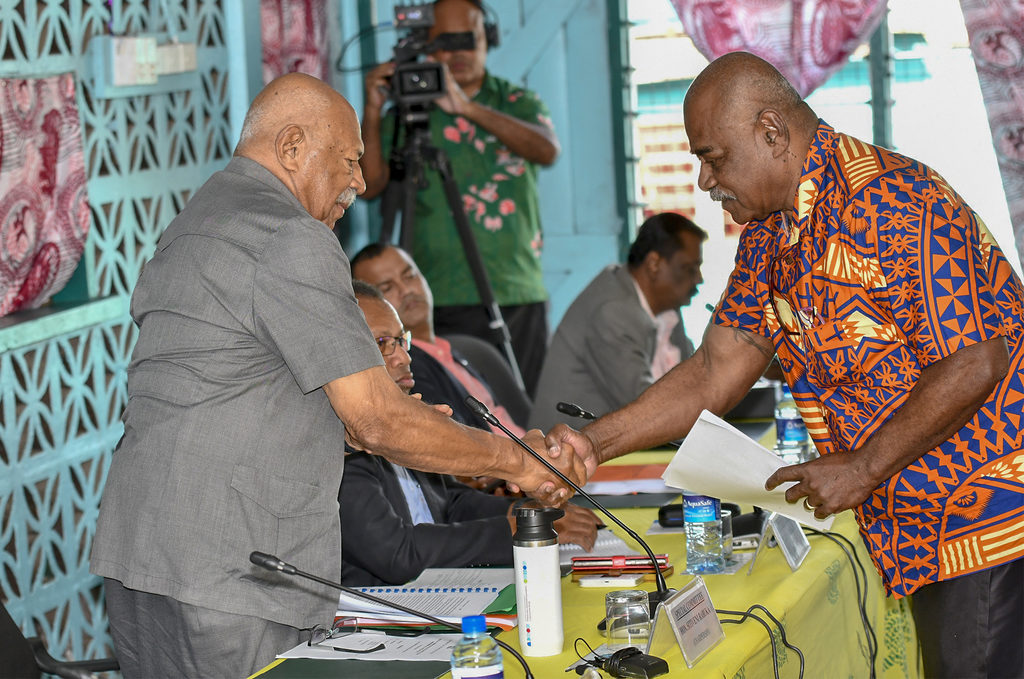
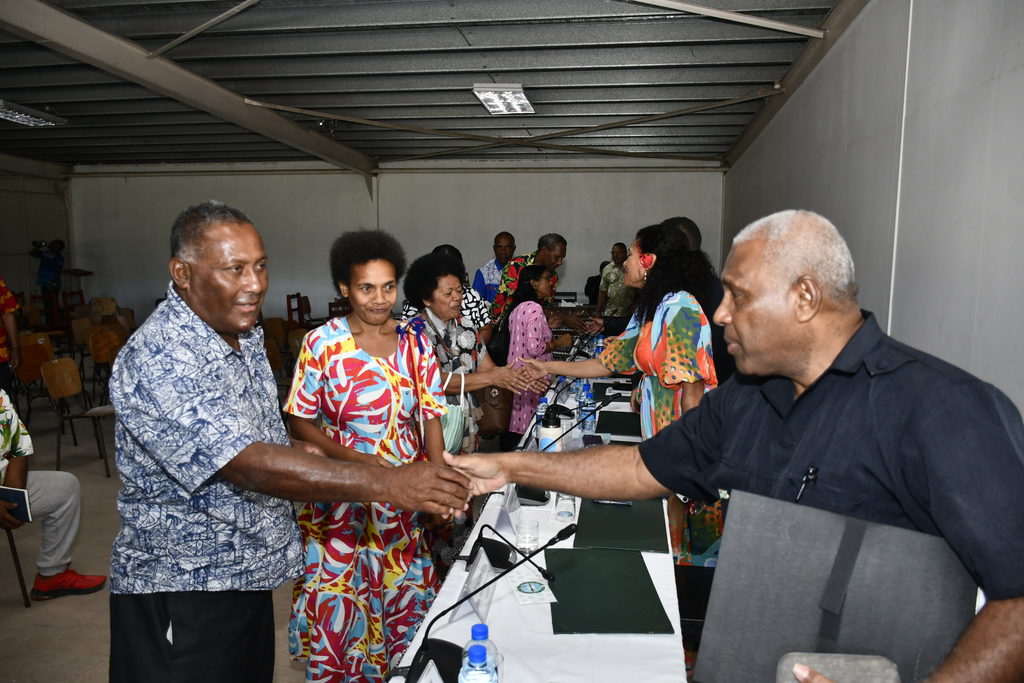
Peni Duaniwai hands over his submission to PM Sitiveni Rabuka after the Constitution (Amendment) Bill public consultation at Rakiraki village. Picture: BALJEET SINGH