THE word that followed me through childhood was no. No, do not cry. No, boys do not use those colours. No, netball is for girls. No, poetry is not what boys do. Each refusal sounded small, almost harmless, delivered by people who probably believed they were teaching me how to survive the world. Only now do I understand they were also teaching me how much of myself I would have to surrender to be accepted in it.
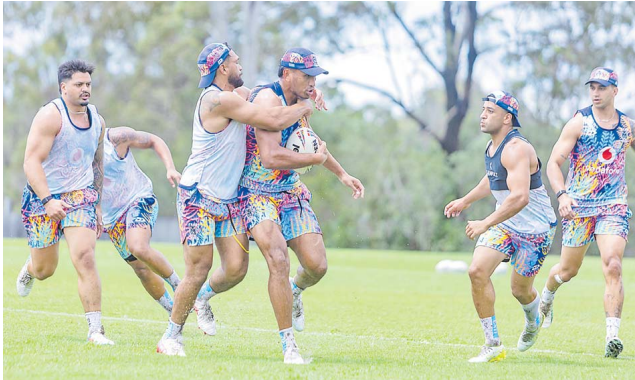
Growing up in Lautoka, I learned that masculinity came with an instruction manual nobody had written down. At school, if I wanted to fill my drawings with colour, friends reminded me that boys were not supposed to do that. I wanted to play netball rather than football and discovered that even a game could apparently threaten my identity. Poetry appealed to me more than Boy Scouts, but that preference invited judgement too. A child’s interest in a ball, a pencil or a poem had become a referendum on whether he was sufficiently male.
What troubles me is how ordinary it all seemed. Nobody needed to announce that we were policing one another. Children became the enforcers of rules inherited before they were old enough to question them. We laughed, teased, corrected and excluded without recognising the cruelty involved. I wonder how many boys put away something they loved, not because they had outgrown it, but because they were tired of explaining why they loved it.
There is a particular loneliness in being told that the things bringing you joy make you less of a boy. You begin to rehearse yourself before entering a room. Is your voice too soft, your interest too unusual, your sadness too visible? Eventually, the person you present becomes so carefully edited that you struggle to remember what was removed. People call that growing up. Sometimes it is learning to disappear.
In many Indo-Fijian households, “be a man” carries the weight of generations. It can mean work hard, protect your family, keep your promises and take responsibility. These are not bad values. The trouble begins when we attach another set of commands: never falter, never admit fear, never need anyone, and certainly never cry. Responsibility becomes a virtue measured by how completely a man can conceal his pain.
I think about my father, my brothers, my uncles, and now the men of my generation. I have seen the pressure to be the man of the house, to provide, solve problems and remain composed when circumstances are anything but manageable. There is dignity in what many of these men do for their families. But how many have been given space to say they are frightened or exhausted? How many have sat among people who love them and still believed they had nowhere safe to put their sadness?
We praise men for their sacrifices while making it difficult to speak about the cost. A father works through illness and is called dependable. A husband carries financial worry alone and is called strong. A son avoids burdening his parents and is called mature. We admire the performance so much that we forget to ask whether the man performing it is coping. When he finally breaks down, we treat it as his failure rather than evidence that our expectations may have been impossible.
The consequences are not merely philosophical. Figures released in Fiji in 2025 showed that 370 of the 489 people who died by suicide between 2020 and 2024 were men. These deaths cannot be explained by one cause; suicide is complex, shaped by relationships, health, economic pressures and access to support. But when men are repeatedly taught to hide distress, we must question what that lesson costs. A country cannot keep telling its sons to suffer quietly and then act bewildered when some cannot find a way to ask for help.
Yet the conversation becomes dishonest if we pretend men are only victims of these expectations. Some use the power granted to them to silence women, intimidate children or ridicule other men. Emotional repression does not excuse cruelty. Nor should men’s suffering be set against women’s, as though only one deserves attention. The same expectations that punish boys for tenderness can teach them that control is proof of manhood.
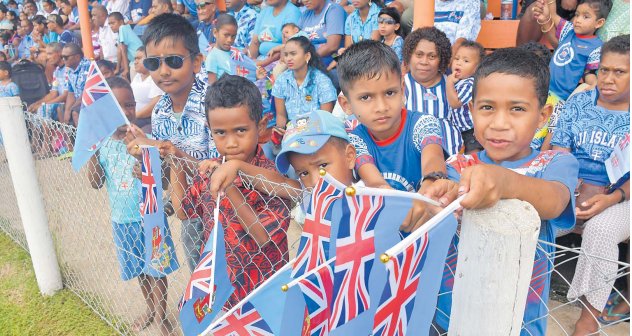
I know how easily these ideas reproduce themselves because I now meet them from the other side of a classroom. As a primary school teacher, I see how early children attach gender to colours, activities, emotions and ambitions. Sometimes my work is less about teaching something new than helping children unlearn something they arrived believing was obvious. They are young enough to reconsider, but old enough to repeat what they have heard with startling certainty. The prejudice seldom begins at school; it merely finds another place to speak.
When a child believes a game belongs to boys, I want that belief questioned. When another believes tears are embarrassing, I want crying treated as a human response, not a fault. When children dismiss art or poetry as unsuitable for boys, I ask who decided that and why. This is not about forcing every child to enjoy everything. It is about ensuring nobody is shamed for enjoying something harmless because it does not fit a stereotype.
It would be convenient to blame older generations, but that would let the rest of us escape too easily. I have heard these attitudes repeated by people my age, sometimes as jokes, sometimes as advice. We laugh when a boy is called feminine, then claim we want men to be emotionally intelligent. We tell men to communicate, yet shame them when their honesty is inconvenient. We cannot demand vulnerability while punishing them every time they offer it.
Nor can schools fix what homes insist on reinforcing. Teachers can challenge stereotypes, but children return to dinner tables, sports fields and social media feeds where other lessons may be louder. Fathers, mothers, grandparents and community leaders all shape the meaning of manhood. The work begins in the casual remark, the nickname, the comparison, the instruction to toughen up. It begins when an adult chooses not to laugh at a boy for being gentle.
I think of that younger version of myself, holding a coloured pencil and wondering whether to put it down. He did not know he was encountering a social rule; he knew only that belonging seemed to require a small betrayal. There would be other interests to defend and other moments when silence felt safer than explanation. Perhaps that is why the memory has stayed with me. The pencil was never the issue. The issue was that someone believed they could decide the limits of a boy’s imagination.
I do not want today’s boys to inherit that narrow permission to exist. Let them play football or netball, write poems or climb trees, cry when hurt and laugh without wondering whether joy looks masculine enough. Let them see fathers and teachers who apologise, seek help and talk about fear without shame. A man who seeks counselling is not abandoning responsibility; he is exercising it. Becoming a man should not require removing everything tender from oneself.
For years, the world told me no, often over things that should never have required permission. I cannot return to those classrooms and playgrounds to answer differently. But I can answer differently now, especially when a child is deciding whether it is safe to be himself. Yes, you may use every colour. Yes, you may play the sport you love. Yes, you may write the poem. And yes, if something hurts, you are allowed to cry.
ASHNEEL JAYNESH PRASAD is a Fiji-born New Zealand citizen currently working as a teacher in Tokyo, Japan. The views expressed in this article are his and do not reflect the views of this newspaper.