

In today’s busy world, staying healthy means much more than avoiding fever or infection. According to the World Health Organization (WHO), good health includes physical, mental, and social well-being. A person may appear healthy on the outside but may still suffer from stress, poor sleep, loneliness or unhealthy habits that slowly damage the body.
Modern life has brought many comforts, but it has also created new health challenges. While infectious diseases such as dengue fever and tuberculosis still exist, lifestyle diseases are now becoming the greatest threat to public health.
The rise of lifestyle diseases
Lifestyle diseases, also called non-communicable diseases (NCDs), are illnesses mainly caused by unhealthy daily habits. These include:
Heart disease;
high blood pressure (hyper tension);
stroke;
diabetes;
obesity;
certain cancers; and
chronic lung diseases.
These diseases often develop slowly and may require lifelong treatment. Rapid urbanisation, unhealthy food habits, lack of exercise, stress and poor sleep are major reasons for their rise.
In countries such as Fiji and other South Pacific Nations, changing lifestyles and increasing dependence on convenience food and technology have made these conditions more common than ever before.
Four major risks you can control
The encouraging news is that many lifestyle diseases can be prevented. Experts say there are four major risk factors that people can change through simple lifestyle choices.
1. Tobacco use
Tobacco use is a leading preventable risk factor linked to non-communicable diseases such as heart disease, stroke, cancers, diabetes, and chronic respiratory diseases, which contributes a significant economic burden. Tobacco use is also associated with deaths from communicable diseases such as tuberculosis and other health conditions including vision loss, hearing loss and reduced fertility. Even passive smoking – breathing-in smoke from others – can seriously affect children and family members.
A recent study showed that tobacco-related illnesses cost the Fijian economy $319 million every year, equivalent to 2.7 per cent of its GDP and about 4.3 times more than the revenue generated by cigarette taxes. They also kill more than 1200 Fijians annually.
Health experts warn that every cigarette shortens life expectancy.
2. Physical inactivity
Modern life has made people less active. Long hours of sitting at desks, watching screens, or driving have reduced physical movement.
A survey conducted in Fiji revealed that 56.4 per cent of respondents did not participate in vigorous physical activity. The prevalence was notably higher among women, with 75.3 per cent reporting no engagement in vigorous activity, compared to 38.5 per cent of men.
Furthermore, the study highlighted an age-related trend, showing that more than 82 per cent of individuals aged 60-69 years reported no participation in vigorous physical activity, while 43.8 per cent of those aged 18–29 years were similarly inactive.
At least 30 minutes of moderate exercise five days a week is recommended. Simple activities such as walking, cycling, gardening, swimming, or taking the stairs instead of the elevator can make a big difference.
3. Unhealthy diet
An unhealthy diet remains a significant public health concern in Fiji, largely driven by an increasing reliance on convenience, processed, and ultra-processed foods, including ready-to-eat meals, ready-to-heat products, and pre-prepared ingredients. These foods are often high in salt, sugar, and unhealthy fats, and their regular consumption substantially increases the risk of obesity, diabetes mellitus, and cardiovascular disease.
A healthy diet should include:
• Fresh fruits;
• Green leafy vegetables;
• Whole grains; and
• Plenty of water.
Adopting healthier dietary practices, such as reducing the intake of fried foods, sugar-sweetened beverages, and excessive red meat, can significantly improve long-term health outcomes. The United Nations has also expressed concern regarding the growing “junk food invasion” in Fiji.
4. Harmful use of alcohol
Studies showed that alcohol consumption in Fiji has increased considerably in recent years. Although per capita alcohol intake remains below the global average, prevailing patterns of consumption are a significant public health concern. Surveys have demonstrated a high prevalence of binge drinking, particularly among younger individuals. Furthermore, the practice of combining kava with alcohol, commonly referred to as “washdown,” substantially increases the risk of psychiatric disturbances, violent behaviour, and long-term health complications.
Lifestyle-related factors contribute to the overwhelming burden of non-communicable diseases (NCDs) in Fiji, which account for approximately 80 per cent of all deaths nationally. Excessive alcohol consumption is a major contributor to this burden through its association with liver disease, cardiovascular disease, and various forms of cancer.
Excessive alcohol consumption damages the liver, heart, brain and other organs. It is also linked to accidents, mental health problems, social issues and certain cancers. WHO classifies alcohol as an inherently toxic, psychoactive and dependence-producing substance. It has been classified as a known Group 1 carcinogen (cancer-causing agent).
Obesity: The silent killer
Being overweight is not just a cosmetic issue. Obesity increases the risk of diabetes, heart disease, joint problems and sleep disorders.
Obesity represents a major public health challenge in Fiji. Current estimates indicate that approximately 38.9 per cent of Fijian adults meet the clinical criteria for obesity, while an additional 29.2 per cent are classified as overweight. Collectively, this means that more than 68 per cent of the adult population falls within an unhealthy weight range.
Significant demographic disparities have also been observed. Women experience higher rates of obesity compared to men, and the burden is disproportionately greater among the iTaukei population, where the prevalence of obesity is estimated at 47.7 per cent, compared with 24.9 per cent among Fijians of Indian descent.
Doctors are especially concerned about “belly fat” or abdominal obesity. Fat around the waist is strongly linked to heart disease and diabetes.
Maintaining a healthy weight through regular exercise and balanced eating is one of the best ways to stay healthy.
Sleep: An essential medicine
Many people underestimate the importance of sleep. Adults generally need about 7 to 8 hours of good sleep each night.
Lack of sleep can lead to:
• Poor concentration;
• Mood changes;
• Stress and anxiety;
• Memory problems;
• Increased risk of accidents;
• Higher risk of obesity;
• Weak immunity;
• Increase in blood pressure; and heart disease.
Good sleep also helps the body repair itself and strengthens immunity.
Mental health matters too
Health is not only about the body. Stress, anxiety, and depression are becoming increasingly common due to work pressure, financial worries, and fast-paced lifestyles.
Simple stress-management practices can help:
• Yoga;
• Meditation;
• Deep breathing exercises;
• Spending time with family and friends;
• Regular physical activity; and
• A calm and positive mind greatly improves overall health.
Protecting yourself from infections
Even though lifestyle diseases are increasing, infectious diseases remain a concern. Recent outbreaks such as COVID-19 reminded the world how quickly infections can spread.
Doctors continue to recommend three simple protective measures:
• Wash hands regularly with soap and water;
• Wear masks in crowded places when needed;
• Maintain physical distance during outbreaks; and
• Practicing proper cough etiquette – covering the mouth and nose while coughing or sneezing – also helps protect others.
Small changes – big results
Healthy living does not require expensive treatments or drastic changes. Small daily habits can lead to major improvements over time.
Here are some simple tips:
• Walk more and sit less;
• Eat fresh, home-cooked meals;
• Drink enough water;
• Avoid tobacco and excess alcohol;
• Sleep well;
• Exercise regularly;
• Reduce stress; and
• Go for regular health check-ups.
Living longer and living better
The goal of good health is not just to live longer, but to live well. Lifestyle diseases can reduce quality of life by causing pain, disability, stress and dependence on others.
By making wise choices today, people can protect themselves from many modern illnesses and enjoy healthier, happier and more active lives in the future.
By stepping away from harmful habits and making deliberate, healthy choices each day, you can protect your body from the modern epidemic of lifestyle diseases and ensure your future years are lived with genuine vitality and joy.
Good health truly begins with everyday habits.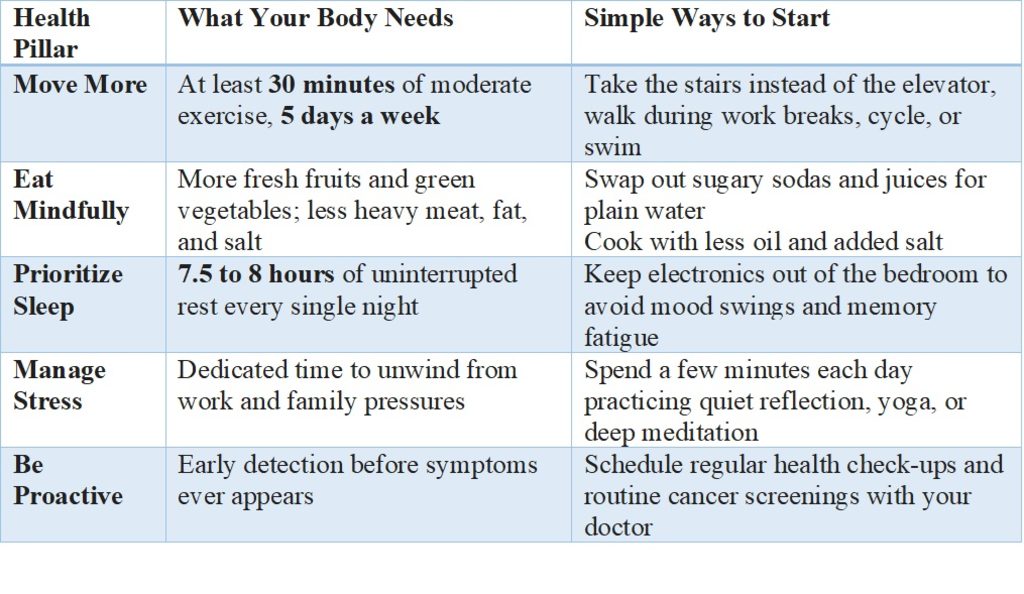
aa

