THREE years ago, I was on a plane to Sydney from Fiji to see my parents and support my mother as she navigated her annual cancer screening. They had gone ahead of me.
Unbeknownst to any of us at the time, the tests would reveal that her thyroid cancer had returned after five years in remission. She would need surgery and radiation to treat it. (Not to worry, dear reader. As of 2024, she is cancer-free again.)
I arrived with a suitcase full of gifts from Fiji for my mum’s family, who had been accommodating my parents for around two months. The gifts were a small thank you. Fiji snacks, that one popular skin care product we all know and bula shirts made up the bulk of them. I have so many male relatives that I decided to choose the same white shirt for all of them, differentiated only by the colour of the flowers.
Later that week, we had one of our many family dinners. To my pleasant surprise, all the men had planned to wear their bula shirts that night. They wore them with pride.
This story is not about bula shirts, of course. It is not about people from Fiji buying gifts from popular Fijian shops to take to relatives overseas, who eagerly await them. Nor is it about Fijians seeking medical care overseas. I recognise, too, that seeking medical care overseas is a privilege not everyone can afford. That is another story, as important as it is.
It is, however, about what it means to belong to a place. About the things we carry with us when we leave it, the things we send across oceans to the people we love, and the quiet ways we remain connected to a country even when we are thousands of kilometres away.
I have been thinking about belonging a lot lately. About how something that has always felt so instinctive can suddenly become something that needs to be explained, defined or defended. About what it means to call a place home, and whether calling it home is enough.
As the nation approaches another pivotal political moment, it seems inevitable that we will once again find ourselves confronted with familiar political tropes about belonging. Us versus them. Who belongs, who doesn’t, whose identity takes precedence, and whose place in this country is open to question.
Identity matters. Of course it does. But I find myself wondering why, every election cycle, we return to these questions with such intensity, while so many other pressing issues demand our attention. What about rising HIV infections? What about violence against women and girls? Or the horrific child sexual abuse cases? What about concerns regarding a growing drug crisis?
You might say, Shazia, it all matters. This isn’t the oppression Olympics, where we compete over whose suffering deserves more recognition. And you’d be right. But I do wonder why questions of identity so often become a political battleground. Because division is a powerful political tool, and few things divide us more easily than questions of who belongs and who does not.
It matters to me that the indigenous people of Fiji have their rights protected and their identity recognised as their own. Their history, their connection to this land and their place in this country matter. I do not believe that recognising this has to come at the expense of recognising my own identity as an Indo-Fijian woman, an identity I personally embrace.
And yet, every election period, it seems that my belonging and that of my community becomes questions again. My identity is pulled into political conversations in ways that make me wonder why it needs to be defended at all.
My sense of belonging is rarely questioned in the ordinary course of my life, whether through my contribution to public revenue or my decision to pursue opportunities closer to home rather than elsewhere. These are simply aspects of the life I have chosen and of the future I hope to help build in Fiji and the wider Pacific.
I know that these contributions do not entitle me to belong. That is precisely the point. Why should I have to demonstrate my commitment to a place in order for my connection to it to be recognised?
We cannot deny that racial prejudice is everywhere. I have been on the receiving end of racism many times. I believe no community is entirely unfamiliar with the experience of being on the receiving end of racism from another.
But is everyone like this? No. And I think it is just as important to acknowledge the love and acceptance that exist alongside the prejudice. We have shared our lives, our homes, our food, our humour and our grief. We have celebrated one another. Our relationships are not always simple, and our history is not without pain, but neither can be reduced to the divisions that so often dominate political conversations.
Perhaps that is what makes these debates so difficult to witness. They take something as complicated and deeply human as belonging and attempt to turn it into something fixed, something that can be defined for us by others.
They say we are never more patriotic about our country than when we are away from it. I think this holds true for us Indo-Fijians, too.
While I cannot speak for all of us, whenever many of are out in the world and encounter other people of South Asian heritage, we are often quick to clarify with pride: “But we are from Fiji.”
There is something about that distinction that matters to me. We recognise a shared heritage, but we also want people to know where we come from. Fiji is not an incidental detail in our identity. It is part of who we are.
I think about those bula shirts in Sydney. I bought them in Fiji, packed them into a suitcase and carried them across the ocean for people I love. My relatives chose to wear them together, proudly. No one asked to explain what the shirts meant or why they wanted to wear them. They simply did.
Perhaps belonging is like that. It lives in the ordinary things we do, in the places we return to, in the people we love and in the connections we carry with us, even when we are far away.
I do not pretend to have all the answers questions about identity, but I do have ideas that appeal to my sensibilities. These ideas are shaped not only by my own reflections, but also by my everyday engagement with Fijians from all walks of life and the realities of the lives they lead. They are also informed by my own heritage, my cultural upbringing, and the experiences of my ancestors, whose lives and struggles form part of the history through which I have come to understand myself and the world around me. I know that Fiji’s history is complicated, that all our communities have experienced pain, and that protecting indigenous rights matters. Yet I also know that my love for Fiji is not diminished by acknowledging any of these things.
I continue to hope we can reach a point where belonging does not have to be defended every time elections approach. Where recognising one person’s connection to their country does not require questioning another’s. Where we can make room for the complexities of our history without turning our identities into competing claims. Where we as voters refuse to let our identities become tools for political ambition or allow ourselves to be divided for someone else’s gain.
Because whether I am overseas or standing on the soil of my own country, even in the thick of an election season, I should never have to hesitate when asked where I am from.
I am from Fiji, I say proudly, emphatically.
And I would like to think that one day, that can simply be enough.
SHAZIA USMAN is a writer, feminist activist and communications professional from Suva, Fiji, with over 16 years of professional experience in gender equality, women’s rights and feminist activism, ending violence against women and girls, and development communications across Fiji and the Pacific. The views expressed herein are those of the author and do not necessarily reflect the views of her employer or this newspaper.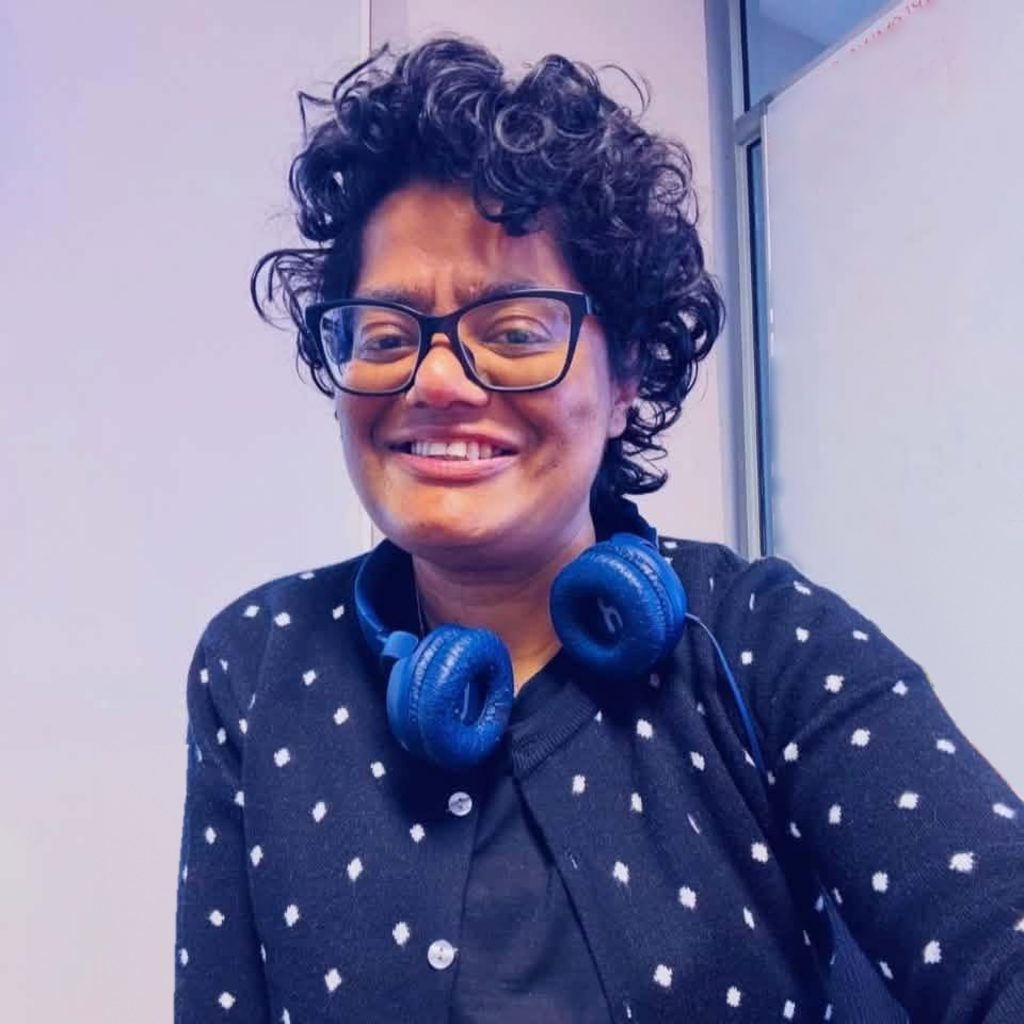
shazia