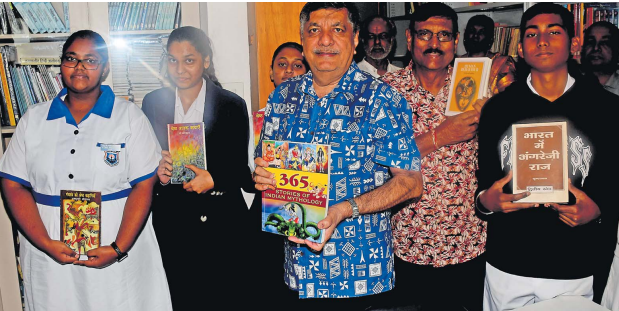
A public library was once more than a building filled with books. It was a place of discovery, imagination, concentration and opportunity. For children without many books at home, a regional library opened the door to a much bigger world.
I remember spending hours in regional libraries during my school days. I browsed shelves, read newspapers and magazines, searched for homework information and sometimes sat quietly with a thought-provoking book. There was something special about finding a book, opening it and becoming mesmerised in its pages.
Today, many young Fijians appear to have a different relationship with public libraries. The question is not whether libraries remain relevant. They do. The real question is how to make them attractive and useful to Generation Beta.
A valuable national resource
FIJI’S public libraries have long provided free access to information, education, recreation and personal development.
Government services have included the Nasese Public Library, Western Regional Library, and public libraries in the Western and Northern divisions, including Ba, Tavua, Rakiraki and Savusavu. Beyond books, services have included borrowing, reference assistance, computers, internet access, printing, scanning and photocopying. Collections have featured fiction, non-fiction, children’s books, reference resources, newspapers, magazines, Pacific collections and easy-reading materials.
A public library remains one of the few places where children can access a substantial body of knowledge without paying. This is an important social resource, yet libraries no longer seem to occupy the same place in many young people’s lives. They provide a shared space for study and learning regardless of family income.
Why are fewer young people visiting?
Technology is an obvious factor. Smartphones provide quick access to books, videos, articles, dictionaries, encyclopaedias and educational websites. Social media, YouTube, gaming and streaming services also compete for young people’s attention.
During National Library and Literacy Week in 2024, Fiji’s Ministry of Education acknowledged that some people consider libraries outdated because smartphones and tablets put information at their fingertips. However, it emphasised that libraries remain important for knowledge, inclusion and access to information. The challenge is not technology itself, but how it is used.
A smartphone can support learning, but it can also distract. Having access to Google does not guarantee understanding. Libraries encourage learners to browse, compare, question, concentrate and make unexpected discoveries. Such habits can be difficult to develop through constant scrolling.
Physical books also offer time away from notifications and constant scrolling.
Some young people may not know what their local library offers. Others may find it uninviting if collections seem old, opening hours are inconvenient or activities for children and teenagers are limited. School, sport, tuition, employment, household responsibilities and entertainment also compete for their time. Libraries should ask students what keeps them away and what would encourage visits.
COVID-19 disrupted library and school library services, while public library use was restricted. Libraries also need adequate staffing. A 2025 report raised concerns about schools without dedicated library staff, making it harder to monitor usage and maximise available resources.
Do not abandon public libraries
Declining visits should not lead us to declare libraries obsolete. Instead, we should reinvent them for modern learners, not by replacing books with computers, but by combining the strengths of both.
The recent launch of the Library Services of Fiji website is encouraging. It is expected to offer digital books, journals, newspapers and learning materials in English, iTaukei, Hindi, Fiji Hindi and Rotuman. Physical libraries supported by strong digital services could become community learning hubs where students research, attend literacy programmes, receive homework support and take part in educational activities. This approach combines digital tools with guidance, reading and shared community spaces. Libraries should remain welcoming to readers who need print materials as well as learners who prefer digital access.
What can schools do?
Schools have an important role. Library visits should be a regular part of the school programme, not an occasional activity. This helps make reading an expected and valued part of learning.
Each class could have a weekly library period with purposeful tasks: finding information, comparing books, preparing presentations, researching a local historical figure or exploring Fiji’s environment and culture. Schools could also visit nearby public libraries and partner with them to hold reading competitions, book clubs, storytelling, debates, writing competitions and research challenges. These tasks build skills in finding reliable information, using evidence and communicating findings.
Teachers should recommend library resources for assignments so that students see libraries as relevant to everyday learning. Teachers also need to model reading. Book recommendations can connect reading with students’ interests and academic goals.
Parents matter enormously
Parents cannot leave literacy entirely to schools. Children who see adults reading learn that reading matters. Parents can take children to libraries, help them choose books and make visits a family routine, perhaps one Saturday morning each month. Rather than automatically turning to smartphones when children are bored, adults can encourage them to read, explore or create. Books about Fiji’s history, cultures, languages, environment, personalities and communities can also help young people understand their own country. Borrowing books is an affordable way for families to explore interests and build reading habits.
Libraries must become more youth-friendly
Libraries themselves must listen to young people if they want them to visit.
Libraries could offer teenage sections, contemporary fiction, graphic novels, children’s literature, examination resources and materials on technology, science, business, climate change, sport and popular culture. Activities might include reading clubs, homework support, storytelling, creative writing, public speaking, debating, digital literacy and research skills.
Community groups, universities, teachers, writers and retired professionals could volunteer to help. Young people could help plan events and recommend titles, creating ownership. Activities should include Fiji’s languages and stories alongside international resources.
Comfort matters too. Good lighting, seating, ventilation, internet access, charging facilities and quiet study areas can make libraries more welcoming. Librarians should be recognised not merely as custodians of books, but as educators, information specialists and community facilitators. Updated collections, regular maintenance and clear opening hours are equally important.
Reasons for optimism
There are reasons for optimism. In 2026, a new library opened at Cautata District School in Tailevu, equipped with books, learning materials, digital devices and other resources. The Ministry reported that 633 of Fiji’s 745 primary schools and 159 of 181 secondary schools had functioning libraries.
Community initiatives also show what is possible. A village near Savusavu recently established a community library through the efforts of local women, with books and learning resources donated by residents and partner organisations. When communities believe in libraries, they can flourish. Partnerships among schools, community groups, businesses and donors can help sustain services.
The way forward
We should not assume that online information makes libraries unnecessary. A child searching Google may find an answer; a child reading a book may discover a question. Education involves more than collecting information. It develops curiosity, concentration, critical thinking, imagination and the ability to understand different perspectives. Libraries can nurture these qualities. Libraries can also teach learners to evaluate sources and recognise misinformation.
Let us make libraries places where students can complete assignments, discover authors, learn about Fiji’s history, use computers, join reading clubs, meet others or simply sit and read.
The future of Fiji’s public libraries should not be a choice between books and technology. It should bring them together. Libraries can once again help young minds discover that the world is larger than what lies immediately before them. Perhaps today’s generation will one day remember their school days and say, “We used to spend hours and hours in the library.” That would be a wonderful legacy!
RAVNIL NARAYAN is a Senior Lecturer in Applied Linguistics in the School of Communications, Language and Literature at The Fiji National University’s, Lautoka Campus. He has published his latest book titled, Winds of insight: rethinking life, learning, and language. The views expressed in this article is his own and not of the affiliated institution or this newspaper. For comments: email at ravnilnarayan@gmail.com.