
ON May 19, 2026, the Chinese Embassy in Fiji published full-page articles in The Fiji Times asserting that Taiwan is unquestionably part of the People’s Republic of China and that the “One China Principle” is an established legal and historical fact.
Such claims deserve careful scrutiny.
The Taiwan issue is not simply a matter of repeating political slogans. It is a complex question involving international law, historical interpretation, democratic legitimacy, and present-day geopolitical reality. To present Beijing’s position as beyond dispute risks misleading readers and oversimplifying one of the world’s most sensitive international issues.
First, UN General Assembly Resolution 2758 did not determine Taiwan’s sovereignty.
The resolution, adopted in 1971, decided only which government would occupy China’s seat at the United Nations. It did not state that Taiwan belongs to the PRC, nor did it authorise Beijing to represent the people of Taiwan internationally. This distinction has been repeatedly emphasised by legal scholars and by democratic governments around the world.
Equally important is a simple historical fact: the People’s Republic of China has never governed Taiwan.
Since the establishment of the PRC in 1949, Beijing has never administered Taiwan, conducted elections there, exercised judicial authority there, or collected taxes from its people. Taiwan today has its own constitution, military, elected government, passport, currency, and democratic institutions. Whatever one’s political position may be, these realities cannot honestly be denied.
History is also far more complicated than Beijing’s narrative suggests.
Taiwan was only formally made a province of the Qing Empire in 1887, and just eight years later it was ceded permanently to Japan under the Treaty of Shimonoseki. For 50 years Taiwan developed separately from China under Japanese administration. After World War II, the 1951 San Francisco Peace Treaty required Japan to renounce Taiwan, but it did not specify which government would receive sovereignty over the island. That unresolved status remains one reason why many countries maintain a carefully worded “One China policy” rather than accepting Beijing’s “One China principle.”
Most importantly, Taiwan today is not merely a historical question — it is a living democracy of 23 million people.
Taiwan holds free elections, protects freedom of speech, maintains an independent judiciary, and operates as one of Asia’s most vibrant democratic societies. The overwhelming majority of Taiwanese people have never consented to rule by the PRC, nor have they accepted Beijing’s “One Country, Two Systems” model.
At the same time, cross-strait relations are increasingly defined not by peaceful “family reunification,” as portrayed in the Chinese Embassy articles, but by military pressure. Large-scale PLA exercises, missile deployments, air incursions, cyber activities, and diplomatic coercion have become routine features of Beijing’s policy toward Taiwan.
This matters not only to Taiwan, but to the wider Pacific.
Pacific Island countries, including Fiji, have every sovereign right to maintain diplomatic relations with China. However, diplomacy should not require unquestioned acceptance of politically selective historical narratives or disputed legal claims. Stability in the Taiwan Strait directly affects regional trade, freedom of navigation, and Indo-Pacific security.
The people of Fiji deserve access to balanced perspectives on issues of international importance. Open discussion — not one-sided propaganda — is the foundation of a free and informed society.
The future of Taiwan should ultimately be resolved peacefully, without coercion, and with respect for the democratic will of the Taiwanese people themselves.
That is not a radical position. It is a principled one.
JOSEPH CHOW is a representative of the Taipei Trade Office in Fiji. The views expressed are the author’s and do not necessarily reflect the views of this newspaper.
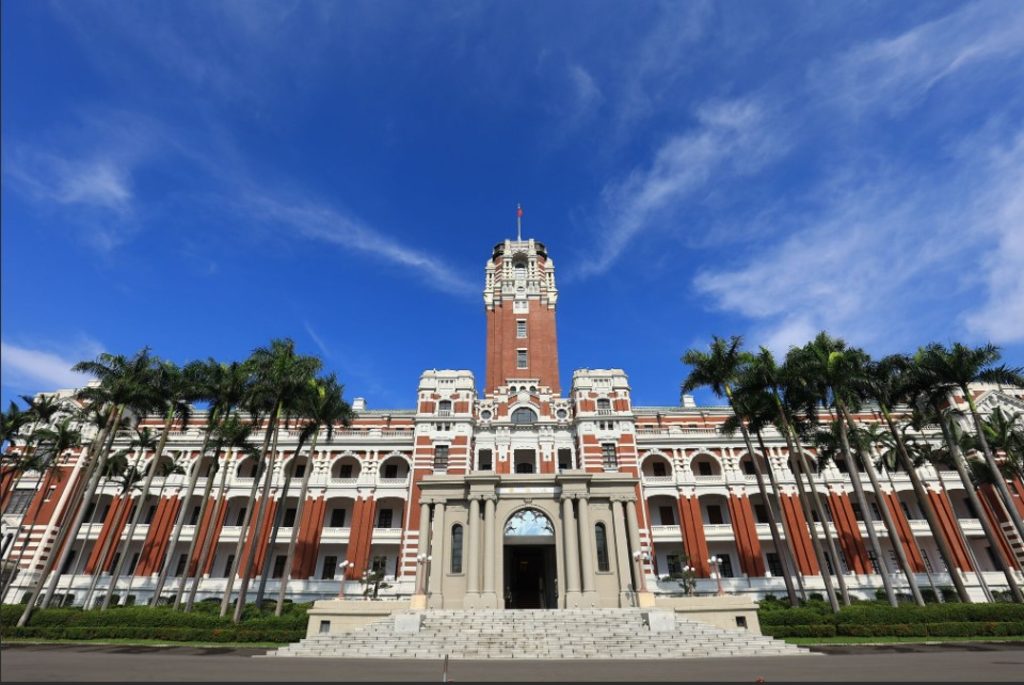
President’s Office in the Taiwanese capital of Taipei. Picture: SUPPLIED
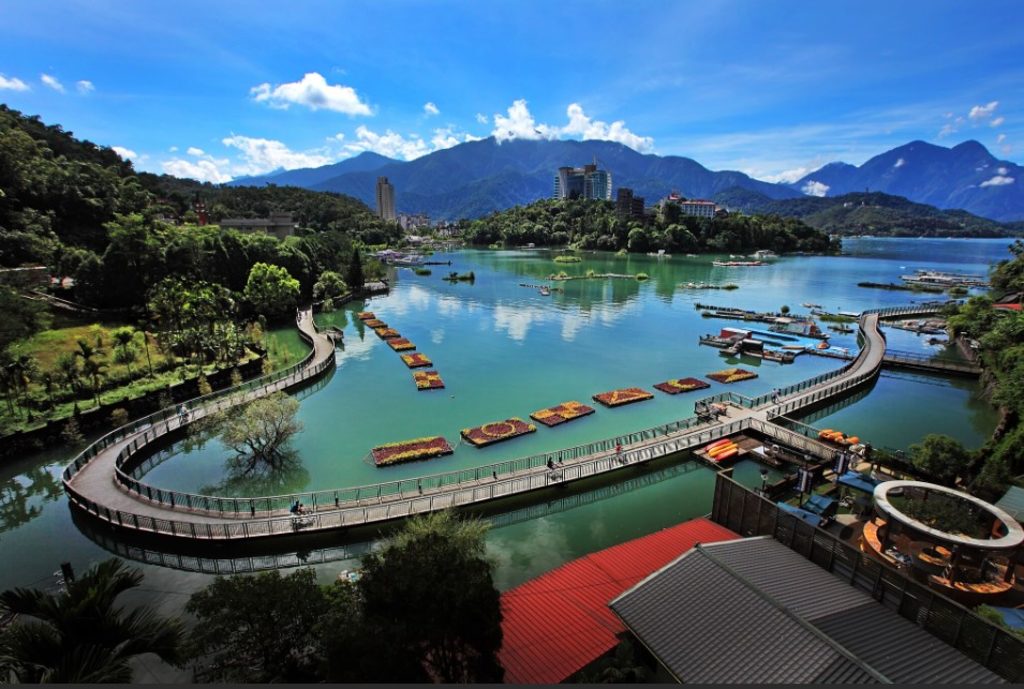
Sun Moon Lake,Taiwan.
Picture: SUPPLIED

