The make: How Fiji built the foundations of a productive economy
Fifty-six years after independence, Fiji has a much larger economy than it had in 1970.
More businesses, buildings, vehicles, hotels, government spending and economic activity.
But a bigger economy raises a more important question:
What have we become capable of producing?
Development is not simply about economic growth. It is about building the knowledge, technology, infrastructure, enterprises and skills needed to produce increasingly valuable goods and services.
To understand Fiji’s challenges today, we must examine the productive foundations we inherited, developed and, in some cases, subsequently lost.
Building on the foundations
At independence in 1970, Fiji inherited an economy built around sugar, agriculture, forestry, fisheries, tourism and supporting infrastructure.
These foundations were uneven. Sugar dominated merchandise exports, the domestic market was small, and Fiji depended heavily on imported manufactured goods and overseas markets.
But the country possessed productive enterprises, technical skills, infrastructure and institutions upon which further development could be built.
During the 1970s and 1980s, investment expanded manufacturing, infrastructure and domestic production.
Industries developed around food processing, beverages, building materials, timber products, garments and other manufactured goods.
The Monasavu hydroelectric scheme, commissioned in 1983, demonstrated the potential of strategic investment, developing engineering capability while reducing dependence on imported fuel for electricity generation.
Manufacturing also expanded
International Monetary Fund historical data indicate that Fiji’s real manufacturing value added increased from approximately $F59million in 1975 to $F95million in 1986, measured at 1977 prices – growth of approximately 61 per cent.
But progress was uneven. Manufacturing growth slowed during the early 1980s, and the sector remained relatively modest. Some industries depended on protection, imported inputs and a small domestic market.
Fiji was building productive foundations, not completing an industrial transformation.
Building the foundations of a modern economy
Development extended beyond farms and factories.
Schools, technical colleges, teacher training, the University of the South Pacific, the Fiji School of Medicine and nursing institutions developed human capability. Hospitals and public health services strengthened communities and the workforce.
Roads, bridges, seaports, airports, electricity, water supply and telecommunications connected people, production and markets.
The Reserve Bank of Fiji, development finance institutions, commercial banking, public finance, economic planning, agricultural extension, research and technical standards supported investment and enterprise development.
Government ministries, the civil service and regulatory institutions provided the machinery for national planning, coordination and public services.
Many of these foundations predated independence; others were established or expanded as Fiji developed its capabilities as an independent nation.
Together, they formed the human, physical, financial and institutional foundations of a productive economy.
Their economic value, however, depended on the productive activities they enabled.
A factory produces more than its products
A manufacturing enterprise develops more than goods.
It requires machinery, engineering, maintenance, production planning, quality control, technical training and management.
Food processing develops preservation, hygiene and packaging skills. Building-materials manufacturing requires mechanical maintenance, laboratory testing and industrial process control. Timber processing supports machinery operators, technicians and logistics.
These industries create demand for suppliers, transport and specialist services.
Workers gain technical knowledge. Engineers solve production problems. Managers improve efficiency and quality.
Over time, these capabilities support more sophisticated industries.
That is how economies progressively move into higher-value production.
State-owned enterprises: building national capability
Building these capabilities also required strategic public investment.
In a small developing economy, private investment alone could not always provide the infrastructure, essential services and industries Fiji needed.
State-owned enterprises and development institutions helped build capacity in electricity, transport, agriculture, fisheries, livestock and other strategic sectors.
Their contribution extended beyond commercial returns to employment, technical skills, essential services and national resilience.
Not every enterprise succeeded, and public ownership did not guarantee efficiency.
But the underlying principle was important:
Where essential services, infrastructure or productive capabilities were missing, Fiji used public investment to help build them.
Pacific cement: The value of integrated manufacturing
The Pacific Cement plant, built in 1968, formed part of the industrial foundation Fiji inherited at independence.
My experience at Fiji Industries from 1994 illustrates the technical capabilities subsequently developed around that foundation.
The company operated an integrated cement-manufacturing process.
Raw materials were prepared, clinker manufactured, cement ground, products tested and machinery maintained through specialised engineering systems.
This required expertise in high-temperature operations, chemical control, mechanical and electrical engineering, laboratory testing, production management and quality assurance.
The enterprise developed technicians, engineers, laboratory personnel, tradespeople and managers capable of operating complex industrial systems.
Not every manufacturing process remains competitive indefinitely. Technology changes, plants age, competition intensifies and investment requirements increase.
The lesson is not to preserve every industrial activity regardless of cost.
Production builds the next layer of the economy
Productive industries create opportunities for further development.
Agriculture supports food processing. Processing creates demand for packaging, refrigeration, machinery, quality testing and logistics.
These activities generate opportunities for engineering, technology, technical training and business services.
Similar connections emerge from construction materials, timber products, fisheries and other industries.
The development process can be expressed as:
Productive Investment Production Technical Learning Value Addition Higher Productivity Skilled Employment Greater National Wealth
This progression is not automatic. It requires competitive enterprises, technology, capable management, finance and markets.
The more sophisticated a country’s capabilities, the greater its potential to compete, innovate and raise real incomes.
The unfinished transformation
Fiji’s pre-1987 economy was not a golden age of industrial development.
Sugar dominated merchandise exports. Manufacturing remained relatively narrow, and some enterprises depended on protection rather than international competitiveness.
A small domestic market, imported inputs and limited scale constrained development. Manufacturing growth had already slowed before 1987.
Nevertheless, Fiji had accumulated important infrastructure, institutions, industrial capabilities and technical skills.
Fiji needed to move from basic production into higher-value industries, and from employment creation into sustained productivity and real-wage growth.
That transformation remained unfinished.
Foundations are not the finished building
Fiji’s economic history should not be reduced to a claim that everything worked before 1987 and everything failed afterward.
But neither should we overlook what Fiji had achieved.
From a small island economy, Fiji developed the infrastructure, institutions, industries and skills of a modern nation. It emerged as a regional centre for education, healthcare, commerce and public administration.
Fiji was building capabilities that other developing countries also sought to establish. Some have since advanced considerably further.
The nation became celebrated as “The Jewel of the Pacific” and associated with “The Way the World Should Be”—expressions of its appeal, promise and potential.
But foundations are not the finished building.
Fiji had the opportunity to turn its emerging capabilities into a diversified, high-productivity and prosperous economy.
How did a nation with such promise lose momentum in its productive transformation?
That is the question examined in Part 2.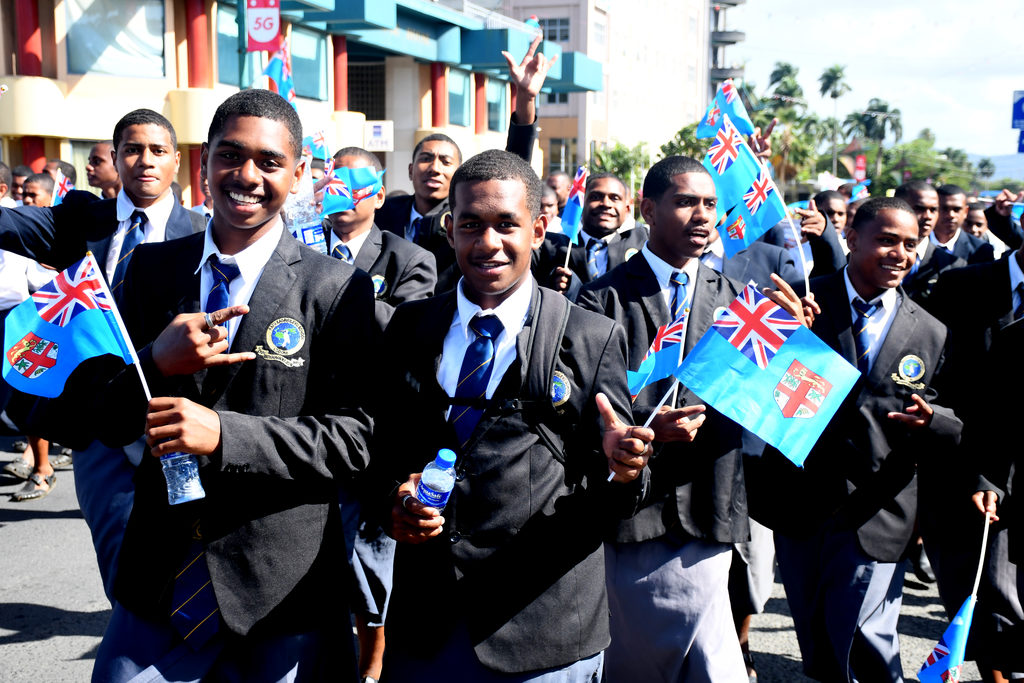
Ratu Kadavulevu School students celebrate Fiji Day during a march from the Suva Flea Market to Albert Park. Picture: JONA KONATACI
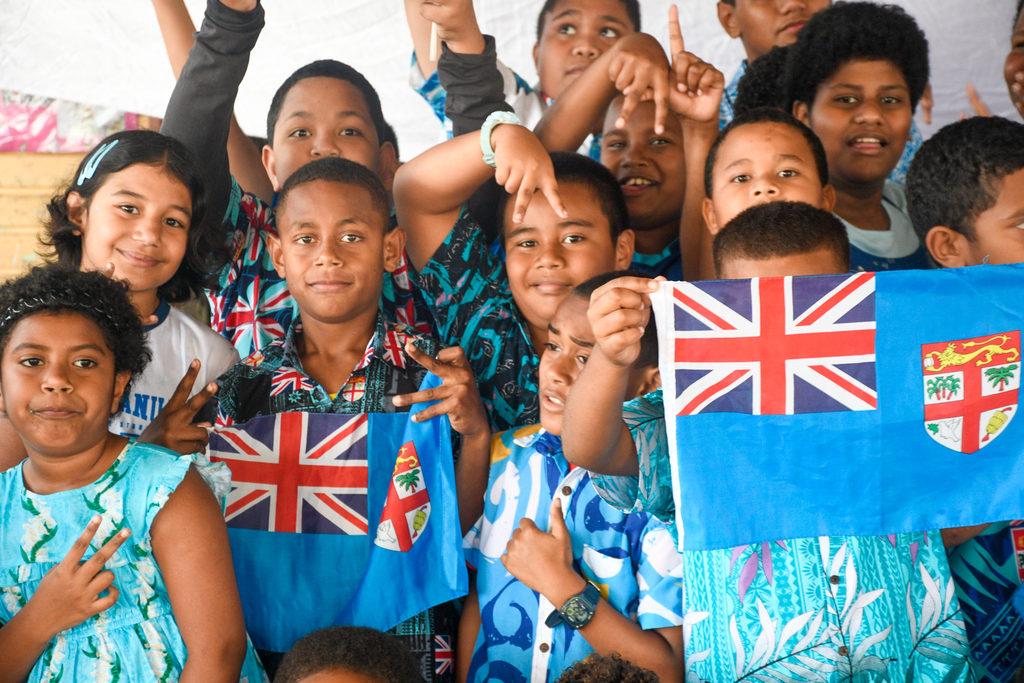
Students of Suva Primary School during their Fiji Day celebration at the school along Rewa Street, Suva.
Picture: TIMOCI DAWAI
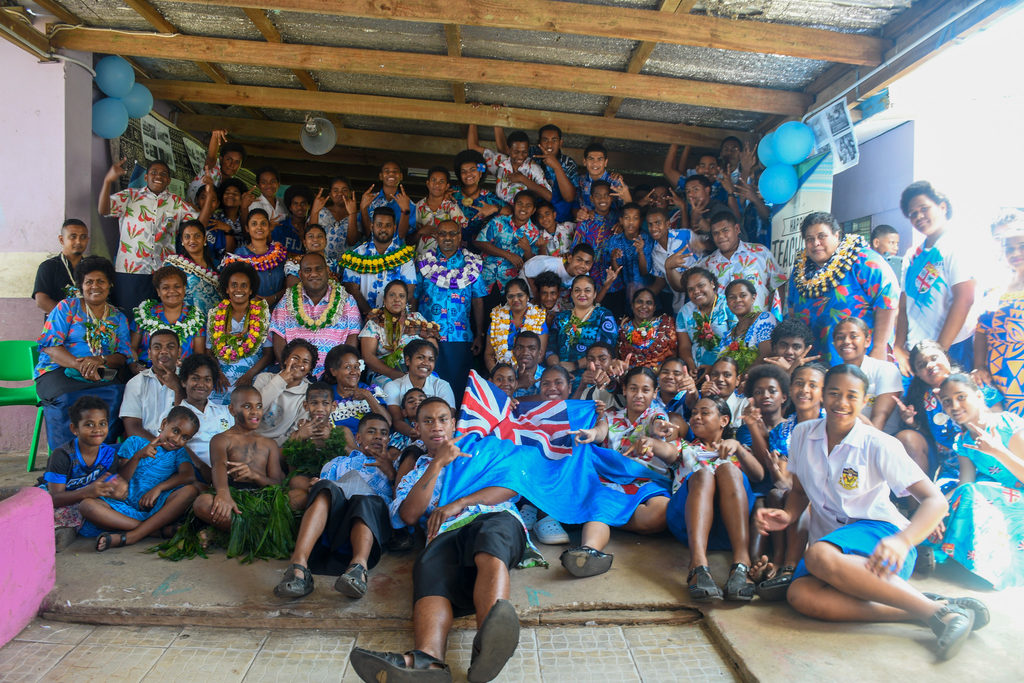
Students and teachers of Kalabu Secondary School during their Fiji Day celebration at the school in Kalabu, Nasinu.
Picture: TIMOCI DAWAI