
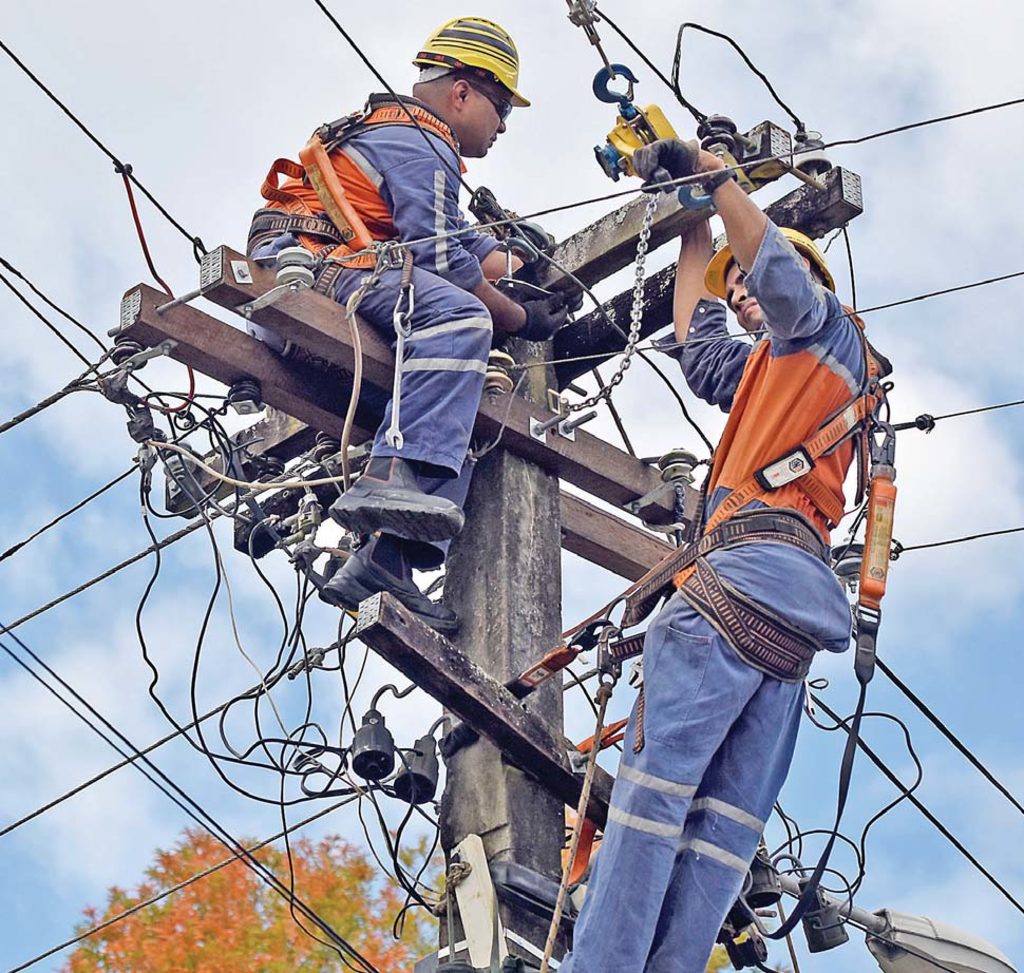
Chugoku Electric paid $1.3 billion for Fiji’s grid. It cannot weather a commodity cycle. And Rabuka is signing cheques to a company he once called a secrecy operation.
ON April 26, 2026, Prime Minister Sitiveni Rabuka addressed the nation on fuel, citing storage volumes and tanker schedules with the assurance of a man who had answered the question.
He had not.
In every fuel crisis in the modern era, supply has almost never been the problem.
Tankers arrive.
They always arrive.
The crisis is the price. While Rabuka spoke about litres in storage, three distinct extractions were being simultaneously processed against Fijian consumers and taxpayers.
First: a permanent base electricity tariff increase of three to six percent for domestic users, higher for commercial operators, effective January 1, 2026.
Second: an unconditional four-month fuel rebate to Energy Fiji Limited of 20 cents per litre on diesel and 12 cents per litre on heavy fuel oil, drawn from the $56 million emergency budget with no consumer price guarantee and no dividend restriction.
Third, submitted April 27, 2026: a proposed three-month emergency surcharge of 11 cents a kilowatt hour on top of the January-increased tariff.
Tariff hike. Public subsidy. Consumer surcharge. All three active simultaneously. All three directed at the same utility.
Fiji’s largest commercial privatisation is producing a triple-dip on the Fijian economy.
A $1.3 billion fiduciary failure
Energy Fiji Limited is 44 percent owned by overseas and foreign-owned Japan’s Chugoku Electric Power Company in a transaction valued at $1.3 billion, the largest commercial deal in Fiji’s history.
When a foreign conglomerate of that standing acquires a regulated natural monopoly, it acquires with it a non-negotiable fiduciary obligation to consumers who have no alternative provider and no competitive market to turn to.
Fijian businesses and households had every reasonable expectation that an entity backed by institutional Japanese capital would manage commodity price volatility through hedging instruments, forward procurement contracts and the financial reserves that define competent utility governance.
EFL has not disclosed whether it holds any fuel price hedging position.
A utility of this capitalisation, with access to Tokyo’s capital markets, is expected as a matter of basic corporate governance to hold such instruments.
The Fijian businesses absorbing its cost shock are entitled to know whether it does. If Chugoku could not deliver commodity resilience for $1.3 billion, the asset was underpriced.
Fiji sold its grid for less than its fiduciary burden demanded. That is not a Fijian problem to solve. It is a Chugoku obligation to honour.
What this costs Fijian business
Fijian-owned businesses have absorbed the fuel crisis in compounding layers. Supply chain costs climbed through 2025.
January 2026 delivered a proposed permanent commercial tariff increase, higher in percentage terms for businesses than the domestic rate.
Now a three-month emergency surcharge of 11 cents a kilowatt hour is being processed for approval.
A Fijian-owned small business running 2000 kilowatt hours a month — a bakery, cold storage operator, hardware merchant, or restaurant already squeezed by fuel-driven inflation — absorbs $220 added to the monthly electricity bill.
That is $660 over three months extracted from the margin of a Fijian entrepreneur with no offshore shareholder to absorb the shortfall, no Tokyo capital market to draw on, and no mechanism to pass the cost up a supply chain already under maximum pressure.
This $660 does not circulate in the Fijian economy.
It flows into the cost recovery account of an entity whose dividends are 44 per cent Japanese.
The Fijian small business sector is not a surrogate balance sheet for a foreign conglomerate’s commodity exposure.
Secrecy that Rabuka once condemned
Under the Audit (Exemption) Regulations 2021, Energy Fiji Limited is legally shielded from audit by Fiji’s Auditor General.
EFL’s accounts, fuel procurement contracts, hedging positions and dividend flows to Chugoku Electric are not subject to independent public scrutiny.
When the government transfers four months of diesel rebates from consolidated national revenue, there is no independent public mechanism to verify how those funds are applied, whether they reduce the cost burden they were designed to address or whether the claimed shortfall justifying the FCCC surcharge survives after the rebate is netted.
Prime Minister Rabuka, before taking office, publicly denounced this exemption, characterising it as business conducted in secrecy.
He was correct.
An entity receiving public subsidies, operating a natural monopoly and processing a consumer surcharge application through a statutory regulator has no legitimate basis for audit exemption.
What has changed is that Rabuka is now the Prime Minister signing public-funded rebate cheques to the same company whose secrecy he once condemned.
The Audit (Exemption) Regulations 2021 remain in force. The books remain closed.
The 24-hour chairman
The FCCC’s trajectory on this surcharge cannot be read without documenting Christmas Eve 2025, reported by the Fiji Times and FBC News.
Following public outrage over EFL tariff increases, Minister for Commerce Esrom Immanuel removed FCCC chair Cecil Browne and appointed Joel Abraham — the former chief executive who built the Commission’s regulatory architecture across thirteen years, with qualifications spanning accounting, economics, finance and public law, and whose tenure prompted Deputy Prime Minister Manoa Kamikamica to state publicly that consumers were better off under his leadership — as the new chairman for three years, effective Christmas Day. Abraham was known to intend an immediate tariff review.
Within 24 hours the appointment was rescinded.
Browne was reinstated. Immanuel stated Abraham had chosen to focus elsewhere. Fiji Global News reported internal FCCC communications showing CEO Senikavika Jiuta expressing confusion over ministerial statements she said contradicted prior approvals.
A chairman removed within one day for intending to scrutinise EFL is not an administrative irregularity.
It is documented interference in an independent statutory regulator at the precise moment public pressure demanded accountability.
Greenhorns, implied threats, legal risk
The FCCC has announced an expedited review with targeted consultations.
It has stated publicly that EFL’s financial stability is important to ensure reliable electricity delivery.
That framing is not regulatory neutrality. Buried within it is a threat that competent regulators never permit into their public discourse: approve this surcharge or supply reliability is at risk.
No independent regulator accepts corporate sustainability as a parameter of its own assessment.
It demands proof, documents and independent verification.
The Commission has not announced an independent audit of EFL’s net fuel cost position after the government rebate is deducted — the single most basic step forensic regulatory review requires.
The FCCC’s own statutory procedural requirements under the Commerce Commission Decree include public consultation periods for surcharge determinations.
An expedited process compressing those requirements is not merely poor practice.
It is potentially unlawful and vulnerable to immediate challenge in the High Court.
Any surcharge approved without full procedural compliance hands Fijian businesses a direct path to judicial review.
The verdict
The FCCC must not issue any surcharge determination without first commissioning a fully independent external audit of EFL’s net fuel cost position.
That audit must quantify the government rebate already received, deduct it from EFL’s claimed shortfall, and limit any approved surcharge to the verified uncompensated balance only.
Any approved charge must carry explicit, published, quantitative removal triggers — specific fuel price benchmarks at which it is automatically withdrawn.
Temporary surcharges in Pacific utility regulation have a documented history of becoming permanent fixtures long after the conditions justifying them have passed.
Prime Minister Rabuka must account publicly for why the Audit (Exemption) Regulations 2021 remain in force for a utility receiving unconditional public funds, when he himself denounced those arrangements as secrecy before taking office.
Chugoku Electric paid $1.3 billion for 44 percent of Fiji’s grid. That price carried every fiduciary obligation Fijian businesses were entitled to expect.
It did not purchase the right to present those businesses with the bill for its own commodity risk failure.
Fiji’s Fijian-owned enterprises are the productive backbone of this economy.
They are not a contingency fund for a foreign conglomerate.
They have been squeezed enough.
DR SUSHIL K SHARMA BA MA MEng (RMIT) PhD (Melbourne), is a World Meteorological Organisation accredited Class 1 Professional Meteorologist, a former Associate Professor of Meteorology at the Fiji National University and Manager Climate Research and Services Division at the Fiji Meteorological Services. The views expressed are those of the author alone and not of this newspaper.
SKS mugshot for Pix Byline

