In Tokyo, I know Diwali is approaching because a date appears on my phone. In Lautoka, I knew because somebody was washing curtains, somebody was testing lights, and excitement had begun creeping along the roads of Kashmir. Children are selfish about festivals; we imagine the sweets, decorations and happiness simply arrive because we have waited long enough. Only after leaving Fiji did I understand how many people worked to make those evenings possible. What I miss most is not the fireworks, but being young enough to mistake other people’s love for magic.
USUALLY, the first announcement was a fresh Shanti Dut at our house or my mama’s, its glossy Lakshmi cover promising celebration. I studied recipes I never attempted and, morbidly, the obituary photographs, checking familiar faces and wondering who would be absent next year. Before social media, its pages were our newsfeed, gossip column and family album. I guarded my copy until someone tore out a page to wrap lunch, reducing my prized newspaper to a roti parcel. Shanti Dut still publishes its Diwali edition; it is the little boy who devoured it on the floor who has disappeared.
At Arya Samaj Primary, heaven had the texture of crepe paper, and decoration duty felt like a promotion. We folded red, green, blue and yellow strips into zigzag patterns, twisting others into garlands and stapling everything across classroom walls. Nothing matched, several decorations sagged, and we admired the result like artists unveiling a masterpiece. I remember how pleased I felt to be trusted with making a room beautiful for everyone else. Perhaps belonging begins like that, with crooked staples, cheap paper and children who cannot imagine being anywhere else.
One year I played Lord Ram, an honour nearly defeated by my footwear. My father and brother spent hours fashioning wooden paduka, the traditional sandals that looked magnificent and felt like furniture strapped to my feet. During the skit, the boy playing Bharat caught his dhoti on one sandal while lifting it, nearly turning our solemn Ramayan into a wrestling match. I recall the laughter far more clearly than my lines. What moves me now is remembering two people spending their evening building something uncomfortable and beautiful, simply because their boy was going to be Ram.
The Saturday before Diwali was Lautoka City’s unofficial festival, when even the pavements seemed dressed up. Women in beautiful sari moved between shops, families from different communities filled the streets, and Navtarang played Deepawali Banaye Suhani through the heat. Rups Big Bear and Courts Fiji competed in loudspeaker warfare, while children counted their coins for sursuriya and admired flicker lights overhead. Somewhere, I would feel guilty about eating chicken curry while the radio praised Lakshmi Mata. That contradiction never troubled Lautoka much; devotion, shopping, hunger and celebration knew how to share the same afternoon.
At home, my brother assumed command of the lights, nursing reluctant bulbs back to life with great seriousness. Our old fireworks came out of cupboards, and we decorated bamboo sticks with crepe paper as though preparing a royal procession. Once, discarded DVDs became shining Om and swastika designs, catching light as they moved in the breeze. The decorations were uneven, homemade and gloriously excessive. They mattered because they announced that this particular household, with limited supplies and unlimited opinions, had prepared itself to welcome something sacred.
My mother’s part in Diwali was harder to photograph, so I understood it last. She cleaned, planned, cooked, arranged and welcomed, while I noticed only the miraculous appearance of full trays. I never wondered how long she stood cooking, or whether the adults were exhausted by the first diya. We spoke of welcoming Lakshmi into a bright, spotless home, but somebody had to do the scrubbing. Now I distrust any praise of tradition that overlooks the hands sustaining it.
My mother also made me place my schoolbooks near the assan and study for 30 minutes during the puja.
Whatever you do on Diwali, she warned, you will do all year, a prospect I found deeply unreasonable. I complied like a prisoner of mathematics, occasionally negotiating with the gods for excellent marks requiring considerably less work. Today I suspect she simply wanted 30 uninterrupted minutes in which I stopped bothering everybody. Yet those books beside the prayers say something about her hopes for me that I was too young to recognise.
Later, boys wandered down our street carrying plastic bags and their irresistible refrain: “Kerekere, bhaini, some sweets?” They possessed the confidence of children who knew their knocks would be welcomed. Doors opened, adults laughed, and small hands collected bara and sweets from people who might otherwise have remained neighbours in passing. Some homes had more to offer than others, but nobody needed an invitation printed on expensive paper. For me, the finest Diwali lights were often those coming through an open doorway.
Night ended in my father’s van as we toured Lautoka, judging each illuminated house against the unbeatable one in Simla. More than the lights, I remember riding together with nowhere urgent to be. The festival lingered for days in leftover bara, bhajiya, saina and sweets, eaten with afternoon doodh cha. Those leftovers remain my finest memory of afternoon tea. I would trade elaborate celebrations for that van ride, with my family talking over one another.
I left Fiji for New Zealand in 2011, and life eventually carried me through other countries to Japan. I have celebrated around work and time differences, in rooms where nobody outside knew anything sacred was happening.
I chose this life, and it has given me much; longing for home does not cancel gratitude for elsewhere. Still, distance preserves strange details, especially those we scarcely noticed while living them. I can fly back to Lautoka, but I cannot return to a Saturday when everyone I loved was exactly where I expected them.
Our Diwali was not an Indian festival sealed away from the country in which we lived. Descendants of girmitiyas kept faith and language alive, making celebrations with Fiji Hindi, Navtarang, bara and neighbours of other religions. I grew up among Hindu, Muslim and Christian friends, knowing sweets could not settle every difference. Fiji has real divisions, and pretending otherwise serves nobody. Yet there was something worth defending in our willingness to open the door, offer food and recognise another household’s happiness as part of our own.
I wish we had photographed ordinary moments: my father making sandals, my brother untangling lights, my mother finally sitting down. Childhood was not perfect, and I remember the arguments, tired tempers and occasional firecracker that refused to co-operate.
But loving families cannot always recover the precise arrangement of one evening. Parents age, children leave, houses change, and ordinary evenings become worth crossing oceans for. Nobody tells a child that one day he will miss the preparations more than the festival.
This year, I will light a diya and remember the words, “Ek woh bhi Diwali thi, ek yeh bhi Diwali hai.” I hear more than regret; this flame carries something of the lights we hung in Kashmir. Somewhere in Fiji, a child awaits the end of puja, certain sweets and grown-ups will always be there.
I hope that child takes another bara, laughs at the crooked decorations, and remembers to photograph the hands passing the plate. I wish I had known, while I was living it, that those hands were Diwali.
ASHNEEL JAYNESH PRASAD is a Fiji-born New Zealand citizen currently working as a teacher in Shinagawa-ku, Tokyo, Japan.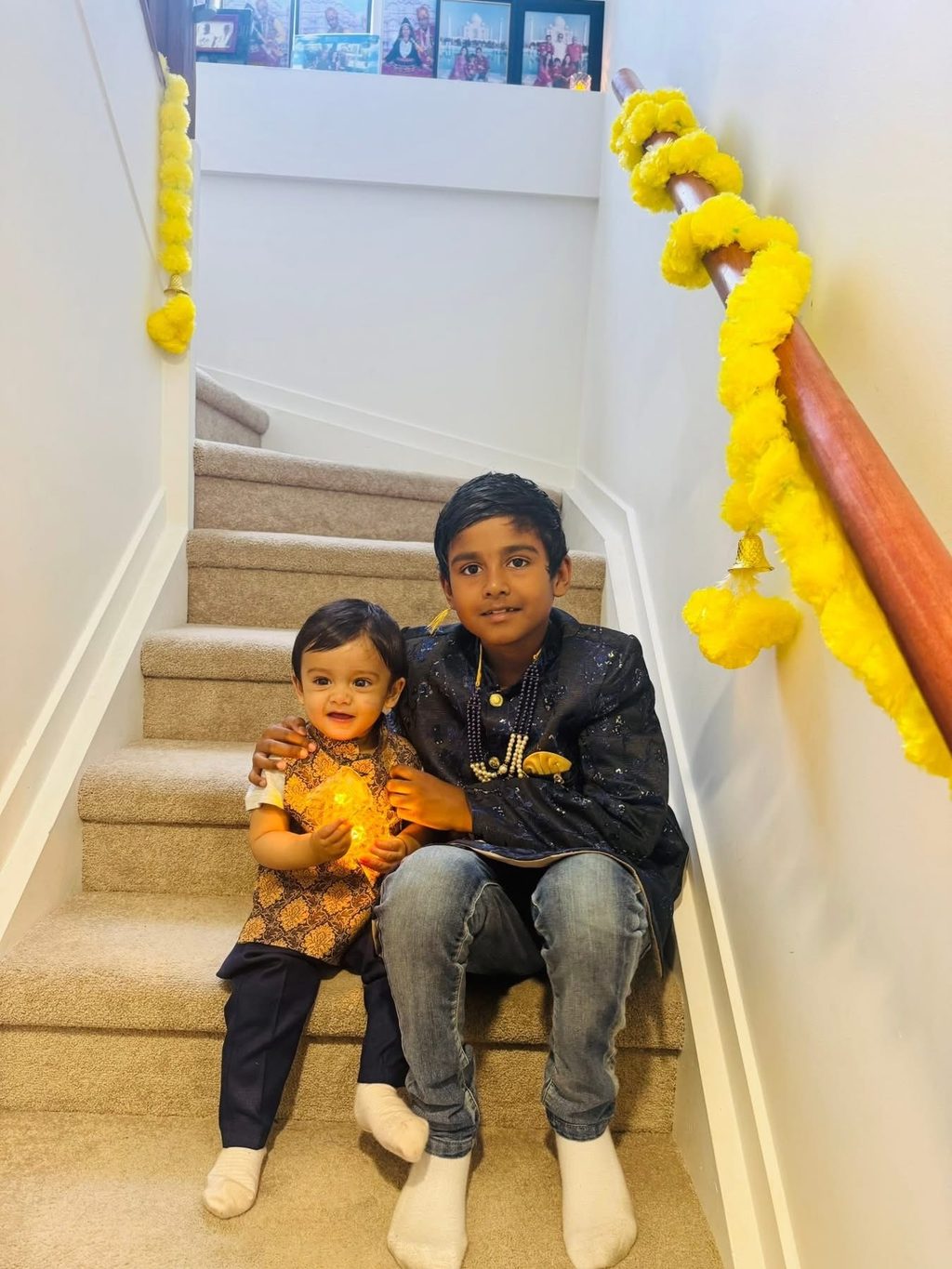
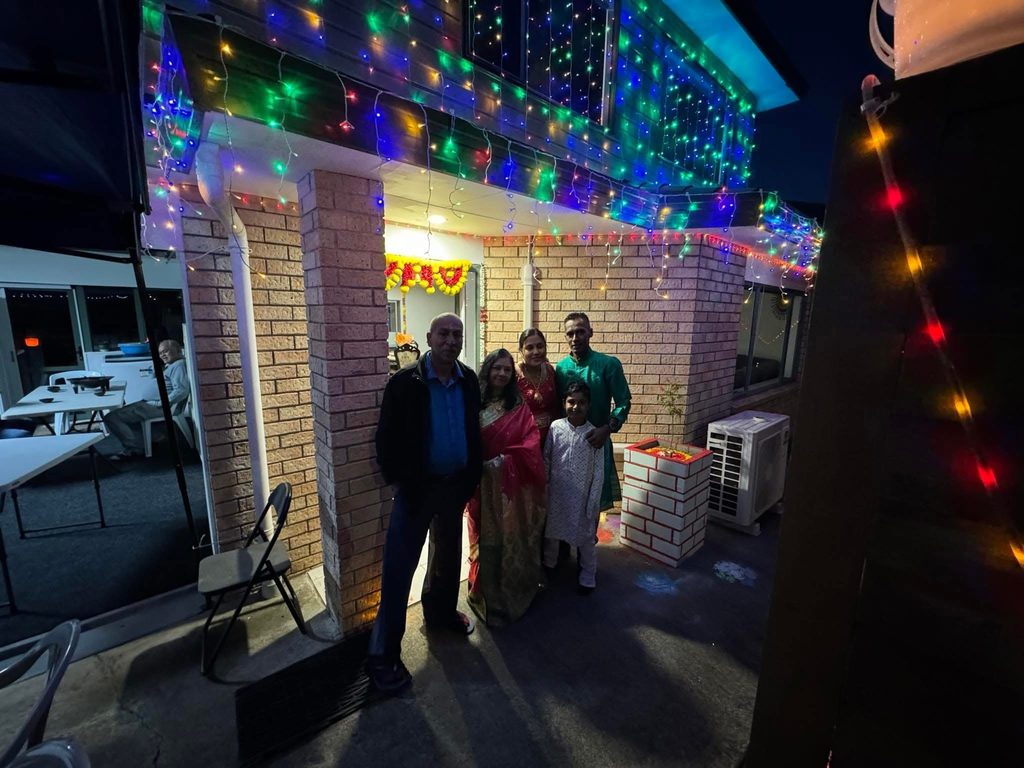
Inset: Aarav and Aarnav Prasad celebrate Diwali in 2025.
Picture: SUPPLIED