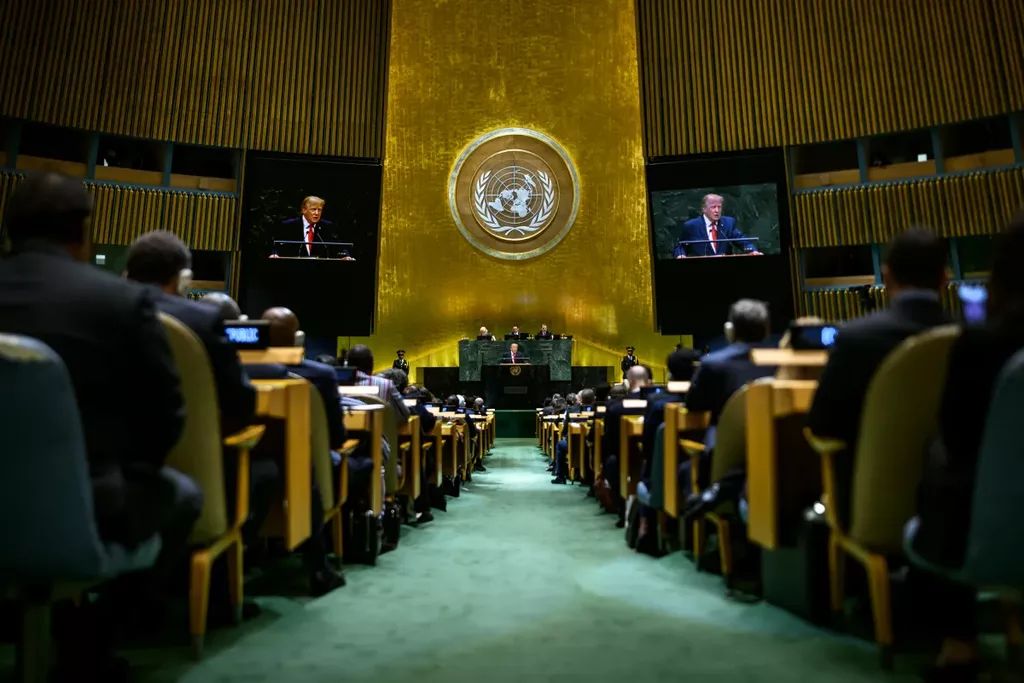
The 81st United Nations General Assembly offered more than the usual parade of national statements, diplomatic language and familiar calls for peace.
Taken together, the contributions from world leaders revealed something deeper about the state of global democracy — the world is increasingly questioning who gets a voice, who makes the rules and who ultimately benefits from the international system.
From Washington to Suva, Nuku’alofa to Nairobi, the message was remarkably consistent, even when the solutions proposed were different.
The international order is under pressure, and confidence in its institutions is being tested.
The question now is whether those institutions can adapt before the gap between their principles and their practice becomes too wide to ignore.
A crisis of representation
Brazilian President Lula da Silva opened the General Debate by stressing the need to restore trust in international institutions, particularly through reform of the UN Security Council.
That concern was echoed even more forcefully by African leaders.
Kenya’s President William Ruto captured the frustration when he argued that the equality proclaimed in the General Assembly effectively ends at the doors of the Security Council.
Africa has 54 UN member states, yet no permanent representation on the council.
South Africa’s Foreign Minister Ronald Lamola pointed to the irony that more than 70 per cent of Security Council resolutions concern conflicts on the African continent, while Africa has no permanent seat at the table.
The Pacific raised a similar concern from a different geographical and historical experience.
Tonga’s Prime Minister Lord Fakafanua argued that too much of the international architecture still reflects the world of 1945 rather than today’s realities.
Representation cannot be meaningful if it does not translate into influence.
That is a democratic principle familiar at home.
Having the right to speak is one thing; having a genuine ability to affect decisions is another.
The Global South wants more than a seat
Political representation was not the only source of frustration.
India’s External Affairs Minister S. Jaishankar highlighted what he described as a global 4F crisis — food, fuel, fertiliser and finance — showing how wars and geopolitical tensions in one part of the world can quickly affect vulnerable populations elsewhere.
His argument was particularly relevant to developing countries.
Disrupted shipping routes, higher energy costs and fertiliser shortages do not remain geopolitical abstractions.
They become higher food prices, greater debt and increased pressure on households.
African leaders made much the same argument about global finance.
Ruto’s call for markets to “price risk, not price prejudice” went to the heart of the problem.
Developing countries argue that they often pay significantly more to borrow than wealthier nations, making it harder to finance development while servicing existing debt.
The proposed African “Borrowers’ Club” and calls to reform the IMF, World Bank and global credit-rating system reflect a growing desire to change the rules rather than simply ask for assistance within them.
The language of the Global South is increasingly one of urgency, ownership and sovereignty.
The Pacific’s warning
The Pacific contributions added another dimension to this debate.
Fakafanua linked climate, oceans and biodiversity, arguing that they cannot continue to be treated as separate issues.
Tonga’s renewable-energy ambitions also demonstrated that Pacific states are prepared to match their demands for international action with domestic commitments.
Fiji’s President Ratu Naiqama Lalabalavu took the argument further by connecting climate change to sovereignty itself.
Rising seas are not merely an environmental concern for small island states.
They raise fundamental questions about territory, maritime boundaries, statehood and political representation.
His call for maritime rights and EEZs to remain legally protected despite sea-level rise is therefore about more than climate policy.
It is an assertion that a country’s sovereignty should not become vulnerable simply because it is suffering the consequences of a crisis it did little to create.
His demand that climate finance move from promises to actual disbursement carried the same frustration expressed elsewhere at the UN.
In essence, the Pacific was and is effectively saying — do not applaud our resilience while withholding the resources needed to sustain it.
Between multilateralism and power politics
French President Emmanuel Macron provided perhaps the clearest philosophical framing of the debate when he asked whether the world wanted to return to a “law of the jungle” or live in a civilised international society.
That tension ran through the entire assembly.
Macron defended multilateralism and international justice while criticising global inaction over Gaza.
Ukrainian President Volodymyr Zelenskyy demanded stronger pressure on Russia but also proposed practical measures, including an energy-grid ceasefire.
US President Donald Trump, meanwhile, drew attention with a more assertive defence of American interests and leadership, including on Iran and artificial intelligence.
These contrasting approaches illustrate the dilemma facing the international system.
There is still strong support for multilateralism, but there is also growing scepticism about whether the existing multilateral institutions can restrain powerful states or respond effectively to crises.
A new democratic question
Perhaps this is the most significant lesson from this year’s UNGA.
The central democratic question of our time may no longer be simply whether people are allowed to vote.
It is whether power is genuinely distributed, institutions are accountable and those affected by decisions have a meaningful voice in making them.
That question is now being asked at the international level.
Africa wants a permanent place in the Security Council.
The Pacific wants its existential concerns reflected in international law and finance.
South-East Asia wants the consequences of geopolitical conflict to be recognised beyond the battlefield.
Latin America wants multilateral institutions strengthened and Ukraine wants international rules enforced.
These are different demands, but they share a common thread.
The old international order is being challenged not only by powerful states, but increasingly by those who believe they have been asked for decades to accept rules they had little role in writing.
The UNGA therefore reflected a world caught between two impulses — the preservation of a multilateral system and the demand to fundamentally reform it.
The danger is that if institutions fail to evolve, people and nations may stop believing that those institutions can deliver fairness.
And that is ultimately a democratic problem.
Because democracy cannot survive on the promise of equality alone.
It depends on people believing that their voice matters.
At this year’s UNGA, much of the world was asking whether that remains true.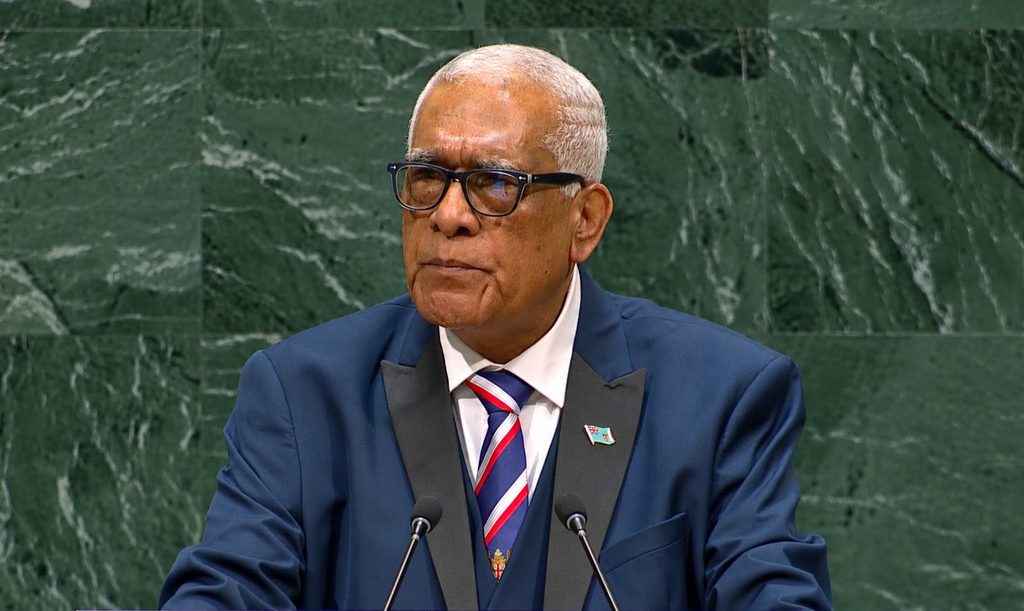
President Ratu Naiqama Lalabalavu delivers his address during the 81st session of the UN’s General Assembly in New York last month. Picture: FIJI GOVERNMENT