
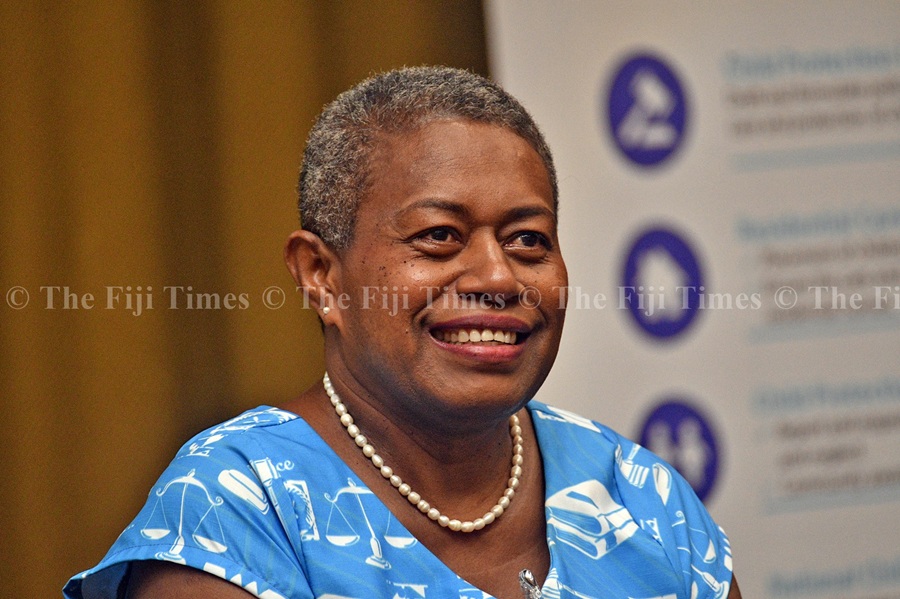
The re-introduction of corporal punishment will normalise violence as a means of instilling discipline, says permanent secretary for Justice Selina Kuruleca.
And this, she adds, contributes to creating abusive or violent adults.
Speaking during the National Conversation on Corporal Punishment earlier this week, Ms Kuruleca said data showed that violent discipline in childhood was strongly linked to violence later in life.
She cited the Multiple Indicator Cluster Survey 2021, which found that 81 per cent of children in Fiji experienced violent discipline at home.
“That means that most of our children grow up learning that fear and love co-exist,” Ms Kuruleca said.
“The problem is that they begin to believe that fear and love must exist together all the time. These effects don’t end in childhood.”
She said children who associated love with fear were more likely to repeat those patterns in adulthood. She referenced a 2011 study by the Fiji Women’s Crisis Centre, which found that 64 per cent of women had experienced physical or sexual violence by an intimate partner.
“Regional studies by Pacific Women Lead and UN Women in 2022 also show that adults who were beaten as children are almost twice as likely to use or tolerate violence in their own homes.”
Ms Kuruleca, a psychotherapist by training, said the first lessons in violence were learned in the home.
“When we normalise violence as discipline, we create citizens who see violence as communication.
“We are the first teachers, and our homes are the first classrooms.”
She said Fijian traditions historically promoted non-violent forms of discipline long before modern psychology and neuroscience explained the harm caused by physical punishment.
“Our cultures already understood this.
“They valued teaching through respect and connection, not fear.”

