
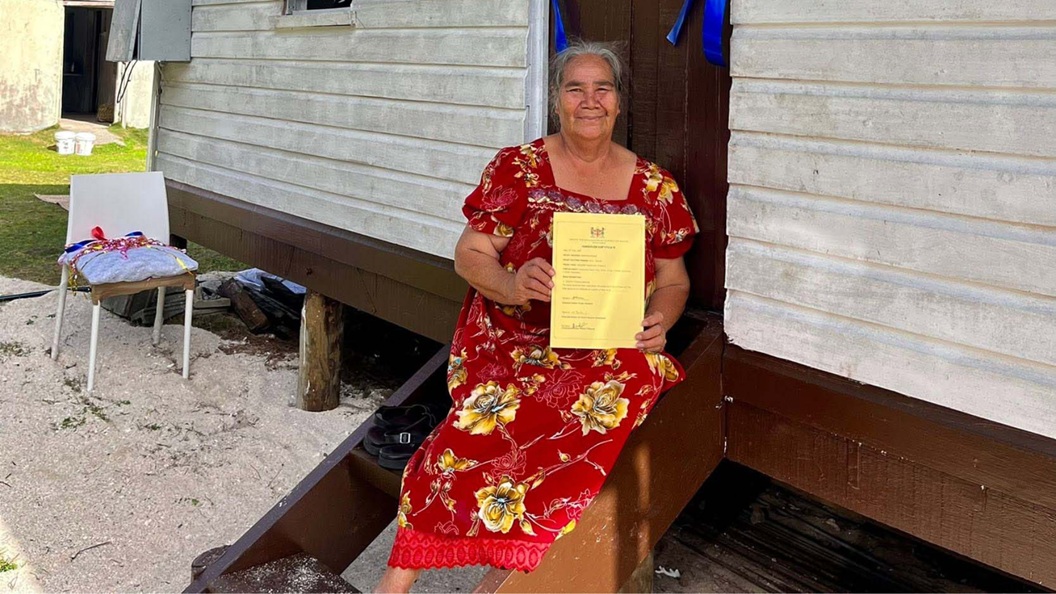
For nearly a decade, 65-year-old widow Semantafa Kafoa faced every heavy downpour with anxiety, watching the roof of her traditional thatched bure leak at Mea Village in the district of Itu’tiu, Rotuma.
Since losing her husband in 2016, Mrs Kafoa has lived entirely alone. Unable to afford a carpenter, she has been relying on the goodwill of neighbours to patch up her deteriorating home every time the weather turned destructive.
That cycle of worry came to an emotional end when Minister for Rural and Maritime Development and Disaster Management Mosese Bulitavu officially handed over the keys to her brand-new home.
The house is part of a project delivered under Scheme 4 of the Government’s Rural Housing Assistance (RHA) Program, a targeted initiative designed specifically to provide safe shelter for social welfare recipients and those living with disabilities.
Overwhelmed with emotion, Mrs Kafoa expressed her gratitude, saying the new house had lifted a long-standing burden from her shoulders.
“I am so happy that I have this new house,” Mrs Kafoa said.
“Before, when it rained, my bure leaked, and I had to depend on others to repair it because I could not afford a carpenter. I thank the Government for giving me a safe home.”
During the handover, Mr Bulitavu said providing a safety net for citizens such as Mrs Kafoa remained a core priority for the State. He reaffirmed the Government’s commitment to ensuring that vulnerable members of society, including the elderly, widows, and persons living with disabilities, have direct access to safe and dignified housing.
Through ongoing rollouts of the Rural Housing Assistance Program, the Government continues to steadily upgrade living conditions for vulnerable households across Fiji’s most remote rural and maritime communities.

