Every resort in Fiji is doing the same thing this month.
Checking the water tanks, testing the generators and reviewing the cyclone plan, because the season opened on November 1 and Fiji Met expects below-normal rainfall through to February.
A dry spell and a storm season at once is a good test of whether you prepared early.
The World Bank’s first Fiji Economic Update, released on October 28, suggests the national economy needs the same kind of check.
The headline numbers deserve serious attention.
The World Bank projects growth of 2.1 per cent this year, recovering to 3 per cent by 2028.
Vision 2050 needs 4 to 6 per cent a year, roughly double our historical rate.
Public debt fell from about 95 per cent of GDP in 2021 to 76.9 per cent in 2025, which is real progress, but it is projected to rise again.
The report says Fiji’s room to respond to future shocks is narrowing.
I read that as a fair assessment, and tourism has no interest in pretending otherwise.
Recovery is not the same as resilience, unless you’re still in business once the storm has cleared and the clean-up is a distant memory.
Tourism helped carry Fiji through the post-pandemic recovery, and it can help carry the climatic next phases, but not on its own.
People often talk about diversification as if it means building something entirely separate from existing industries.
In practice, tourism is the market that other industries can sell into.
Hotels, restaurants, cruise operators and superyachts create demand for farmers, fishers, transport companies, builders, manufacturers and professional services.
The World Bank points to agriculture, fisheries, renewable energy and export diversification as growth areas.
Tourism is already a ready customer for several of them.
The opportunity is to keep more of every visitor dollar in Fiji.
Operators want to buy local, but the barriers are real – but only to those who operate in this environment: consistent supply through the year, quality, volume, pricing and distribution.
A chef cannot build a menu around produce that arrives in “feast or famine” mode.
Fix those, and visitor spending reaches further into communities and can make a significant difference to overseas orders and, therefore, money that can stay right here in the country.
Energy is the other opportunity.
At HOTEC, equipment, freight and energy costs were the pressures operators raised again and again, and the World Bank itself flags higher fuel and shipping costs.
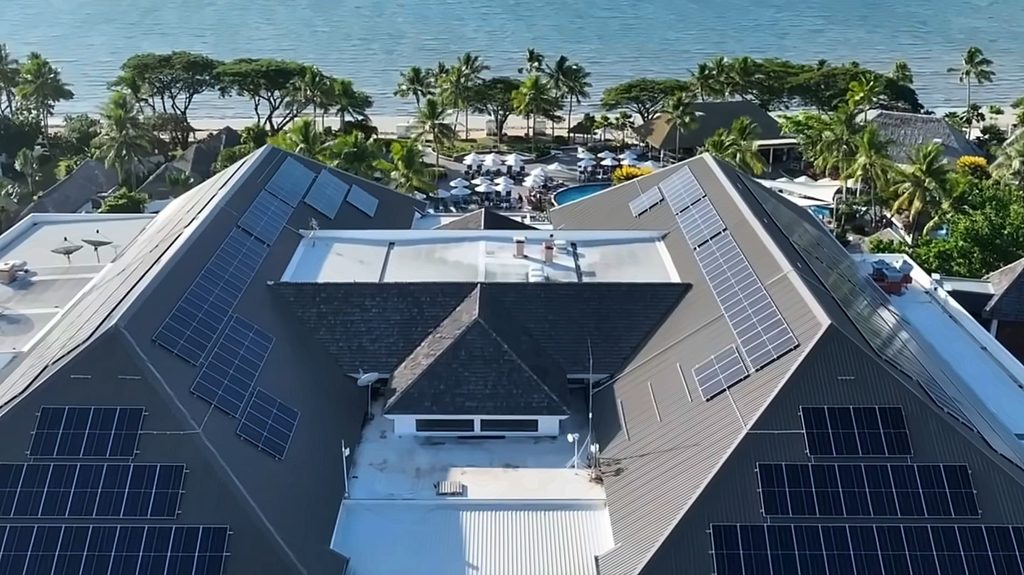
More renewable energy lowers operating costs, shields businesses from price shocks outside our control and builds resilience.
This season makes the point.
Fiji’s hydro system depends on rain falling in the catchment areas higher up and not just around our coastal areas, so a dry spell can become an energy problem as well as a water problem.
Drought is a risk this year, not a certainty, but operators who have diversified their power and water supply will sleep better either way.
Certainly, those who have planned for this outcome add another layer of preparation.
People matter just as much.
The question is not only how many jobs we create but whether Fijians have the training, practical experience and pathways to take them.
That means employers, Government and training institutions working together so that education spending produces measurable employment outcomes, and it means lifting women’s participation in the workforce.
Tourism’s growth should translate into better productivity and stronger local businesses.
Now the harder conversation.
The World Bank argues for rebuilding fiscal buffers, improving the quality of public spending and moving to more targeted assistance, and we understand the logic.
Tourism accepts that it must continue to contribute to national revenue.
How the revenue is raised still matters.
Operators are already absorbing higher fuel, freight, energy and financing costs while competing in a price-sensitive international market, and the Tourism Services Tax introduced on 1 September is one more factor in pricing, investment and operating decisions.
This is not an argument about tourism being exempt.
It is making the point that fiscal policy should recognise the competitiveness of industries that earn foreign exchange, employ people and support everyone else in the chain.
The World Bank also calls for protecting investment that supports growth and jobs, and that is precisely the point.
So we should watch what happens.
Visitor arrivals, visitor spending, business performance and future investment will show the effect of the tax over time, and we continue to work with the government on industry data and practical insights to help with that.
Good policy is also built on good evidence.
Investment confidence is built over decades, not budgets.
Hotels, resorts and attractions commit capital on expectations that stretch well beyond one financial year, and investors need to trust that rules will be predictable, consultation meaningful and the operating environment steady.
Sudden changes to taxes, regulation and business costs affect those decisions, especially when other destinations are chasing the same capital.
So too does political stability.
Investors are not simply assessing today’s conditions; they are judging whether a country can provide policy consistency, institutional certainty and confidence that major decisions will not shift with every electoral cycle.
Stable governments create the confidence needed for long-term investment, while political uncertainty raises risk, delays decisions and pushes capital towards competing destinations where the future appears more predictable.
In a region fiercely competing for tourism and infrastructure investment, political stability is not just a governance issue; it is a core economic advantage.
Fiji cannot reach 4 to 6 per cent growth through tourism alone.
Nor can it get there by weakening the industries already pulling their weight.
The answer is a genuine partnership between Government and the private sector, with stronger local supply chains, a capable workforce, more affordable energy and responsible fiscal management.
Growth cannot be assumed.
Like a cyclone plan, it has to be prepared for, tested and kept current, well before the weather turns.
FANTASHA LOCKINGTON is the CEO of Fiji Hotel and Tourism Association. The views expressed are not necessarily those of The Fiji Times. To share a comment or thoughts on the article, please send email to info@fhta.com.fj