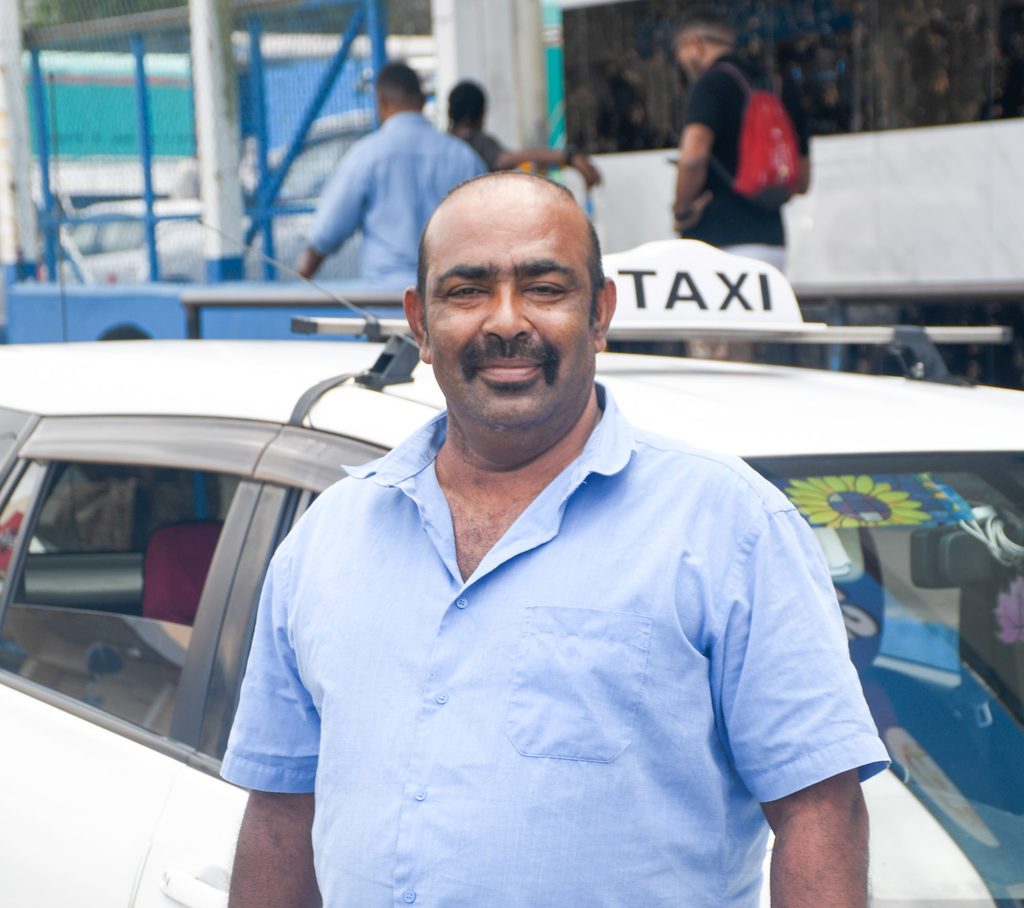
Driving is not just about getting from point A to B; it’s about the journey and the experiences that come with it. What began as a love for driving has become a 30- year journey on the road for Umendra Singh.
Born and raised in Lautoka before getting married and settling in Suva, Mr Singh,49, has spent much of his working life behind the wheel.
Before becoming a taxi driver, he spent seven years driving a minibus between Suva and Korovou and another two years travelling between Suva, Nadi and Lautoka.
Today, driving remains both his passion and his livelihood.
“I like driving. It is my hobby, and now I am doing it as my work,” he said. Mr Singh works on a $60 daily contract and sometimes bases his taxi near Rajendra’s Supermarket, although his official base is beside New World Supermarket.
He prefers the area because traffic around FNPF can become heavy.
But after three decades on the road, he says the challenges facing taxi drivers have changed.
Fuel, maintenance, tyres and other household expenses are putting greater pressure on his daily earnings.
“The increase in fuel prices has affected my daily earnings because a bigger portion of what I make goes towards fuel.”
He can earn at least $60 on a good day, but fuel costs can quickly reduce what remains.
While some taxi operators are calling for higher fares, Mr Singh believes the issue is more complicated.
“The government has to balance everything.”
He understands that passengers are also struggling with the rising cost of living.
“This fare is alright, but some people cannot afford.”
He recalled trips costing $11 or $12 where passengers sometimes offered $10 and asked whether it was enough.
“This fare is Alright and some people can’t afford, some place where I drive taxi to, reaching $12 or $11 but some customers just give $10 and ask us if this is enough for us? I just say that it’s enough.”
Mr Singh has also seen passenger numbers decline.
Before the fare adjustment, he could make between 20 and 30 trips a day. Now, he says, three or four trips can sometimes be all he makes.
“When the fare was not increased, I could have 20 to 30 trips a day. Now I hardly make any trips.”
He believes many commuters have shifted to buses and minibuses because they are trying to save money.
For Mr Singh, the debate over taxi fares is therefore about finding a balance between a driver’s livelihood and a passenger’s ability to pay.
He believes monitoring of fares and fuel prices by the FCCC.
“The fare should be fair to both passengers and drivers,” he said.
After three decades of driving Mr Singh continues to drive, hoping each day brings enough passengers to make the long hours worthwhile.