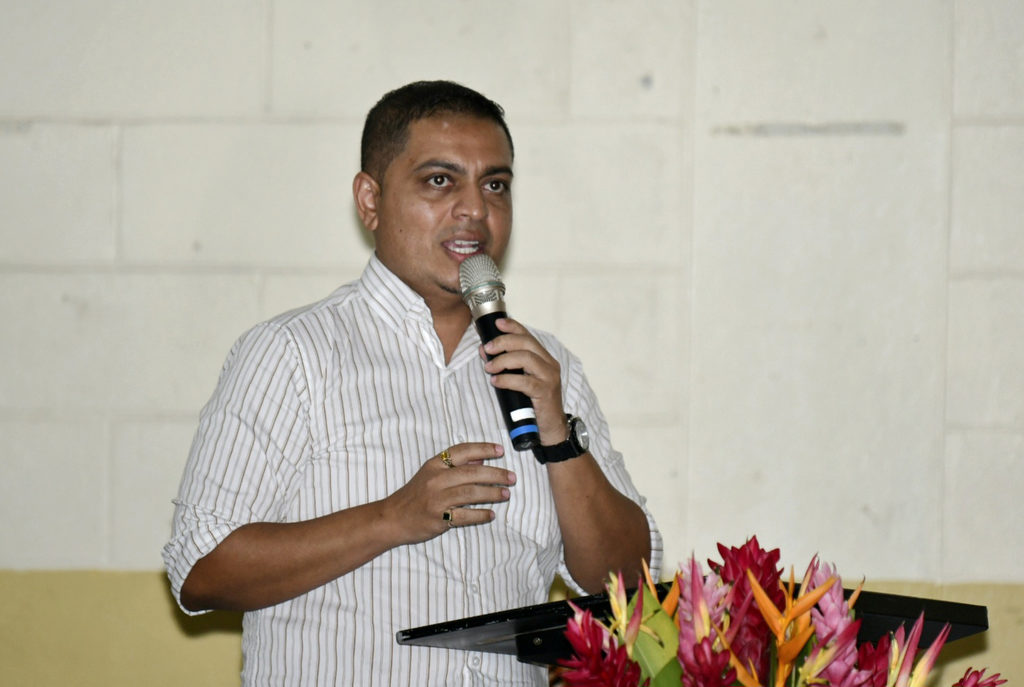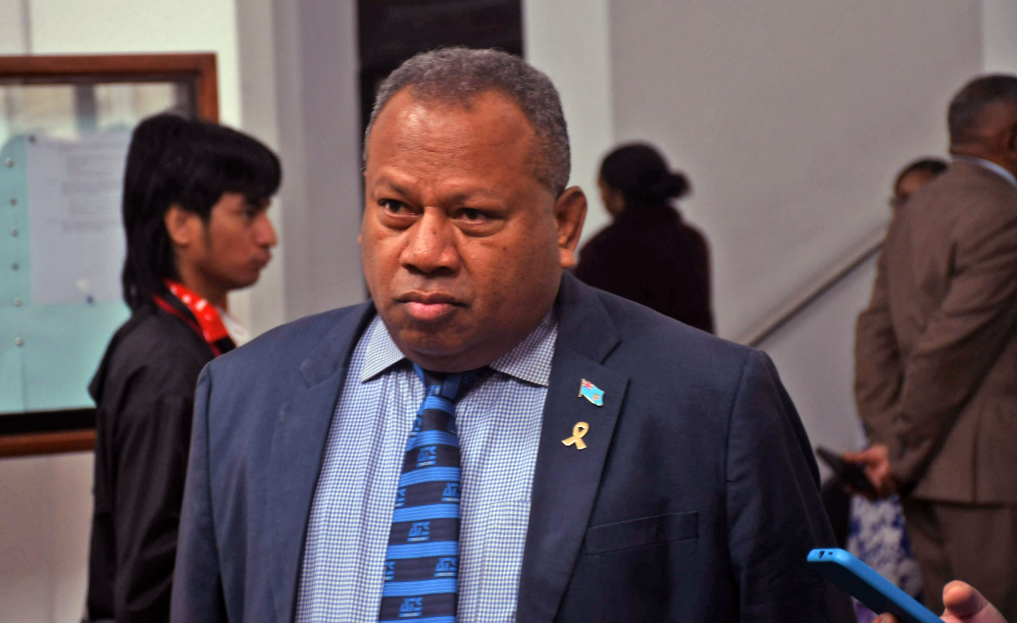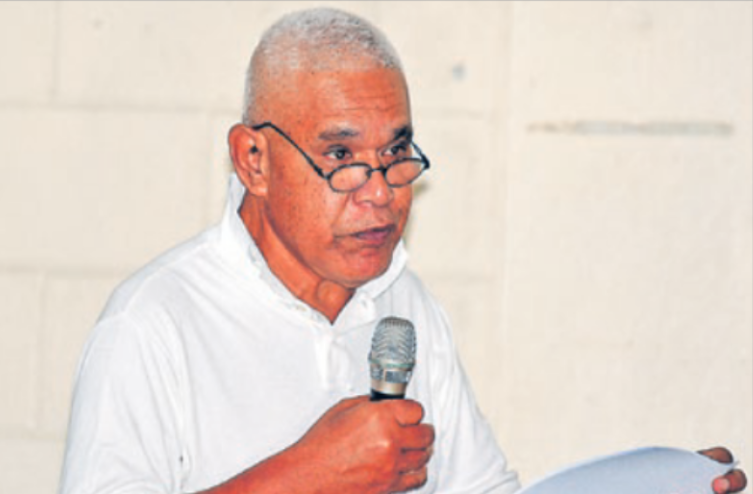
Three brothers. Three different paths. One remarkable sporting legacy.
Long before Fiji football had a national team, a national league or a place in international football, the game was being played on school grounds, village fields and open spaces around Suva.
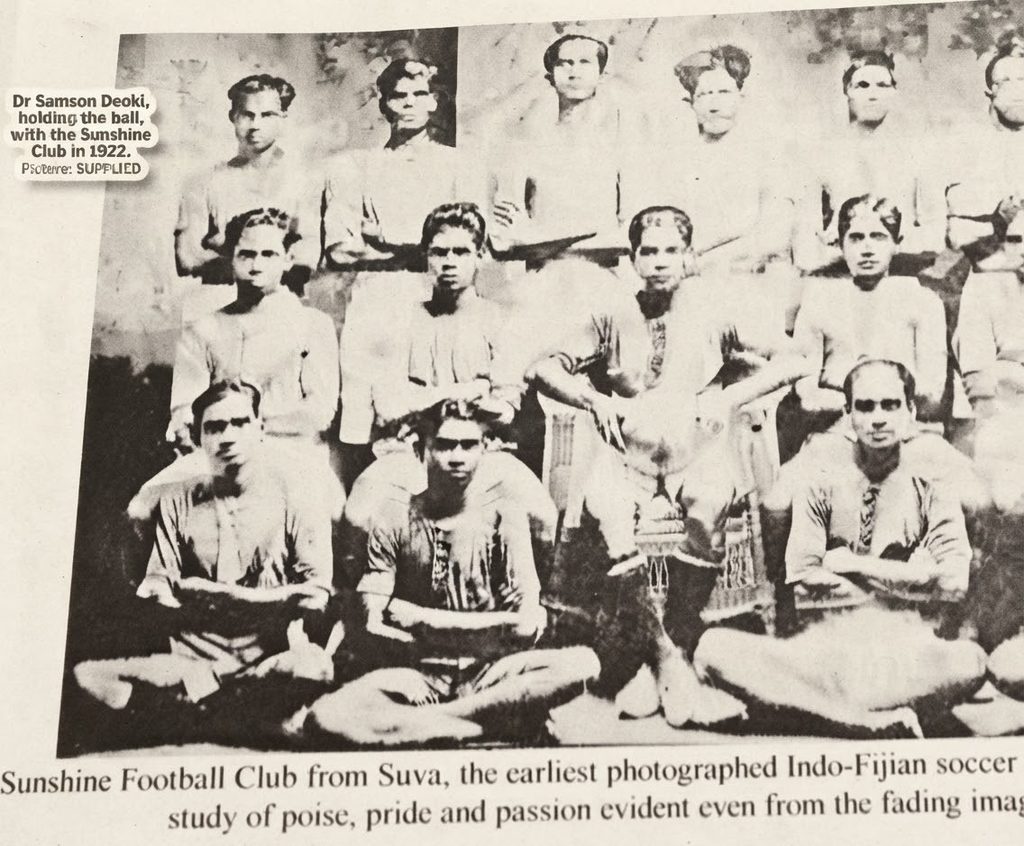
And among the men who helped give that fledgling game roots were three brothers from the Deoki family: Dr Samson Deoki, Reverend Ramsey Ram Narayan Deoki and Andrew Deoki.
Their stories were different, but together they form a remarkable thread running through the early history of organised football in Fiji.
It’s a story not simply about sport. It’s a story about education, social reform, determination, inclusion and eventually the idea that football could belong to all Fijians.
Samson Deoki and the beginning
The earliest chapter begins with the eldest brother, Dr Samson Deoki.
In 1922, Samson established the Sunshine Club, described in historical accounts as Fiji’s first organised soccer team. At the time, organised football in Fiji was still in its infancy.
There was no national football association governing the game. There was no national competition and no national team representing Fiji. There were simply men and boys who loved kicking a round ball. Samson helped turn that enthusiasm into an organised club.
That seemingly modest act was enormously significant.
A club creates teams. Teams create competitions. Competitions create associations. Associations eventually create national organisations. And that’s precisely the path Fiji football would follow.
Ramsey and the Indian Reform League
The second Deoki brother, Ramsey Ram Narayan Deoki, took a different route. But his contribution to the development of organised sport was equally significant.
Ramsey became one of the founding members of the Indian Reform League, established in Suva in 1924. The League was founded by A. W. McMillan of the New Zealand YMCA together with educated Indo-Fijians and government employees, including Ramsey Deoki.
The League was much more than a sporting organisation. It was involved in social reform, education, health and community welfare. During the 1925 typhoid epidemic, its members provided volunteer nursing assistance.
But sport became an important and integral part of its mission.
The League promoted cricket, football, hockey, tennis and Table Tennis, believing sport could help develop young people and strengthen the community. Then came a pivotal moment.
In December 1927, the Indian Reform League organised a schools’ football competition at Albert Park in Suva.
The success of that competition led to the formation of a dedicated football committee in January 1928.
Organised football was beginning to develop from individual clubs into something much larger. The journey from the playing field to the football association had begun.
From competitions to an association
The story then moved beyond the Deoki family.
Men such as A. S. Farebrother, Dwarka Singh, J. F. Grant, Ilahi Ramjan and others became important figures in building the administrative structures of organised football.
The Indian Reform League experience helped seed the Suva Football Association, while football spread to Rewa, Lautoka, Ba, Nadi, Levuka and other parts of Fiji.
By the 1930s, the desire for teams from different districts to compete against one another was becoming impossible to ignore.
Football had outgrown the individual club. It needed a national structure. On October 8, 1938, representatives from the various football districts gathered in Suva, at the offices of A. S. Farebrother & Co.
There they established the Fiji Indian Football Association.
A. S. Farebrother became its first president, with Dwarka Singh as vice-president and representatives from the various districts forming the executive structure. Suva, Rewa, Ba, Lautoka and Levuka were among the founding district associations.
This was the institutional birth of what would ultimately become today’s Fiji Football Association.
But the story was not finished.
Andrew Deoki enters the story
The youngest of the three Deoki brothers was Barrister and Solicitor Andrew Deoki.
By the 1950s, Fiji football had developed into a substantial sporting movement.
Andrew became one of its leading administrators.
He served as president of the Fiji Indian Football Association from 1951–53 and again from 1955–58. He also helped establish the Fiji Secondary Schools Soccer Association, extending competitive football into secondary schools.
But Andrew’s most important contribution was still ahead of him.
He believed football should not remain divided along racial lines.
At the time, the governing body still carried the word “Indian” in its name.
Andrew, along with other reform-minded administrators, began pushing for a different vision.
A football association that did not belong to one ethnic community.
A football association that belonged to Fiji.
The change wasn’t effortless.
There was fierce opposition in some quarters.
But the reformers persisted.
1961 & the great transformation
In August 1961, the word “Indian” was removed from the name of the Fiji Indian Football Association.
The organisation became the Fiji Football Association, a national and multiracial body.
Andrew Deoki was one of the important figures associated with that transformation.
He was also manager of Fiji’s first overseas representative tour in 1961, when the Fiji team travelled to New South Wales. Historical records identify him as the team’s manager.
The symbolism is extraordinary.
The eldest Deoki brother had helped establish one of Fiji’s earliest organised football clubs.
The middle brother had been involved in a reform movement that promoted sport and helped nurture organised football in Suva.
And the youngest brother helped lead the governing organisation from an explicitly Indian identity towards a national Fijian identity.
From three brothers to one national game
It would be wrong to suggest that the Deoki brothers alone created Fiji football.
They didn’t.
There were many pioneers: A. W. McMillan, A. S. Farebrother, Dwarka Singh, J. F. Grant, Ilahi Ramjan and countless players, teachers, administrators, patrons and volunteers whose names have largely disappeared from the historical record.
The Fiji Football Association itself was formally created in 1938 by a broader group of football representatives from around the country.
But the Deoki family’s contribution forms a remarkable three-generation-like chain across the crucial formative decades:
Samson Deoki — 1922
The Sunshine club.
Ramsey Ram Narayan Deoki — 1924 onward
The community, reform and sporting movement of the Indian Reform Leagy
Andrew Deoki — 1950s–1961
The national association and the opening of the game to all races.
And there’s something particularly beautiful about that progression.
The journey began with a club.
It grew through competition.
It developed through organisation.
And ultimately it became a national institution.
A legacy bigger than football
Perhaps the greatest legacy of the Deoki brothers was not the goals they scored or the matches they won.
It was the institutions they helped build.
Samson helped demonstrate that organised football could take root in Fiji.
Ramsey helped demonstrate that sport could be part of a wider movement for education, community development and social participation.
Andrew helped champion the idea that football should transcend racial boundaries and become a game under one national banner.
That final step matters enormously in Fiji’s history.
A country divided by colonial structures, ethnicity, religion and competing identities needed institutions capable of bringing people together.
Football became one of them.
And so, when we look at the Fiji Football Association today, we should not see only an organisation founded in 1938 or renamed in 1961.
We should see the generations of ordinary Fijians who kicked the first balls, formed the first clubs, organised the first competitions, travelled impossible distances, argued over constitutions, raised trophies, trained schoolchildren and refused to accept that sport had to remain divided by race.
Among those pioneers were three brothers from the Deoki family.
Samson. Ramsey. Andrew. Three brothers. Three different paths. But one extraordinary contribution to the story of Fijian Football.