
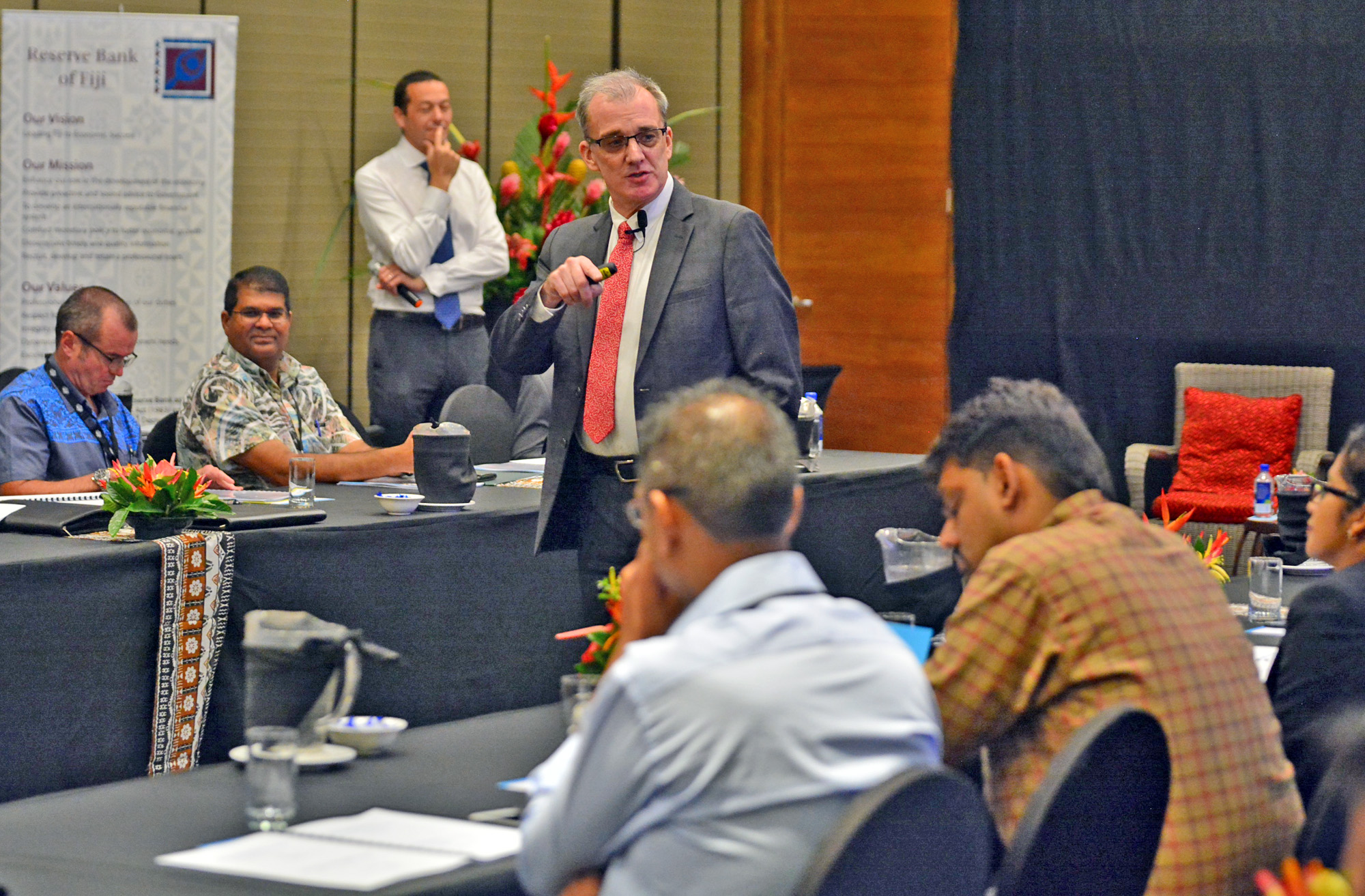
FIJI’S corporate bond market is filled with untapped potential as it provides an opportunity to address the capital needs of corporates seeking alternatives to borrowing from a single financial institution, says Reserve Bank of Fiji governor Ariff Ali.
Mr Ali said their current estimates place the value of outstanding corporate loans to about $2 billion.
Speaking at Corporate Bonds Forum at the Grand Pacific Hotel yesterday, Mr Ali they only had to look at the significant growth of lending and capital raising in Fiji to realise the important role played by the financial intermediaries.
“For example, the combined value of new loans last year by the commercial banks and credit institutions stood at $3b, more than four times the value of new advances 10 years earlier.
“These funds have helped grow the economy through increased investments and consumption across most economic sectors.”
Mr Ali said the value of outstanding bonds in the domestic market exceeded $4b by the end of 2018, which was more than 42 per cent higher than recorded a decade earlier.
The IFC, a member of the World Bank Group, in co-operation with the RBF is working with industry representatives to develop Fiji’s corporate bond market.
The forum yesterday was held by IFC, along with RBF and the South Pacific Stock Exchange to get feedback from potential issuers, investors and advisers on the corporate bond market.
A statement from IFC stated that the move followed an IFC study, supported by the Australian government, which looked at ways to develop Fiji’s corporate bond market.
It said while the government bond portfolio in Fiji was relatively large, there had been no issuances of corporate bonds in the market in recent years.
“We hope that following Fiji’s successful sovereign green bond, the private sector will now start issuing corporate bonds to raise money for their medium to long- term financing needs,” said Australia’s High Commissioner to Fiji, John Feakes.
“There’s a significant amount of funds available for investment in Fiji, held by institutional investors looking for opportunities to diversify their investments,” said IFC’s resident representative in Fiji, Deva De Silva.
“We’ve seen interest from pension funds as well as insurance companies and managed funds who could all be potential investors in corporate bonds, and hopefully in the future, we’ll see the public also investing in corporate bonds.”
The IFC review identified at least 10 companies that could be potential issuers of corporate bonds, where key investors already have equity in or loans to many of the companies.
The IFC review found gaps in the legal and regulatory environment which need to be addressed in order to deliver on the potential of a functioning corporate bond market.
The forum aimed to lay the groundwork for a streamlined process to spur corporate bond activity.

