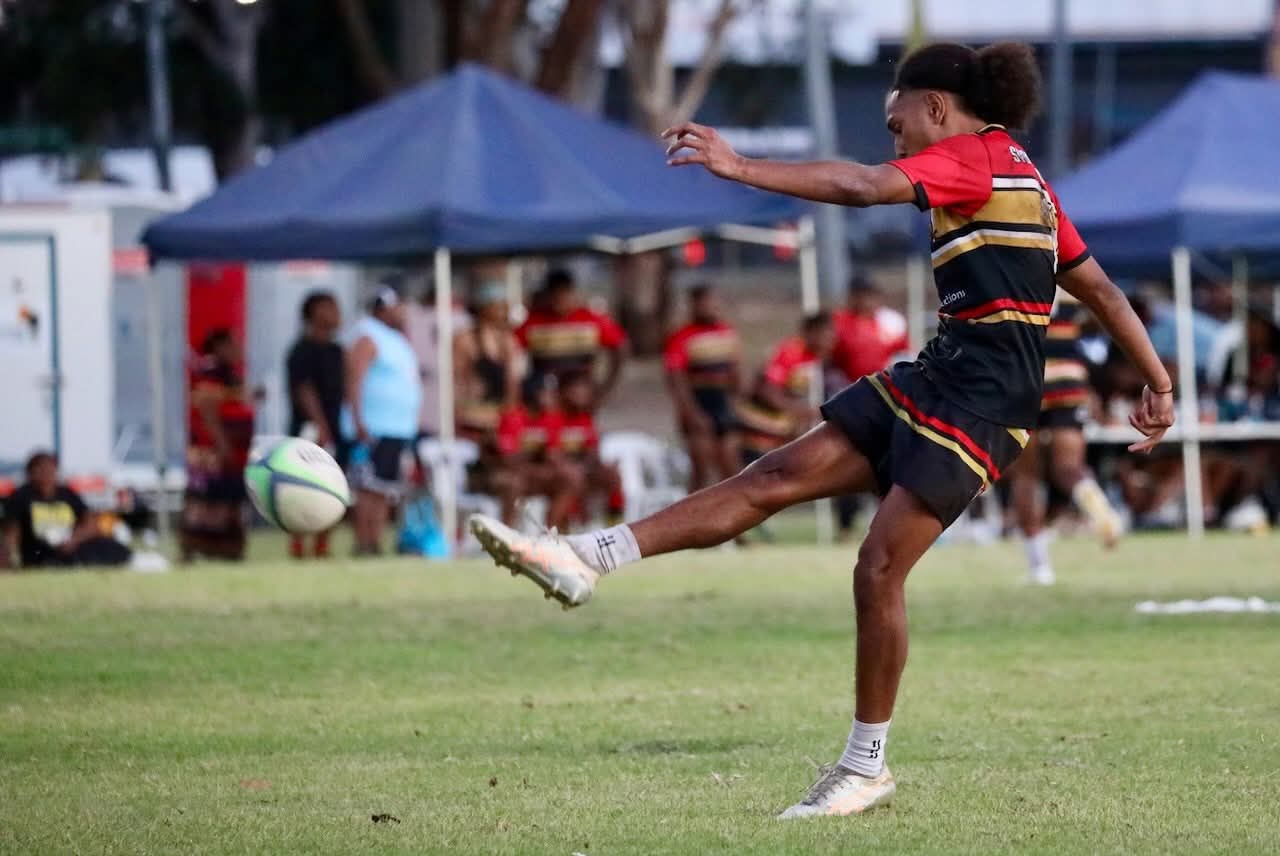
THERE are rugby players who take years to make their presence felt, and then there are those who announce themselves with performances that demand attention.
Lorima Saukuru appears to belong to the latter category.
The Australian-born, Fiji-rooted youngster is quickly building a reputation as a player to watch, combining exceptional speed, attacking instincts and playmaking ability with a maturity that belies his age.
At just 18, Lorima is already making his mark across two codes of rugby, and his recent performances in Australian sevens tournaments have raised an intriguing question: could he be a future playmaker for Fiji’s national sevens team?
The playmaker is making waves in 7s rugby while building his future in rugby league, with hopes of one day representing Fiji in either code.
If his current form is anything to go by, the possibility is certainly worth considering.
The next chapter will depend on how he builds on that promise, but one thing is clear: this is a name rugby fans should remember.
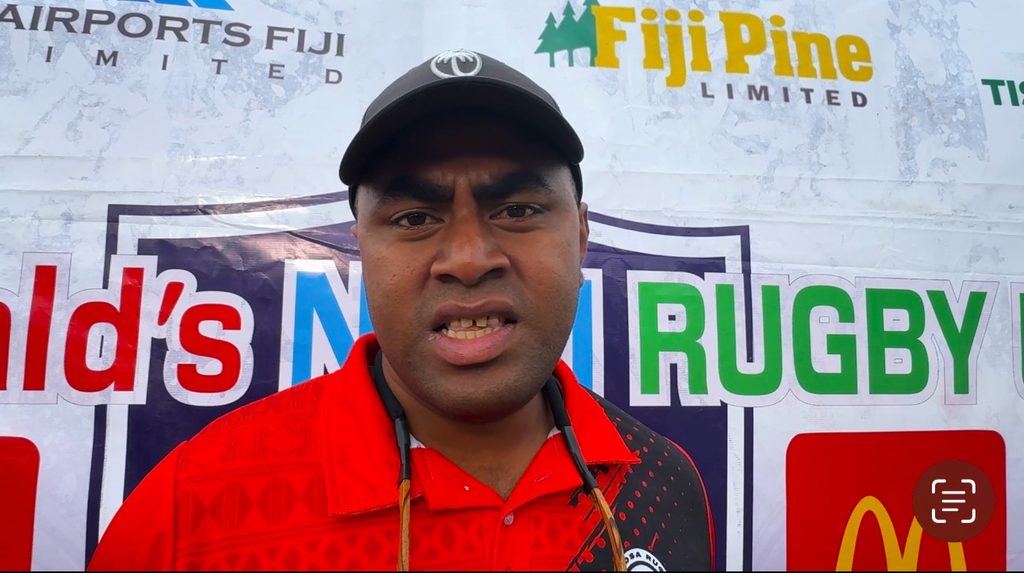
For Fiji sevens coach Osea Kolinisau, players such as Lorima represent the kind of emerging talent who could strengthen the country’s rugby stocks in the years ahead. However, with Australian rugby league pathways also providing opportunities for the young star, Fiji may need to move decisively if it hopes to secure his services in the future.
Lorima’s recent performances have already offered a glimpse of what he could bring to the international stage.
Over the past few weeks, he has been turning heads in Australia’s sevens circuit, winning Player of the Tournament honours at two consecutive events. His latest achievement came at the TTS Navosa 7s tournament in Liverpool, Sydney, held in conjunction with Fiji Day celebrations.
Representing Saunaka, Lorima played an important role in a campaign that culminated in tournament victory, giving the side plenty to celebrate during a weekend that brought together rugby, Fijian identity and community spirit. For the young playmaker, the tournament was another opportunity to demonstrate that his talent extends beyond the rugby league field.
Saunaka’s path to the title was not without a challenge.
In the quarter-finals, the side defeated Nationwide Rugby Plus, a team featuring several familiar names from the Fijian rugby scene, including former Fiji 7s representative Alusio Naduvalo, popularly known as Nitro, alongside Dan Yaya, Livai Ikanikoda, Matori Atunaisa, the younger brother of Tuivuaka, and Jona Saumaisue.
It was a significant contest against experienced opposition, but Saunaka continued its march towards the title and ultimately emerged as the tournament’s winner.
For Lorima, collecting another individual award while contributing to his team’s success was further evidence of his growing confidence and ability to influence matches.
Yet behind the emerging rugby prospect is a family whose connection to the game runs deep.
His mother, Mili, is proud of what her son has achieved, but she is equally conscious that his journey is only beginning.
A woman from Lakeba, Lau, Mili said Lorima was contracted to the St George Illawarra Dragons for two years, with the contract due to expire next year.
The agreement places him within a professional rugby league development environment, where young players must continue to prove themselves while competing for opportunities to progress.
Despite his growing profile, Mili said the family would leave his future in God’s hands.
“Lorima is turning 19 next month and, as for his future, as his parents, we leave everything in God’s hands and hope for the best,” she said.
“He loves playing both codes.”
It is a sentiment that reflects both the family’s faith and the uncertainty that accompanies a young athlete’s pursuit of a professional sporting career.
For now, Lorima is balancing his rugby league development with opportunities to test himself in 7s, a format that places enormous demands on speed, decision-making, support play and the ability to exploit even the smallest defensive gap.
His natural attributes appear suited to the demands of the shorter game.
As a fullback in rugby league, he has developed the ability to read attacking movements, identify space and turn defensive situations into opportunities. Those qualities can become valuable assets in 7s, where players must make decisions quickly and often operate with limited support.
His performances in Australia suggest that he is comfortable adapting his skills to the different demands of the two codes. Mili believes her son is the brightest of her children when it comes to rugby.
“I have six boys and a daughter,” she said.
“All the boys are playing rugby league and rugby union.”
The family’s rugby connections extend beyond the immediate household, creating an environment in which the game is more than simply a weekend activity.
It is part of their identity, their family conversations and their hopes for the next generation.
Mili also pointed to the achievements of their extended family, including cousin Sevuloni Satala, who was part of Fiji’s under-20 side that travelled to South Africa this year.
Other relatives have also made their mark in the sport.
Solomone Saukuru, a Wests Tigers centre and member of Fiji’s Bati squad for the Rugby League World Cup this year, is among Lorima’s cousins. The family also counts Api Koroisau and Sunia Turuva among its relatives.
Such connections provide a reminder of the depth of rugby talent within the wider family, although Lorima must ultimately establish his own identity through his performances.
And he has already begun doing that.
This year, Lorima starred as the first-grade fullback for the Corrimal Cougars in the Harrigan Motor Group Cup.
His contribution helped the club reach its first grand final in 37 years, an achievement that highlighted his growing influence at senior level.
For a young player, being entrusted with the fullback position in a first-grade side is an important responsibility. The role requires more than speed and attacking flair; it demands sound positional awareness, composure under pressure and the ability to organise defensive cover.
Lorima’s performances attracted further attention, helping him secure a place in the St George Illawarra Dragons’ junior system after moving from the Parramatta Eels pathways.
At Parramatta, he had progressed through the club’s junior development structures, gaining experience and building the foundation for his transition to a higher level of competition.
His move to the Dragons marked another step in that development.
He went on to serve as the starting fullback for the Dragons’ under-18 SG Ball Cup squad throughout this year’s campaign, producing several multi-try performances.
Those outings demonstrated his ability to contribute to the scoreboard while operating in a structured development system designed to prepare promising youngsters for the demands of professional rugby league.
The challenge now is to turn promise into sustained progress.
Australian rugby league offers a clear pathway for young players with the ability and discipline to advance through the grades. At the same time, Lorima’s performances in sevens have opened another door, one that could eventually lead to opportunities on the international stage.
For Fiji, the attraction is obvious.
The country has a proud tradition of producing instinctive, elusive and creative sevens players. A playmaker who combines rugby league experience with the speed and attacking vision required in sevens could become a valuable prospect.
But talent alone does not guarantee international selection. Continued development, consistency, fitness and the opportunity to perform at the appropriate level will determine how far Lorima can go.
His Australian background and development pathways also mean that his sporting future could involve difficult decisions about where to pursue opportunities and which representative ambitions to prioritise.
For Mili, however, the dream remains simple.
“Rugby runs in his blood,” she said, expressing the hope that one day her son will represent Fiji in either rugby league or rugby union’s 7s format.
It is a hope shared by many families who watch their children develop through the ranks, knowing that the journey requires patience, sacrifice and the right opportunities at the right time. Lorima’s father, Ilaisa, also has a rugby background, having represented Nadi and Fiji.
The youngster was named after the father of Vatemo Ravouvou, Fiji 7s player who helped the country win its historic gold medal at the 2016 Rio Olympics.
That connection adds another layer of meaning to a name that could one day become familiar to rugby followers in Fiji and beyond.
For now, Lorima remains a young player with plenty to learn and a promising career still unfolding.
His consecutive Player of the Tournament awards, his contribution to Saunaka’s Liverpool triumph and his progress through Australia’s rugby league pathways have given him a strong platform on which to build.
Whether his future lies in rugby league, 7s or both, the coming years will be crucial.
Kolinisau and Fiji’s rugby selectors may eventually have a decision to make if Saukuru continues to develop at his current pace.
Australia’s rugby league system has already invested in his potential, and the Dragons will be watching his progress closely.
But for the young man from a family with strong Fijian roots, the prospect of representing Fiji remains a dream worth pursuing.
There is no need to rush that journey with the performances are speaking for themselves, and Lorima is steadily making a name for himself.