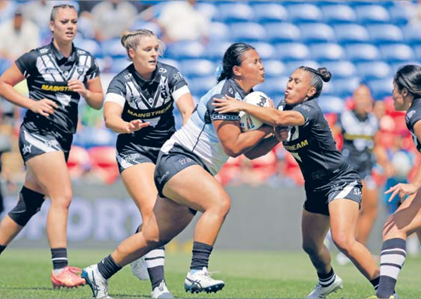
The acid test
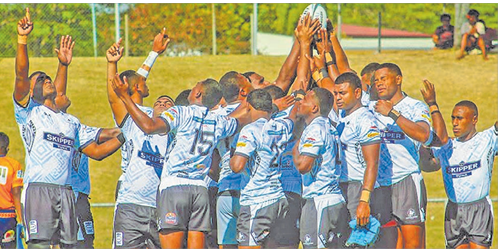
FRESH from their baptism of fire in a pulsating encounter against New Zealand, our Bulikula now face the acid test against the Papua New Guinea Orchids. Rugby league is more than just a sport in Papua New Guinea. It is a national passion. Playing the Orchids on home soil presents a formidable challenge, as PNG teams are renowned for their fierce competitiveness and unwavering determination in front of their passionate supporters. This crucial encounter could determine which side progresses to the knockout stages of the 2026 Rugby League World Cup. It promises to be a thrilling contest, with both teams carrying the hopes and pride of their nations onto the battlefield. I am optimistic that our Bulikula will return this week even more determined in both defence and attack. This will be a real crunch match, with Melanesian pride at stake. Let us get behind both teams and celebrate what promises to be one of the tournament’s most compelling contests. For our Bulikula, this will require a committed effort until the final whistle.
FLOYD ROBINSON
Micronesia
A winning mentality!
A HUGE statement was made by the Fiji Bati at the McDonald Jones Stadium in Newcastle as they opened their 2026 Rugby League World Cup campaign with a resounding 40-12 win over the Cook Islands in front of a little more than 10,000 fans on a sunny but windy Sunday afternoon. The game was over in the first half as the Bati led 28-0, scoring five wonderful tries. Brandon Wakeham, Jacob Saifiti, Solomone Saukuru, Kurt Donoghoe, Waqa Blake, Taane Milne, Caleb Navale, Kitione Kautoga and Apisai Koroisau stood out with a sublime and rock-solid performance. However, the journey to the eliminations has just started as the Bati face rugby league’s giant, the Kangaroos, at the Suncorp Stadium next Sunday. The Kangaroos are smarting from their 24-22 win over New Zealand. The Bati has yet to taste victory against the Kangaroos and Sunday’s battle will be a test of character. A winning mentality is needed against the world champions. On the other hand, the Fiji Bulikula won hearts despite losing to New Zealand 18-12. The Bulikula rose to the challenge and took the opposition head on, but NZ’s experience and fitness gave them the edge. The bold Bulikula showed great resilience and determination. They lost but earned respect for a mighty effort!
RAJNESH ISHWAR LINGAM
Nadawa, Nasinu
Breaking the coup cycle
I HAVE formally submitted a structural reform proposal to the Special Committee on the Constitution (Amendment) Bill aimed at permanently neutralizing coup risks by reorganizing the civilian command over the Republic of Fiji Military Forces (RFMF). I believe Fiji’s political history has been recurringly disrupted because of legal ambiguity under Section 131(2) of the 2013 Constitution. I believe the broad man date tasking the military with the general “wellbeing” of Fiji has historically allowed individual commanders to interpret national stability through personal judgment, circumventing democratic processes. To break this cycle, my submission proposes a Dual-Executive Civilian Command System. This framework completely removes operational authority from military commanders and vests it firmly in an elected President as Commander-in-Chief. To ensure national legitimacy, the President would be selected by a Multi-Stakeholder Presidential Electoral Council combining traditional authority (BoseLevu Vakaturaga), elected parliamentary representation, and our legal institutions. We must establish an explicit, unambiguous chain of command where military leaders hold no legal authority to mobilize troops without written executive authorization. Our democratic future depends on ensuring the power of the armed forces is always subordinate to lawful, accountable civilian direction.
PAULA KALOUKOCEI
Korovou Baba, Levuka,
Ovalau
Reliable water supply
THERE have been times when residents in Velovelo, Lautoka, have gone without water for three days. Despite repeatedly contacting the water-filling team and WAF’s toll-free numbers, resolving the issue has taken more than 48 hours. This is frustrating for families who depend on water for everyday needs such as cooking, cleaning and personal hygiene. I hope WAF can find lasting solutions to these recurring problems and keep residents informed about water disruptions. We understand that unexpected issues can occur, but going without water for days creates real difficulties. Our community deserves a reliable water supply and timely assistance when problems arise.
SHEFALI SAMI
Velovelo, Lautoka
Sitting on the fence
DURING the parliamentary vote on the proposed constitution changes, I believe many opposition members, including the Leader of the Opposition, abstained. Abstention may be procedurally valid, but on a significant public issue, I believe, it denies voters the clear position and accountability they are entitled to expect from their elected representatives. That hesitation is particularly difficult to defend when the same members were prepared to cast a decisive vote on parliamentary pay increases. Repeated abstentions on consequential legislation risk turning parliamentary representation into political avoidance. Opposition members should state their position, explain it publicly and accept responsibility for the outcome. The third-reading vote will therefore be an important test of whether they will act on principle and in the public interest, rather than self-preservation or pursue short-term personal gain.
JAN NISSAR
Sydney, NSW, Australia
But why?
THE chorus of critics is growing, but Government seems hell-bent onstream-rolling the Constitution Amendment Bill. What and why, the rush? Is it to change the almost incomprehensible Electoral System? No, there just isn’t enough time remaining for all that to happen before the next GE is due to be held in March 2027; Is it to implement an outstanding Manifesto promise? Or is it to abolish the largely ineffective FICAC? Is it to expunge the much-maligned Immunity Chapter? Or is it to remove an imposed common National Identity and create a new one? Your guess is as good as mine. But, given that politics is a game of numbers, it might just be, that the present Coalition Government is not confident that it will get back into power after the next GE and have the necessary numbers in the new Parliament, to meet the reduced two-thirds requirement opined by the Supreme Court, to initiate the replacement of the notorious 2013 Constitution. Like the Elvis song says: “… it’s now or never…”! Then I could be wrong.
DANIEL FATIAKI
Suva
Tourism development
THE Fiji Times report on tourism development for the North (13/10) is encouraging, as it is economic development for Fiji as well. It is an asset for Labasa. Those who migrated always long to come back home. The tourism minister Viliame Gavoka’s announcement on this issue will certainly develop tourism with investor confidence in a competitive global market. The job seekers will remain in the ever green north, hopefully. They will always feel at home as they contribute to a better Fiji.
TAHIR ALI
Hamilton, New Zealand
Respectful, humble
BEING humble is what some people need to be reminded of. It is important because the act of humility conveys that we are aware that we are human, fallible, often weak and no better than other people in society. Being humble reminds us that we are human. Sobo!
WISE MUAVONO
Balawa, Lautoka
Valid point
AFTER watching the man fall off the chair, I believe people will prefer not to take a seat but remain standing at any Constitution Consultation because better chairs are only provided for the servants serving the people from the civil sector. Anyway, that man raised a valid point and it validates on how members of the public can be treated in public just like when this bunch of politicians came into office and increased their remuneration.
AREKI DAWAI
Suva
Being bold
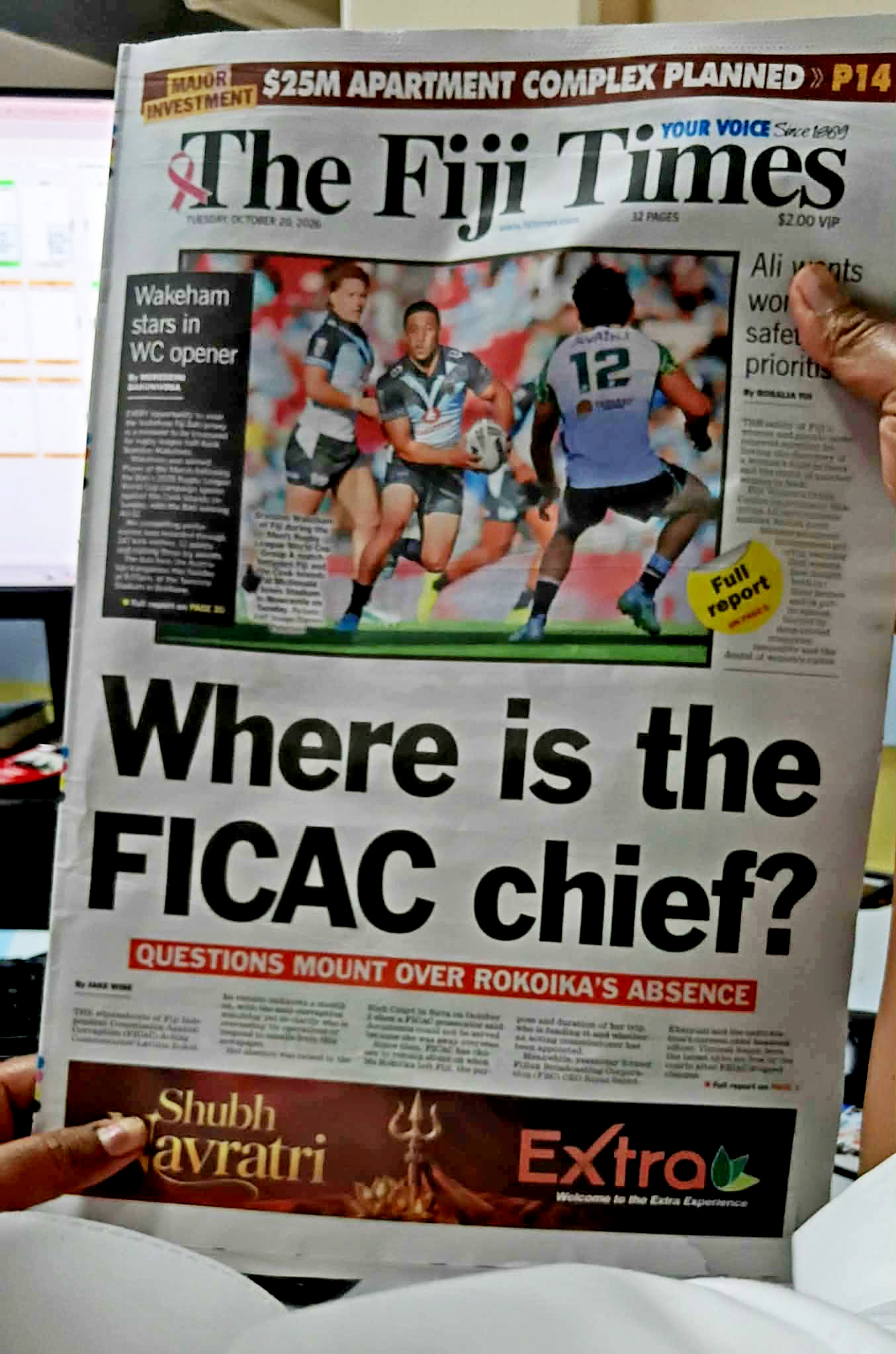
BROTHER Lingam broke from (his) tradition (of playing safe side) to ask through his letter (FT21/10) about where the FICAC Commissioner was. Quite bold of him. Not many care though about her whereabouts. Their hit rate (convictions) is so poor after all. Many years ago, I asked a counterpart why he kept quiet and didn’t ask those important questions during the weekly contract meetings. His answer: “lamulamu bula balavu”. I myself don’t subscribe to that belief system. I’m glad some of our fellow writers are also gradually getting bolder. The already bold gang must remain bold. Brother Lingam, this is banter, for your grog session. Ahem ahem.
DONALD SINGH
Nausori
Sunday rest
DURING public consultations on Fiji’s Constitution Amendment Bill 2026, the Methodist Church in Fiji has made numerous submissions seeking to have its proposals incorporated into the national Constitution. Its president has also echoed calls for “Sunday Rest” as part of the proposed changes. I have a simple but legitimate question, if a Sunday ban and restrictions on trading hours are introduced, will these apply only to Christians, or will citizens of all religious faiths be expected to comply? Why should people who wish to make productive use of their Sundays be forced to observe what is essentially a religious practice? While some may prefer to spend Sunday in church or resting at home, others may wish to work, run their businesses, shop or simply go about their daily lives. Many businesses operate on Sundays to serve the public, including churchgoers themselves, who often stop at shops after services to buy bread, cigarettes, grog, groceries and other essentials. Would it not be rather ironic if those preaching Sunday rest depended on businesses that were supposedly meant to remain closed? Furthermore, some Christians have called for Fiji to be declared a Christian nation. Yet, amid all these demands, I have heard little explanation of the practical benefits such a declaration would bring to ordinary Fijians. Would it reduce the cost of living, create employment, improve our struggling healthcare system, raise educational standards or solve our social problems? Or would it simply give one religious group greater influence over a secular nation shared by people of different faiths and beliefs? If Christianity is to become the supreme creed, what tangible benefits would the country gain, and at whose expense would they come? Faith should be a personal choice, not a compulsory national lifestyle. The freedom to practise one’s religion must also include the freedom of others not to have that religion dictate how they live, work or conduct their businesses. Before we debate making Fiji a Christian nation, perhaps its proponents should explain how such a move would make Fiji a better nation for all Fijians, not just those who share their faith. Please practise your Sunday rest by all means, but do not expect the entire country to clock off just because the church says so.
NISHANT SINGH
Lautoka
Mining Sigatoka Sand Dunes
THE recent revelations regarding the proposed mining project at and around the Sigatoka Sand Dunes National Park raise serious concerns about the integrity of Fiji’s public consultation process. As highlighted in Charlie Charters’ excellent investigative article (FT 20/10/26), the Ministry of Environment and Climate Change appears to have commenced the public consultation period on October 2, yet the public was only informed through a Facebook announcement on October 13. If this is indeed the case, then almost half of the consultation period had already expired before many citizens even became aware that a consultation was underway. This raises an important question: since when did Facebook become the official medium for public notices in Fiji? Many Fijians, particularly senior citizens and those in rural communities, do not use social media. Others deliberately avoid platforms such as Facebook because they do not regard them as reliable sources of official government information. Legislation governing public notices exists precisely to ensure that all citizens have a fair opportunity to participate in matters affecting their communities and their nation. What makes the situation even more troubling is the apparent lack of accessible documentation. According to the report, only four hard copies of the Environmental Impact Assessment were made available, with no freely download able PDF version accessible to the public. This is remarkably similar to concerns raised during the TNG Fiji proposal, when members of the public reportedly faced excessive charges to obtain copies of relevant documentation. We are now well into the digital age. It is difficult to understand why documents of such national significance cannot be published online in a readily accessible format at no cost to citizens. Public consultation is not genuine consultation when people are unable to access the information they need to make informed submissions. The Sigatoka Sand Dunes are not just another development site. They represent one of Fiji’s most important archaeological, cultural and environmental treasures. Any proposal involving the excavation and extraction of hundreds of thousands of tonnes of material annually over two decades deserves the highest standards of transparency and public engagement. I respectfully call upon Prime Minister Sitiveni Rabuka to ensure that the responsible minister complies fully with both the spirit and letter of the law governing public consultation. The consultation period should be extended to compensate for the days lost, all relevant documents should be made freely available online, and the public should be properly notified through established and widely accessible media channels, including newspapers. Meaningful consultation requires more than ticking boxes. It requires transparency, accessibility and fairness for all Fijians.
DR SUSHIL K SHARMA
Lautoka