Leadership does not always begin with a title, nor does it follow a straight path.
For Pacific Beverages Pte Ltd director and co-founder Rajesh Patel and Permanent Secretary for Information Eseta Nadakuitavuki, leadership is shaped by experience, difficult choices, resilience and a willingness to keep learning. Both members of the 2002 Leadership Fiji cohort, they have taken markedly different professional paths, but their reflections point to a common understanding of what it means to lead.
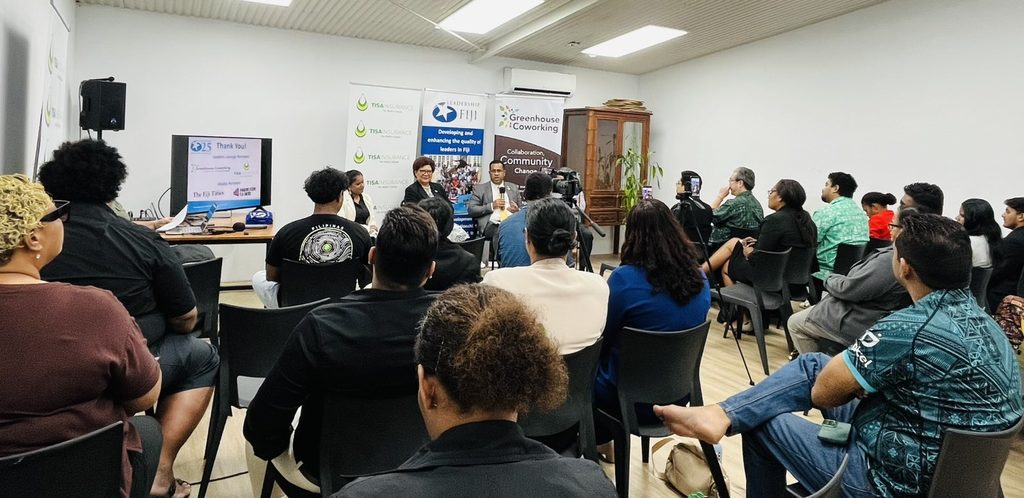
Speaking at the Leadership Fiji Leaders Lounge event, “Voices of Leadership” in Suva on Tuesday, Mr Patel and Ms Nadakuitavuki looked back on the experiences that tested and developed them — from business and entrepreneurship to public service and leadership in traditionally male-dominated spaces. Their stories offer lessons not only about achieving success, but about the values, people and sense of purpose that must underpin it.
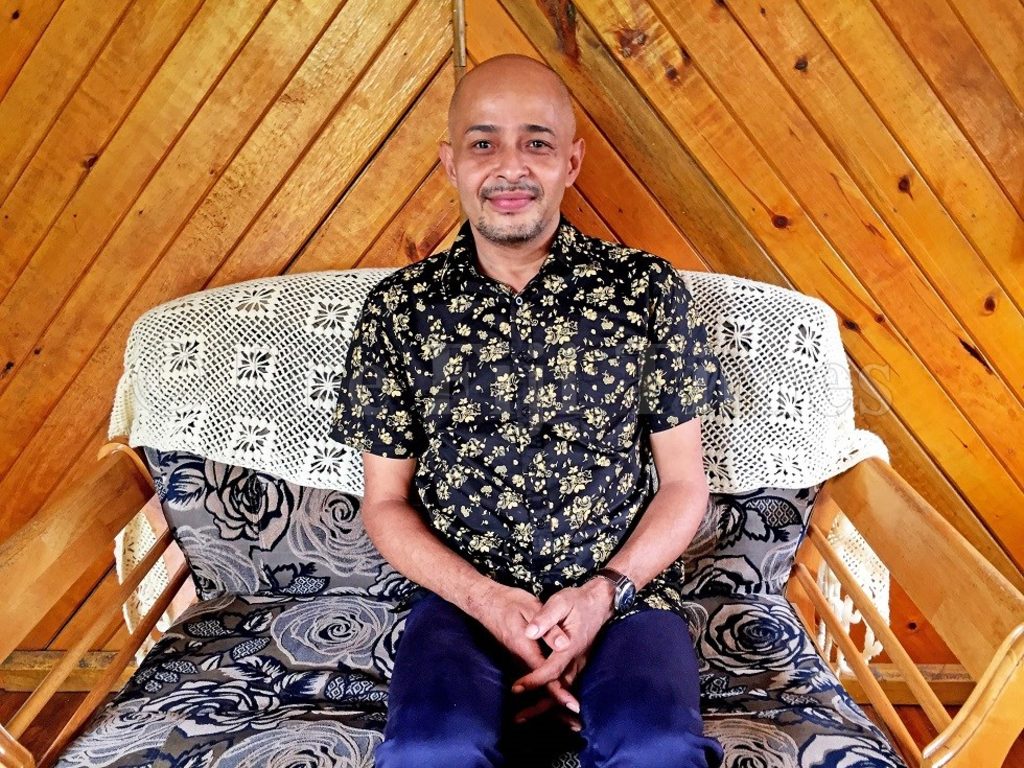
For Mr Patel, leadership has been a journey of learning, taking risks and, above all, investing in people.
A member of the 2002 Leadership Fiji cohort, Mr Patel reflected on his journey from the family business to entrepreneurship and the lessons that have shaped him.
Raised in Ba and educated in Fiji and New Zealand, Patel returned home in 1994 after completing his education abroad to join the family business, Motibhai Group of Companies.
His almost 30 years with the group exposed him to a wide range of business operations, including manufacturing, fast-moving consumer goods, importation and distribution, exports, retail, print media and property management.
“Those experiences shaped my understanding of leadership, business and people,” he said.
Leaving certainty behind
After decades with an established organisation, Mr Patel decided it was time to leave the family business.
The decision, he said, was both unsettling and exciting.
“Entrepreneurship forces you to leave behind certainty and embrace ambiguity,” Mr Patel said.
“It teaches you humility because each decision matters. Every dollar counts and every setback becomes a lesson.”
He took about four months away from work, spending time with his family while considering what came next.
An opportunity in the ready-to-drink beverage market eventually caught his attention.
Pacific Island Beverages PTE Ltd was registered in November 2022, with its first products launched in October 2023.
Mr Patel said it took about 10 months to establish the business — from finding premises and sourcing equipment to developing brands and products and taking them to market.
The company entered with four alcoholic beverage products. Nearly three years later, its portfolio has grown to 23 products across alcoholic and non-alcoholic categories.
Lessons from Leadership Fiji
For Mr Patel, however, one of the most significant chapters in his leadership journey began much earlier.
In 2002, he joined the Leadership Fiji program.
“I was virtually thrown into it,” he said.
The experience, combined with years in business, gave him lessons he continues to carry with him.
His first lesson was discipline.
Something as simple as being on time, he said, demonstrated respect, reliability and professionalism.
“People follow leaders they trust, and trust is built through consistent actions,” Mr Patel said.
He encouraged leaders to arrive at least 10 minutes early for meetings and commitments, saying punctuality was ultimately about respecting the people they were meeting.
People are the investment
Mr Patel also highlighted self-awareness as an essential leadership quality.
No leader, he said, had all the answers. Understanding personal strengths and weaknesses, however, allowed them to build teams that complemented their abilities and improved outcomes.
“People are your greatest investment,” he said.
The strongest organisations, he added, were built around engaged people whose leaders had a responsibility to coach, mentor and support teams.
“When people feel valued, trusted and empowered, they achieve remarkable things,” Mr Patel said.
His advice was to build a strong team — but, importantly, a happy one.
The value of connections
Mr Patel also credited relationships and networks for opening many opportunities throughout his career.
He encouraged emerging leaders to remain curious, visible and connected, and to attend events where they could meet people from different backgrounds and industries.
“Leadership requires us to remain curious, visible and connected,” he said.
For Mr Patel leadership also extended beyond commercial success.
His involvement with Golden Age Homes, the Leadership Fiji Foundation, Rotary Club of Suva and other charitable organisations had been among the most rewarding parts of his journey.
“You must look at providing support to the community and country,” he said.
Adapt or be left behind
As technology, consumer expectations and workplace dynamics continue to change, Mr Patel said today’s leaders must be willing to adapt.
Experience remained valuable, he said, but experience alone was no longer enough.
“Leaders needed to remain curious and open to new ideas.”
Looking back on his years in the family business and his experience building a company from the ground up, Mr Patel said success came through individual effort, strong teams, meaningful relationships and the courage to embrace change.
His message to future leaders was to remain confident but grounded in values, invest in people and never stop learning.
“The leaders who will make the greatest impact are those who are willing to serve, adapt and inspire,” he said.
The road a leader chooses
For Ms Nadakuitavuki, her leadership journey began with a sense that something was already within her — something waiting to be developed, tested and put to use.
She reflected on a leadership journey that has taken her from banking to the senior levels of Government, and through challenges that tested her resilience, values and sense of purpose.
She described her younger self as a “matchstick, ready to be ignited”.
“In 2002, I was in a position to actually lead a team and make decisions that mattered,” she said.
“I believe that the leadership qualities were already within me, and they simply needed to be developed and refined.”
More than technical skills
Ms Nadakuitavuki said education and technical knowledge alone were not enough to become an effective leader.
While working, she continued her studies and learned to apply her knowledge to real-life situations. She also placed importance on building relationships, developing networks and gaining the wisdom needed to understand situations beyond their obvious answers.
For her, discernment was an important leadership quality.
“It means knowing the right from the wrong,” she said.
Leadership, she added, also required the courage to make difficult decisions, including those that might not be popular.
“There will be decisions that you make that will be unpopular. But at the end of the day, you would go home and have a good night’s sleep, knowing that decision was a good decision,” she said.
She also spoke of the sacrifices involved — long hours, continuous learning and the need to build connections while making time for family.
Breaking through
Her leadership responsibilities grew over her many years with the Westpac Bank where she became the first local woman to serve as a retail area manager, overseeing 12 branches.
The achievement came with another challenge — working in what she described as a male-dominated environment.
There were moments when conversations took place over her, leaving her wondering whether those around the table even realised she was there.
But she persisted.
Her leadership experience expanded through board and business roles, including serving with the Fiji Commerce and Employers Federation and chairing the Women Entrepreneurs’ Business Council from its inception in 2013.
Each role, she said, sharpened her leadership skills and helped define her purpose.
Choosing service
By mid-2023, Ms Nadakuitavuki had reached what she described as the pinnacle of her banking career.
But she had reached a point where she had to choose whether to move forward or move out. She chose to leave.
In July 2023, she became Permanent Secretary for Women, Children and Social Protection.
The transition from banking to Government came with its own doubts from others.
“How can a banker become a permanent secretary? What can she do? What can she prove?” she recalled hearing.
She chose to ignore the noise, believing she had been appointed on merit and had a duty to serve.
In January 2026, she was reassigned as Permanent Secretary for Information.
Wisdom over intelligence
She challenged the audience to consider the difference between intelligence and wisdom.
“Intelligence deals with facts, wisdom deals with judgment,” she said.
And in leadership, she argued, wisdom often matters more.
“Your standards must be high. Your integrity even higher,” Ms Nadakuitavuki said.
“Continue learning and growing. Build strong networks,” she said.
“Be resilient in the face of challenges. Lead with wisdom, not just intelligence….Your leadership journey will not be easy, but it will be worth it.”