THE first time Jan Atkinson came to Fiji, she was a tourist staying at the Radisson Resort but sitting by the resort, being served meals while Fijians worked around her, left her feeling strangely unsettled.
She did not want to be served. She wanted to serve.
That feeling would change the course of her life.
A primary school teacher from Melbourne, Victoria, Atkinson had already spent 28 years working with children in classrooms, including children with special needs.
She had experience in counselling, writing teacher resources and tutoring children with long-term illnesses through the Ronald McDonald House.
But Fiji gave her a different kind of classroom – one without walls, where the needs were immediate and the resources were often scarce.
“I wanted to serve the Fiji people. I wanted to give to them rather than them giving to me,” Atkinson said.
A holiday that became a journey
While staying at the Radisson, Atkinson began talking to a young woman named Miri Nadolo, who worked in the resort’s kids club.
As often happens in Fiji, a conversation quickly became an invitation.
Nadolo invited Atkinson to meet her family and visit her village.
That introduction to the Nadolo family in Nadi began what would become a six- or seven-year journey of service and discovery.
In 2006, Atkinson began travelling between Australia and Fiji, making four or five trips a year while continuing to teach in Melbourne.
She brought what she could – laptops, sewing machines, medical supplies, shoes, bags and other resources.
After about four years of travelling back and forth, she eventually settled in Fiji.
“I just loved the place and loved the people,” she said.
She built a small home in the village and continued returning with supplies and resources for communities, including Nakavu.
The attractions were not difficult to understand.
“I really like the warm climate and relaxed environment, no-pressure, no-stress, unlike Melbourne,” she said.
But it was the people and particularly the children who kept her here.
Seeing the gaps
Life in remote Fijian communities exposed Atkinson to challenges she had not encountered in the same way during her teaching career in Australia.
One of the biggest shocks was the lack of children’s books.
In Australia, she was accustomed to children having access to dozens of books at home. In some Fijian communities, children might have none.
The same problem existed in classrooms.
“I’ve seen teachers in classrooms with 30 or 40 children with only like two or three storybooks,” she said.
To Atkinson, the imbalance was obvious.
“Expecting a teacher to be in a classroom with 30 or 40 children with only three storybooks and teach English effectively, to me, just seemed absurd.”
The shortage of resources became more than something she noticed. It became something she felt compelled to address.
She keeps hundreds of books and is happy to provide them to families and children.
But Atkinson believes books alone cannot solve the problem.
Parents have an important role to play in developing children’s literacy, she said, encouraging families to spend even 10 minutes each night reading with their children.
“Children are not the problem. They can learn. You give them the time, they can learn. They are very smart,” she said.
Meeting children where they are
Atkinson’s approach comes from decades of classroom experience.
Rather than teaching every child the same material at the same pace, she believes children should be assessed according to what they already know and then taught from that point.
In Australia, she said, this approach is known as differentiation.
“A child might already be able to spell three-letter words, don’t take them backwards,” she said.
“Find out their benchmark, find out where they are, and then do an individualised program to move them from where they are.”
She uses a mixture of teaching strategies because children learn differently.
Some respond better to auditory methods, others to visual learning or a combination.
One-to-one teaching allows her to identify a child’s strengths and pinpoint gaps that may have developed through earlier years.
She also encourages older students to work with younger children.
For beginning readers, she focuses on foundational sounds.
The response, she said, has been extraordinary.
“The children are totally enthusiastic, excited and 100 per cent fantastic.”
From reading lessons to life lessons
Atkinson’s work extends far beyond English.
Her teaching can include mathematics strategies, health and human relationships, drug awareness, basic morals, reading, writing, spelling and multiplication tables.
The children she works with range from two- and three-year-olds being introduced to literature to young people in their early 20s who need help preparing job applications.
Much of her work takes place around Nadroga and Sigatoka, as well as in remote areas of Namosi, where her husband is from.
With about 35 nieces and nephews, she has plenty of opportunities to work directly with children and young people in community halls, homes and other informal settings.
Her greatest reward is not simply seeing a child get an answer right.
It is seeing confidence grow.
“What I enjoy the most about teaching is seeing the child become confident and develop in social, emotional and academic ways,” she said.
Learning resilience herself
Fiji has taught Atkinson as much about resilience as she has taught the children.
Village life is not as comfortable as life in Melbourne.
She has encountered physical challenges and experienced moments when she was treated disrespectfully, including witnessing difficult treatment of women.
Those experiences have tested her.
“I’ve had to become more resilient,” she said.
“I was knocked down; I’ve had to get the strength to go up and reset myself and continue to move forward.”
She admires the women of Namosi for their strength and hard work and believes children in rural communities develop resilience through the realities of everyday life.
Children may walk one or two hours and simply continue without complaint, she said.
For Atkinson, that strength has become part of what she has learned from Fiji.
“It’s not for the faint-hearted,” she said.
“You must be very durable. You must be very resilient. You must be very strong.”
A life woven into the community
Her days in the village often begin with prayer.
She may then use her Toyota Hilux to transport farmers to plantations that can otherwise take two or three hours to reach on foot.
Before children leave for school, she checks in with them and observes whether anyone needs school shoes, a school bag or other assistance.
Later, she spends time with women in the community, listening to their stories and identifying needs.
Then comes the teaching.
She may sit with children to work on reading and comprehension or check on the emotional wellbeing of children who need extra support.
In the evening, she joins the community gathering.
Her work has also extended to helping young girls pursue educational opportunities.
She has helped provide laptops and assisted three girls from Namosi to attend Corpus Christi Teachers College.
For Atkinson, those opportunities represent something much larger than a computer or a school placement.
They represent possibilities.
Staying the course
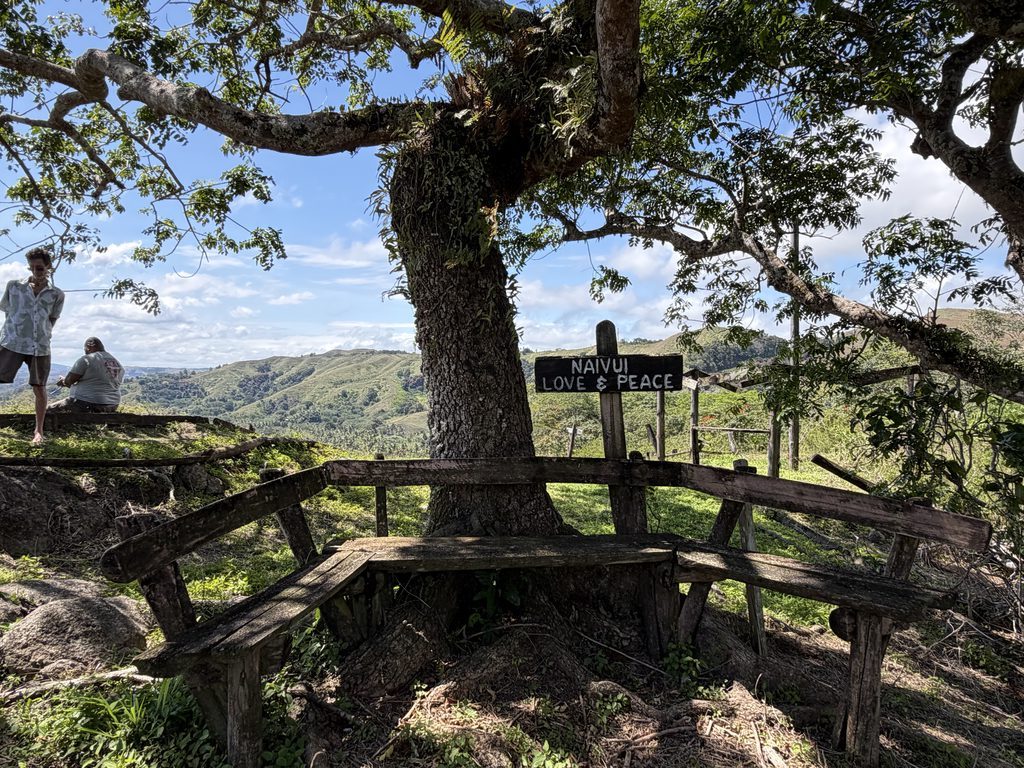
There are many things Atkinson loves about Fiji – the mountains of Namosi, the beaches along the Coral Coast, the smiles of the people and the singing in churches.
But it is the gratitude of children that stays with her.
Something as simple as giving a child an apple can bring a response that leaves her “forever in awe”.
After years of travelling between two countries, building relationships and overcoming challenges, Atkinson no longer sees Fiji as somewhere she visits.
It is home.
She knows she has become connected to a family and to children she cannot simply walk away from.
“I would never walk away from those children and assisting those children wherever I can, whenever I can.”
There are no regrets.
“No regrets whatsoever. I would never change it. It’s been awesome.”
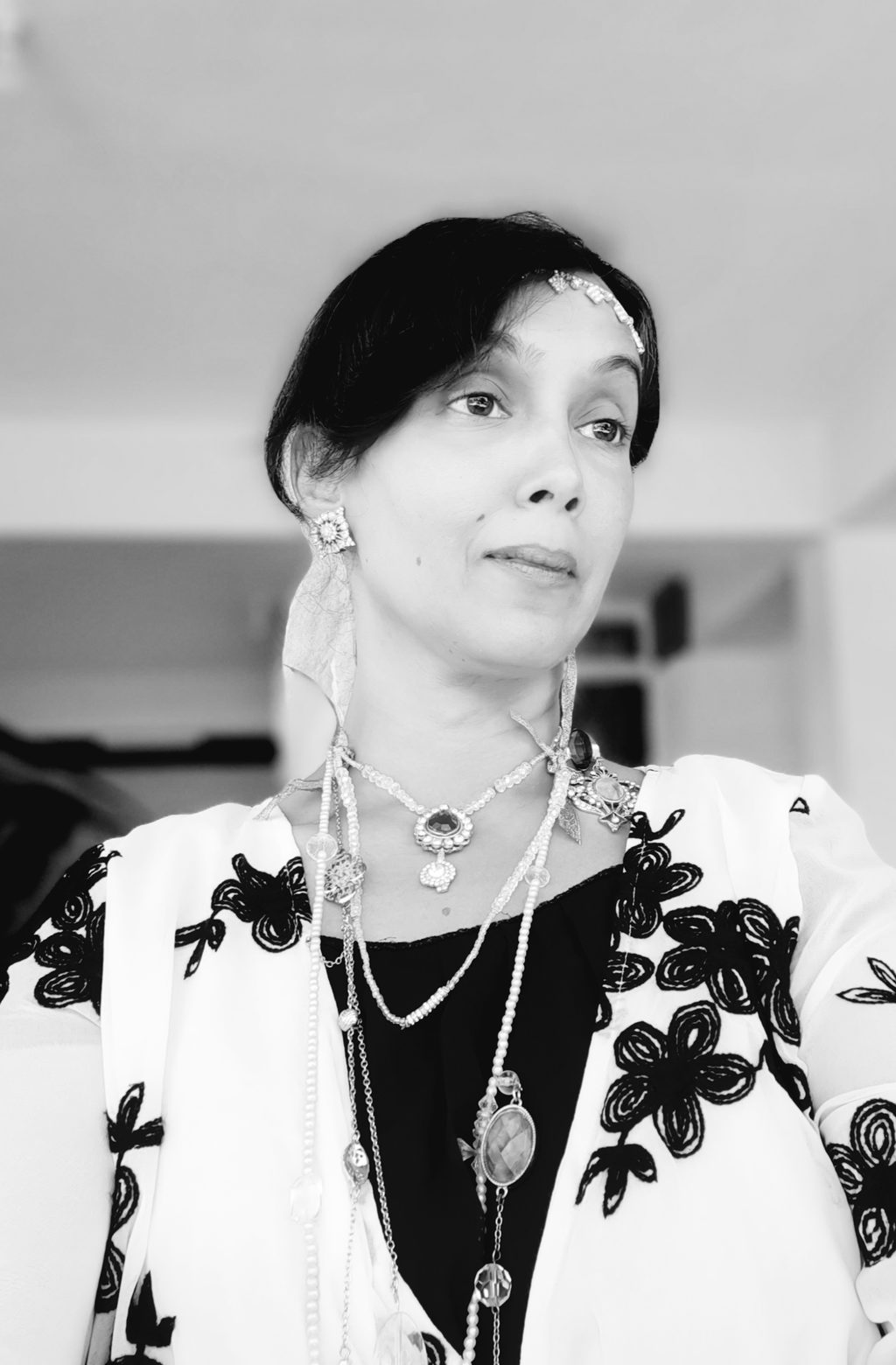
Promoting the protection of women in reference to domestic violence at the Sigatoka Market. Picture: SUPPLIED
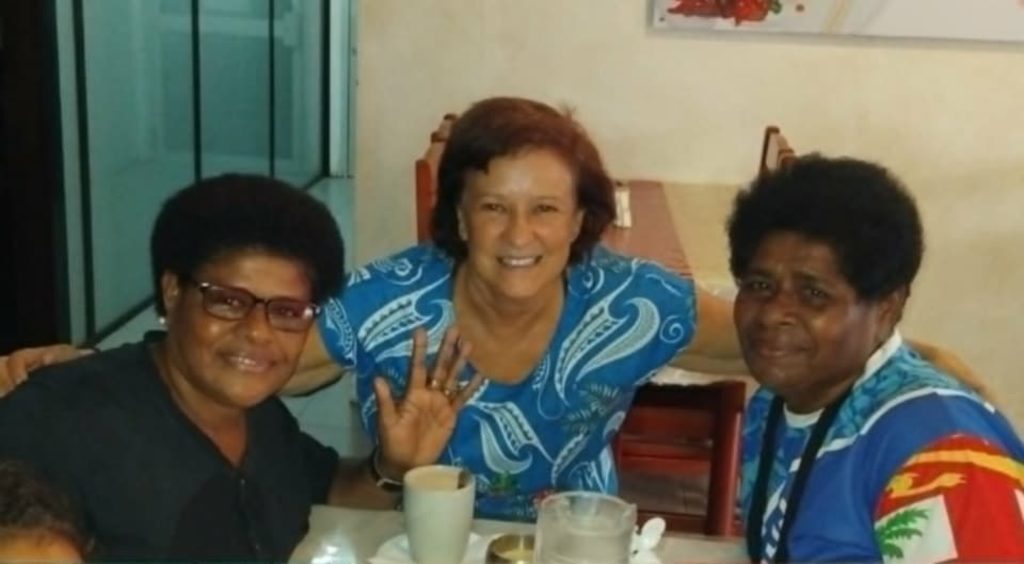
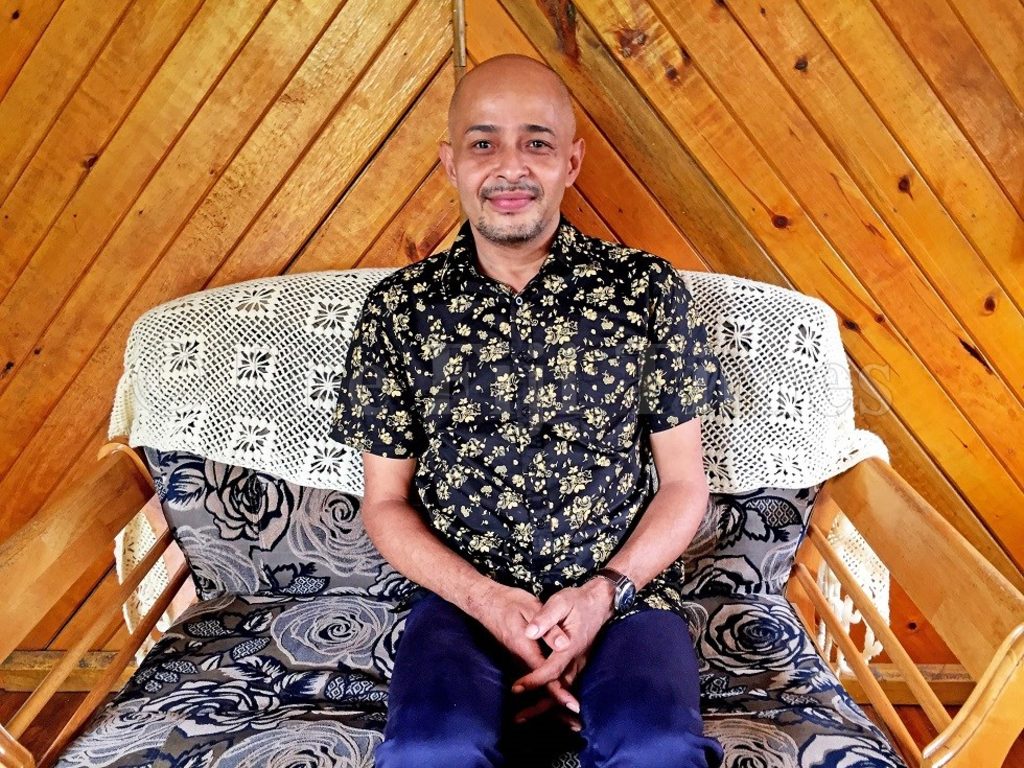
Jan with friends. Picture: SUPPLIED
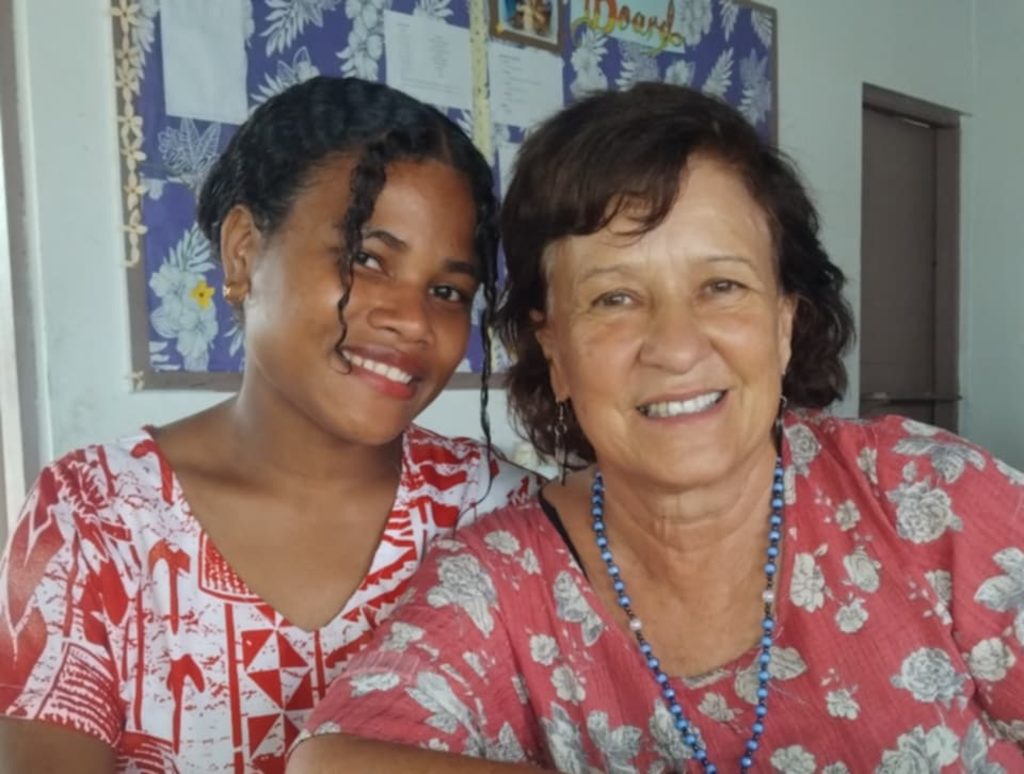
Jan with her niece who received a laptop and is successfully studying at Corpus Christi Teachers College. Picture: SUPPLIED
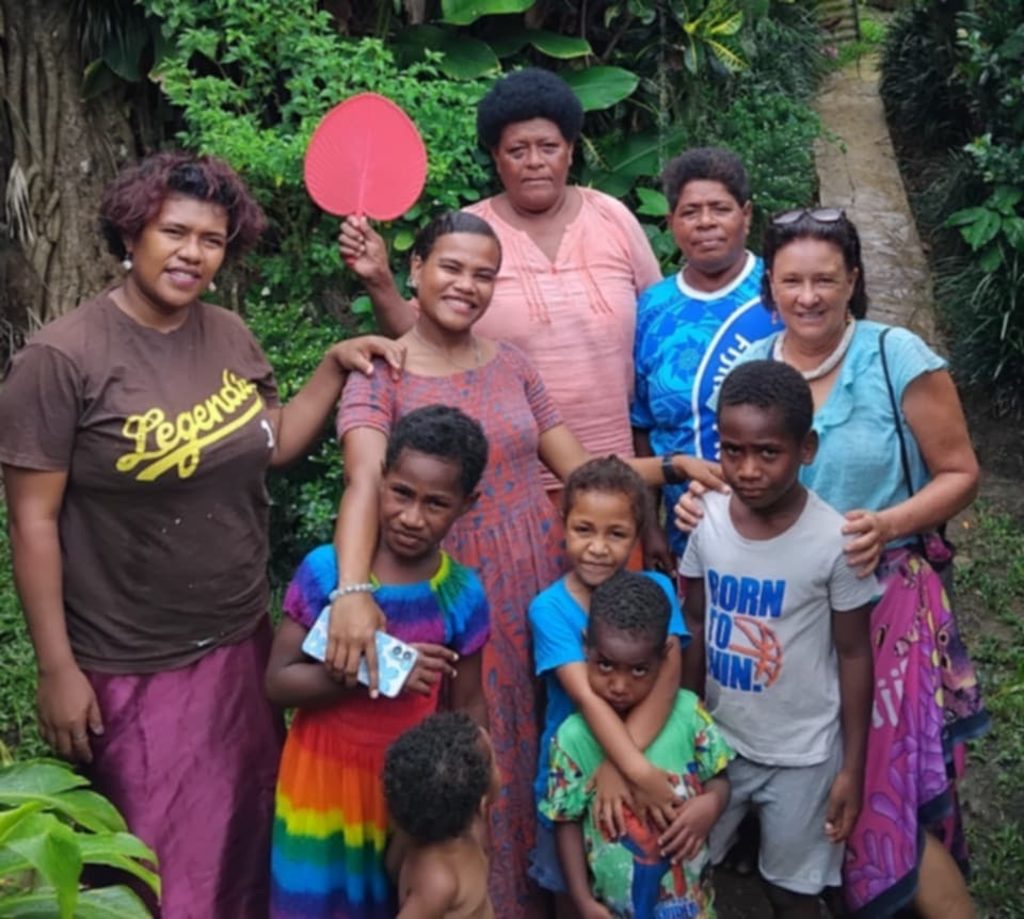
Jan at a family gathering. Picture: SUPPLIED
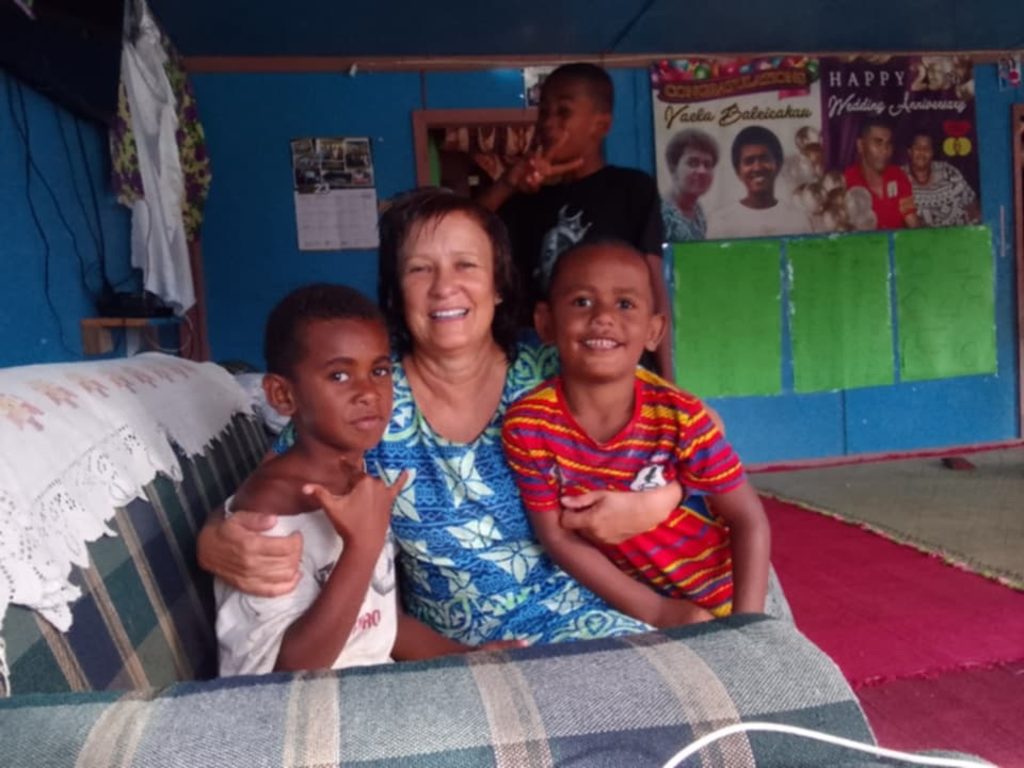
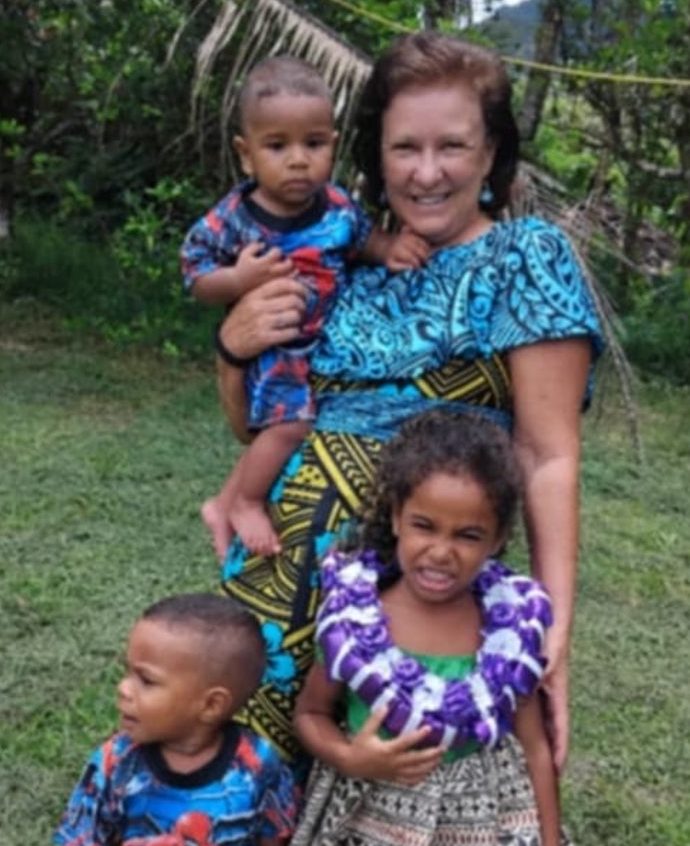
Jan with children from Namosi. Picture: SUPPLIED