
This article addresses the pertinent question on most people’s minds in Fiji. The 2013 Constitution has ruled Fiji for about 10 years, polarising the people into an illusionary separation between the ideologies of equal citizenry and indigenous rights.
Questions on the legitimacy of the Constitution has been canvassed in various forums including the demand to review it. The question that needs to be addressed objectively is what legitimises constitutions and for Fiji, whether the legitimacy of the 2013 constitution can be challenged.
Before we address the question of constitutional legitimacy it is advisable to discuss the background events, including constitutional cases preceding the government that imposed the 2013 Constitution.
The 2000 coup is a good starting place for understanding the relationship between the players and events that contributed to the formulation of the constitution.
The 2000 coup
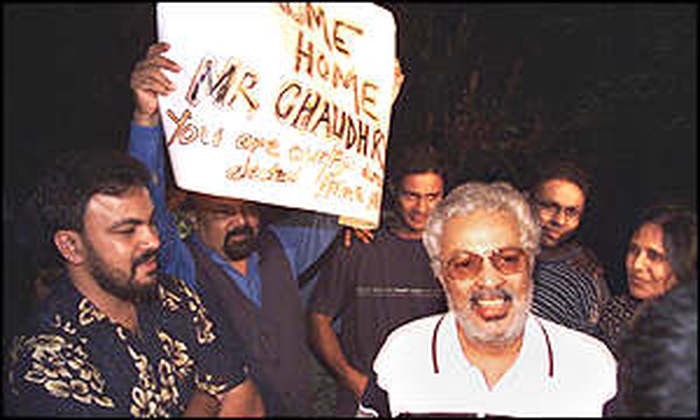
• The Fiji Labour Party won the 1999 election and Mahendra Chaudhry became the first prime minister of Indian ethnicity.
• On 19 May 2000 a group of men led by George Speight entered Parliament and held the government members of parliament hostage. The protection of indigenous rights and interests was provided as motivation behind the coup and the President declared a state of emergency.
• On May 27, 2000 the President appointed Tevita Momoedonu as Acting Prime Minister. And acting on the advice of the Acting PM the President prorogued Parliament for 6 months and Momoedonu resigned as Prime Minister.
• On May 29, 2000 the commander of the RFMF, Voreqe Bainimarama, assumed executive authority and established an interim military government. He purportedly abrogated the Constitution, but Ratu Mara refused to accept the office of President under the new regime.
• On July 4, 2000 Bainimarama created a civilian interim government with Laisenia Qarase as Prime Minister.
• On July 14, 2000 the hostages were released, and the Great Council of Chiefs (GCC) appointed Ratu Josefa Iloilo as interim President.
• On November 15, 2000 the High Court delivered its decision in Prasad v Republic of Fiji [2000] FJHC 121. The High Court (Chief Justice Gates) ruled that the doctrine of necessity permits emergency action in times of extreme crisis, but such action is illegal in normal circumstances. Necessity cannot be used to justify or support the abrogation of the existing legal order. The doctrine may have helped Bainimarama to restore order and secure the release of hostages but the Constitution temporarily on ice reemerges as the supreme law once order is restored. “The doctrine could not be used to give sustenance to a new extra-constitutional regime,” the Court said.
• On March 1, 2001 the High Court decision in the Prasad case was upheld in the Court of Appeal. PM Chaudhry then asked the Acting President (Iloilo) to summon Parliament.
• On March 13, 2001 Iloilo was appointed President under re-established Constitution and dismissed Mr Chaudhry as Prime Minister.
• On March 14, 2001 President Iloilo appointed Ratu Tevita Momoedonu as caretaker Prime Minister.
• On March 15, 2001 the President dissolved Parliament on the advice of the caretaker Prime Minister, who then resigned.
• On March 16, 2001 Mr Qarase was appointed caretaker Prime Minister.
• In August 2001 national elections were held and Mr Qarase was elected as Prime Minister.
The Yabaki case
Yabaki v President of the Republic of the Fiji Islands [2001] FJHC 116 was the case which challenged the constitutionality of the President’s action in dismissing Mr Chaudhry as Prime Minister, dissolving Parliament and appointing Qarase as Prime Minister. The High Court (Justice Scott) ruled that the actions of the President were justified on the grounds of necessity. The decision was overturned on appeal on the grounds that the Constitution limited the President’s power of dismissal of a Prime Minister, and it required the House of Representatives, not the President, to determine whether the Prime Minister has lost its confidence.
The 2006 coup
On December 5, 2006 the military staged a coup, Bainimarama assumed executive authority, declared a state of emergency and appointed Dr Jona Senilagakali as Prime Minister. On December 6, 2006 Dr Senilagakali advised the President to dissolve Parliament and he remained as Prime Minister. On January 4, 2007 Senilagakali resigned and Bainimarama was appointed Prime Minister the next day, January 5, 2007
Qarase v Bainimarama [2008] FJHC 241
This case submitted that the actions of the President were unconstitutional. The Court delivered its judgment on October 9, 2008. The Court ruled that the President’s prerogative powers allowed him to act according to discretion for the public good. However, on April 9, 2009 the Court of Appeal ruled that the President’s prerogative power does not exist in Fiji as the 1997 Constitution thoroughly delimits the President’s powers. The Court also ruled that the doctrine of necessity could not be used to justify a revolutionary regime. On April 10, 2009, in response to that, Bainimarama abrogated the Constitution and his military government began. It is ironic to note the blatant disregard for legitimacy, circumscribing the law to achieve political and personal agendas. The above discussion and court decisions establish that all purported abrogations of the Constitution were null and void. Arguably that includes the abrogation on April 10, 2009 that established the Bainimarama regime, the subsequent FijiFirst government and the 2013 Constitution.
Constitutional legitimacy
Legitimacy is a complex concept that underlies the quality of being legal or according to law. It may also denote the quality of being reasonable and acceptable. However, in legal discourse “illegitimate” means more than being erroneous or incorrect. It implies that if a government or law lacks legitimacy, it may not be worthy of respect or obedience. What legitimises a constitution? A standard answer is that constitutions are legitimate only if they represent the people they govern. The principle of popular sovereignty is that leaders and governments are sustained by the consent of their people, who are the source of political legitimacy. As Benjamin Franklin puts it, “in free governments, the rulers are the servants and the people their superiors and sovereign”. There are two conceptions of representation. Firstly, the constitution is grounded in the consent or the will of the citizens or when the constitution reflects the real identity of the members of the nation. Secondly it is sometimes stated that the constitution is legitimate because it promotes justice or more generally, is grounded in reason. As such, constitutions are typically grounded both in claims to represent the people and in claims concerning the justness and wisdom of the constitutional provisions. Arguably, there are two types of constitutions: constitutions that are primarily representational (for instance, the US Constitution) and constitutions that are primarily reason-based (for instance, the German Constitution). The clearest manifestation of a representative constitution is in the Preamble of the 2013 Constitution that is taken from the US Constitution, which states: ‘We the People …’ These three words have been interpreted to convey the conviction that the legitimacy of the US Constitution rests upon the fact that it is nothing but a reincarnation of the ‘real’ or ‘genuine’ will of the Fijian people. People continue to struggle to come to terms with the 2013 Constitution both in terms of representational legitimacy —the consent and will of the people — as well as promoting justice or being grounded in reason. The 2013 Constitution is found wanting on both counts.
Analysis
Apparently, based on previous court decisions the abrogation of the 1997 Constitution by Frank Bainimarama remains illegal — therefore null and void. Bainimarama ruled by decree from 2006 to 2014 when a general election was conducted under the imposed 2013 Constitution. Bainimarama’s rule was based on the control of the three arms of government and the same is reflected in his imposed 2013 Constitution. The people of Fiji had no choice and were coerced into the 2014 elections. Since then, the elected FijiFirst government under Bainimarama continued to rule with an iron first through their control of the three arms of government. Arguably, the 2013 Constitution was drafted with the notion that it would perpetuate the Bainimarama regime. The authors did not count on the will of the people who craved for change and democracy. As such, the issue of legitimacy by consent or adhering to the requirements of the constitution remains contentious. Overall, the legitimacy of the 2013 Constitution remains questionable. The Court decisions in the Prasad, Yabaki, and Qarase cases still stand, and it remains to be seen if the legitimacy of the 2013 Constitution will be challenged in court.
Conclusion
Fiji needs to change its political culture. The political landscape in Fiji remains unstable because politicians, political commentators and senior military officers are stuck in the quagmire of power struggle and a willingness to circumvent the law as a means to an end. Fiji, its leaders and people need to learn to respect and abide by the rule of law if the country is to progress.
• DR JALESI NAKARAWA is a lawyer and constitutional scholar. The views expressed in this article are not necessarily the views of The Fiji Times.

