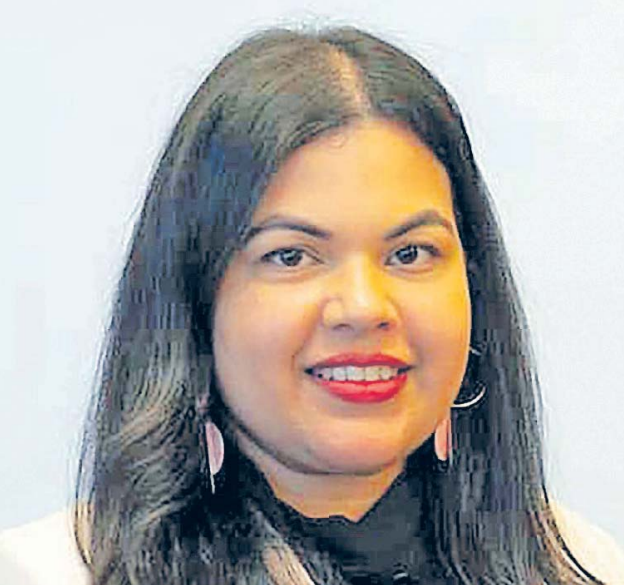
AS the nation reflects on the sacrifices and legacy of the girmitiya, one of their descendants, former Fiji resident Simita Kumar has carved a path that is inspiring Fijians around the world.
Born and raised in Fiji, the 38-year-old attended Samabula Primary School and Dudley High School before moving to Glasgow, Scotland with her family in 2005.
On May 7, she was elected the Scottish National Party representative for Edinburgh South Western in the 2026 Scottish Parliament election, securing 11,727 votes.
Her rise in politics has been shaped by years of community advocacy and public service, including work with NHS Lothian, Public Health Scotland and children’s charities.
In 2022, she became a City of Edinburgh councillor and later made history as the first person of colour to lead a political party group in Edinburgh. She is also believed to be the first Fiji-born person sworn into any parliament in the United Kingdom.
Despite living abroad for more than two decades, Ms Kumar said Fiji remained central to her identity, values and outlook on life.
Her achievement stands as another milestone for descendants of indentured labourers who continued to excel globally while remaining connected to their roots.
In an interview with The Fiji Times, Ms Kumar reflected on her upbringing in Samabula, family roots in Fiji, journey into politics, the challenges she faced on the road to parliament, and her hopes for young Fijians and the diaspora around the world.
FT: How does it feel to achieve this milestone?
Ms Kumar: Honoured and privileged in 2026, we’re still breaking glass ceilings. It’s also a bit surreal and hasn’t sunk in yet. I’m just taking each day as it comes.
FT: Can you tell us about your family’s connection to Fiji and your upbringing?
Ms Kumar: I’ve had the most remarkable upbringing — being born and bred in Fiji is a badge of honour that I wear with pride. My maternal grandparents were farmers in Tailevu while my paternal grandparents settled in Korolevu. I grew up in Samabula and Suva to a working class family. The spirit of the community, of a small nation, never leaves you. I have relatives in Fiji and I’m still best friends with Reshnika Sen who I went to Dudley High School with and she is a pharmaceutical powerhouse in her own right and career. Put simply, you can take the girl out of Fiji but not the Fiji out of the girl.
FT: How much has your Fijian heritage influenced your values and outlook on life?
Ms Kumar: Hugely! Island life is unique in both outlook and gratitude. We are a happy nation where true wealth comes from community and service instead of materialistic gains. We share our half loaf of bread with neighbours and strangers without a second thought and those are the value systems instilled deep within.
FT: What memories do you have of Fiji or your connection with the country growing up?
Ms Kumar: I left Fiji at 17, so I remember pretty much everything. But the word I’d use to describe it is serenity! I’m still a huge fan of Fiji 7s rugby and was sobbing when we were in the Olympic finals. I still miss the smell of cream buns from my local Hot Bread Kitchen or the smell of lovo or wood burning in outside kitchens. I’ve got a lot of nostalgia around Fiji and that connection will never go away.
FT: What inspired you to enter politics and public service?
Ms Kumar: I remember being in school and was not hesitant of public speaking or joining debates. Entering politics was never in the forefront of my mind but perhaps was there in the background. I was born in ’87 which was the first military coup and I remember vividly the coup of 2000 when I was in school. So in some ways, all Fijians (whether we’d describe it as such or not) are politically motivated and aware. However, we also want peace and equity.
FT: Can you share some of the biggest challenges you faced on your journey to Parliament?
Ms Kumar: In 2022, I became the first ethnic minority woman to be elected in Edinburgh Council. Yes, this was an achievement but also demonstrates how much work still remains to get diverse representation. As someone born in Fiji, and still celebrate Fiji Day, I sing our national anthem with emotion and pride. It also, however makes people aware that as an immigrant to Scotland/UK , I am deeply passionate about Scottish independence. It’s hard for people to comprehend the two. Fiji is one of around 65 countries who got its independence from the UK, I’m waiting for the day Scotland has that same freedom and complete autonomy.
FT: What message would you like to share with young Fijians and the Fijian diaspora around the world?
Ms Kumar: Be proud but never forget where you came from which is what will ground you but also give you the drive to do better for communities around you.
FT: Do you believe your multicultural background has helped shape your leadership style?
Ms Kumar: Yes absolutely, my sense of identity is complex. I’ve got Indian heritage, I look very islander (depending on the day), we celebrate all faiths and festivals, and we truly believe in that sense of community. I have taken all of those lessons into my leadership.
FT: How important was family support in helping you reach this achievement?
Ms Kumar: Phenomenally important, my maternal grandfather was a farmer and used to rally all farmers and their families to vote. He would take it upon himself to arrange transportation in villages to polling stations. I think he foresaw my future before I did. I have an incredibly supportive family, my parents and younger sister live in Glasgow while my two older sisters are in New Zealand and Australia. However, no amount of time difference and distance stops us from speaking daily. They are my grounding force, my biggest cheerleaders, my necessary critics, my best friends.
FT: What issues are you most passionate about representing in Parliament?
Ms Kumar: Equality and access — I represent Edinburgh Southwestern which has such a range from incredibly affluent areas to pockets of deep deprivation and poverty. Most times, those with greatest need do not seek help. I’m passionate most about representing those with the greatest need. I want to be in the heart of areas with levels of multi deprivation.
FT: What does this achievement mean for women and people of Pacific and Indian heritage aspiring to leadership roles?
Ms Kumar:: Women across all roles in leadership are hugely underrepresented. We are 50 per cent of the population and need to be represented as such. Added to that the intersectionality aspects of heritage means we do bring unique point of views. I am only one voice, but there are thousands of us doing our bit in our own way that needs to be equally recognised and supported.
FT: What advice would you give to young people from small island nations like Fiji who dream of achieving success internationally?
Ms Kumar: Fiji is the David not the Goliath in our international story. Success comes with hard work and determination. There’s also no limit to trying and reinventing ourselves ’till we become the best versions of ourselves. But also a caution, don’t believe in everything you see and read on media and social media. There are challenges — there’s always two sides of a coin, and the grass is not always greener on the other side. You will know what’s best and right for you. Trust in that and ignore the noise.
FT: Are there any plans for you to visit Fiji in the future?
Ms Kumar: I was in Fiji last year for my cousin’s wedding. Before that I returned for the first time in 2013. I won’t be leaving it that long again and will be hoping to get back as soon as time and opportunity allows me to do so.