PUSHPA Wati uses her latest collection of poems to preserve her mother tongue and encourage younger generations to embrace their cultural identity.
The declining interest in Hindi among younger generations has inspired retired secondary school teacher, Pushpa Wati to use poetry as a way of keeping her mother tongue alive.
Although she has written poetry mainly in English for much of her life, Wati decided to turn to Hindi to express her thoughts and emotions — hoping her work would encourage others to appreciate the language.
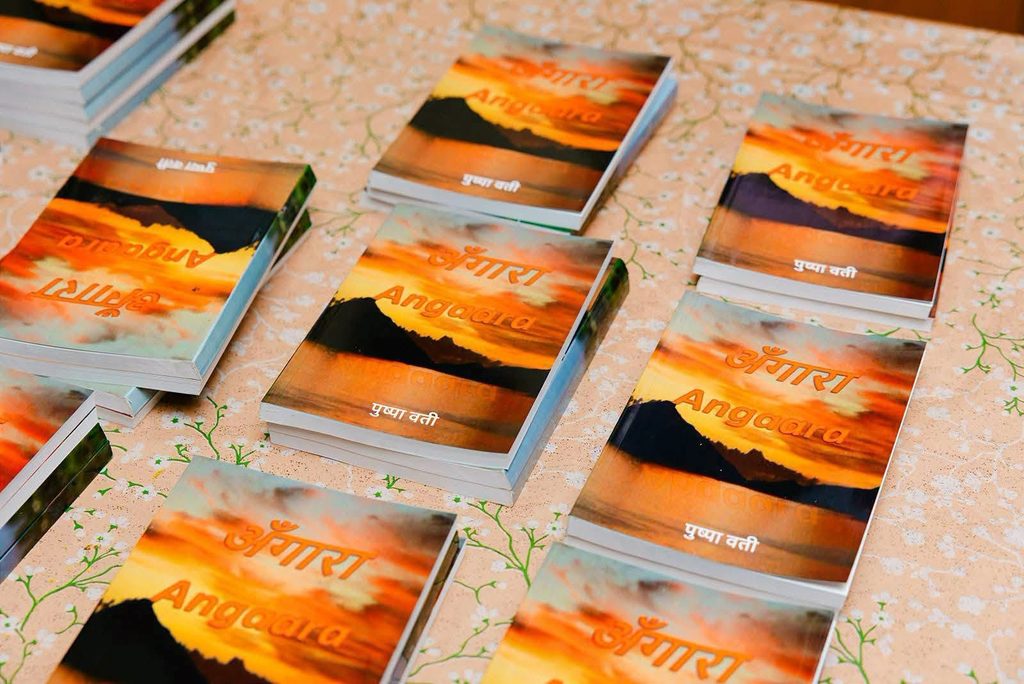
Her latest collection of Hindi poems, launched at the High Commission of India in Fiji on November 13, reflects her commitment to preserving the language through literature.
Despite spending much of her professional life teaching English, Wati believes Hindi remains an important part of cultural identity and should not be lost as younger generations become more exposed to other languages.
“I’ve always had an interest in writing poetry mainly in English. However, the dying interest in the Hindi language among the younger generation encouraged me to express my feelings and thoughts in Hindi,” Ms Wati said.
“Despite being a retired secondary school English teacher, I wanted to play my part in keeping my mother tongue alive.”
A lifelong love of writing
Wati’s interest in writing began at a young age, when she developed a passion for poetry and speech writing.
She was raised in Rakiraki, where she attended Penang Sangam Primary School and Penang Sangam High School before pursuing a Bachelor of Education in English Language and Literature at the University of the South Pacific.
Her teaching career took her to several schools, including Xavier College, MGM High School and Suva Muslim College, where she shared her knowledge of the English language and literature with students.
Over the years, her writing has been shaped by her observations of everyday life and the experiences of people around her.
Some of her poems take a philosophical approach to life, drawing on her personal perspectives.
Others reflect the stories of people she has encountered, including friends, family members and strangers whose experiences have left an impression on her.
“Meeting various friends, families and even strangers and getting to know about the difficulties and challenges in their lives have inspired me to write more realistic and meaningful poems,” she said.
These encounters have helped her develop a writing voice that explores human experiences and the lessons that can be drawn from them.
Stories of love, loss and history
Her latest collection explores several themes, including the experiences of the girmit era, love, loss, hope and gender issues.
Through her poems, Wati hopes readers will find encouragement and wisdom in the words, taking time to reflect on their meaning and apply the messages to their daily lives.
She also draws inspiration from the rich tradition of Hindi literature, particularly the Ramayana and Bollywood music.
For Wati, these remain important sources of exposure to Hindi poetry in Fiji, where much of the community’s connection to the language comes through religious epics and popular music.
“The Ramayana is an epic poem. Bollywood songs are poems first,” she said.
“My inspiration comes from these sources as we are mostly exposed to Hindi literature through these mediums in Fiji.”
She believes poetry deserves greater recognition, describing it as one of the earliest forms of literature in any language.
Keeping the language alive
While her latest publication is a personal achievement, Wati sees it as part of a wider effort to encourage the use of Hindi in Fiji.
She said language was closely connected to identity and culture, and that embracing a global society should not mean abandoning one’s mother tongue.
“The main challenge is to change the mindset as mainly people think that learning the Hindi language is futile and unnecessary in this modern world,” she said.
She worries that if the language continues to lose its place among younger generations, future generations may struggle to understand important works of Hindi literature.
“If we don’t, there may not be anyone left to recite and understand epics like the Ramayana,” she said.
Wati also believes local writers need more opportunities to share their work.
She said there were limited platforms to promote local literature, making self-publishing a difficult undertaking.
Publishing a book requires considerable personal financial investment, and the response from readers often determines whether writers can afford to produce further work.
Although she believes there is considerable writing talent in Fiji, many writers never get the opportunity to share their work with a wider audience.
She expressed gratitude to the High Commission of India in Fiji for providing her with opportunities to share her Hindi poems at its events and hosting the launch of her latest book.
“I am very grateful for this and thank the High Commissioner, His Excellency Suneet Mehta Sir, for this.”
Those who have purchased copies of her collection have responded positively, although she acknowledged that the book had yet to reach a wider audience following its recent launch.
She also noted that publicity had been limited.
Looking towards new stories
Beyond Hindi poetry, Wati is now working on a collection of English short stories and poems.
Her intention is to reach Fiji’s multiracial community through English, allowing her writing to connect with readers from different backgrounds.
She has not ruled out publishing more Hindi literature, saying the public’s response to her latest collection would help determine whether she pursues another publication.
For now, her work remains guided by a belief that literature should be shared and that language must be nurtured if it is to survive.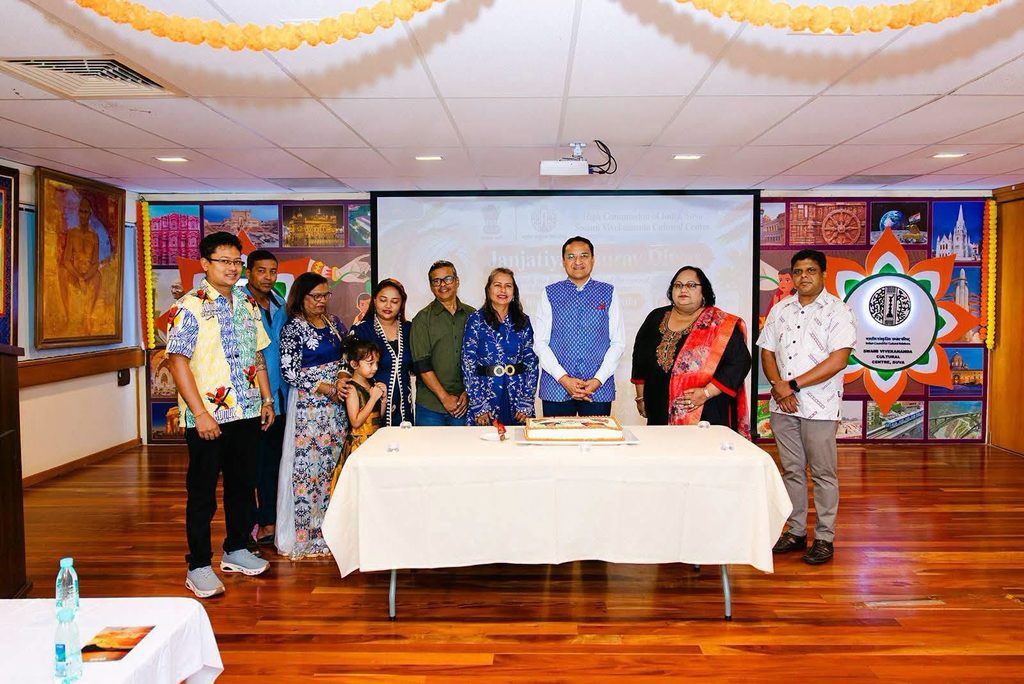
Despite spending much of her professional life teaching English, Wati believes Hindi remains an important part of cultural identity and should not be lost. Picture: HIGH COMMISSION OF INDIA, FIJI.
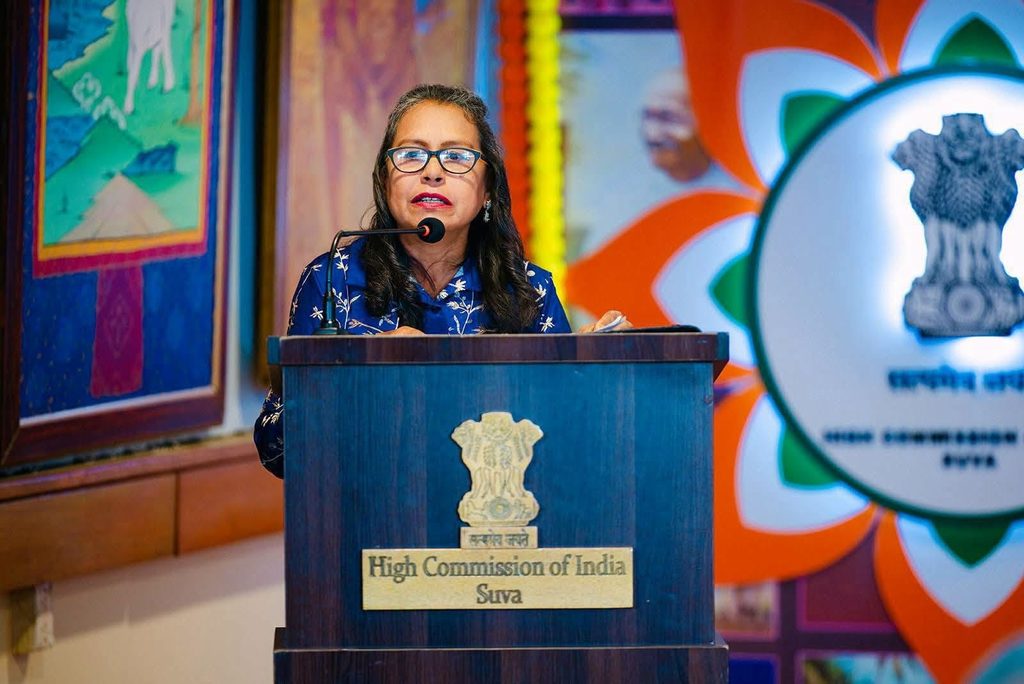
Pushpa Wati’s interest in writing began at a young age, when she developed a passion for poetry and speech writing.
Picture: HIGH COMMISSION OF INDIA, FIJI.