LOMAIVUNA is known for its agricultural potential, with farming providing a livelihood for many families.
Yet for residents of Sector 6, one of the area’s biggest challenges is not finding land to cultivate but securing enough water for everyday living.
The prolonged dry spell has exposed the difficulties faced by households that depend almost entirely on rainwater collected in storage tanks.
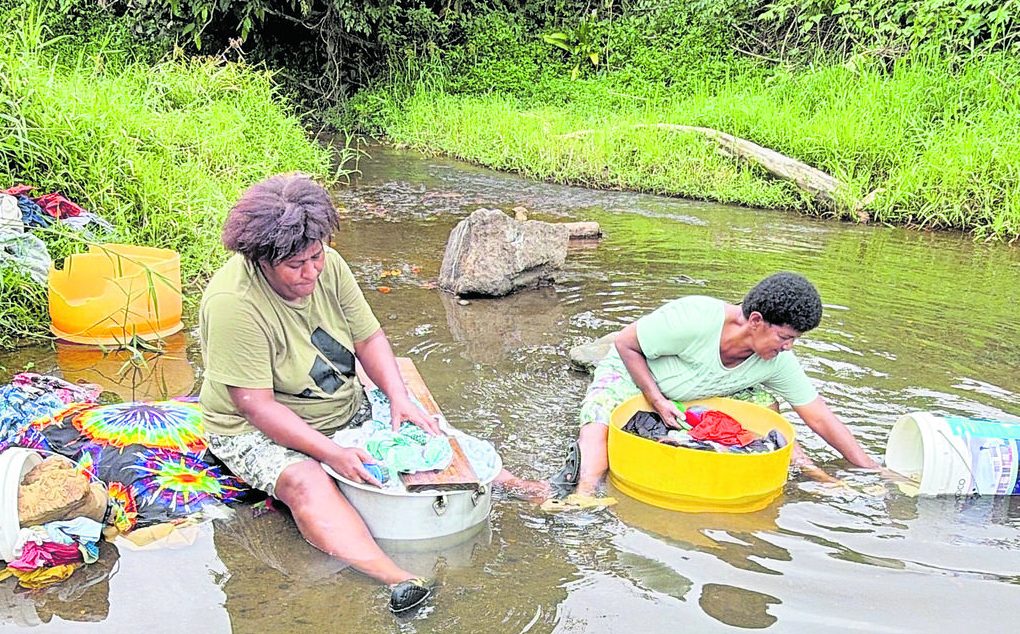
As rainfall becomes less frequent, residents are forced to turn to nearby streams for their domestic needs. Now, even those water sources are beginning to dry up.
For a community that depends heavily on agriculture, the situation raises concerns about how long families can continue managing with limited water supplies.
Ilisapeci Rokobiau, 48, originally from Serea, has lived in Lomaivuna for 27 years.
She said water shortages had become a major concern for households, particularly during extended periods without rain.
“Our drinking and washing water come from our water tank, but when there is no rain, we have to come down to the stream,” she said.
“Sometimes when we come to the stream by the road, it is not as it was before. It is also drying up and does not flow as it used to.”
The shortage has changed how families manage even the most basic household chores.
Mrs Rokobiau, who previously washed her clothes at home using a washing machine, she now visits the stream once a week to conserve the water in her household tank.
Getting the laundry to the stream requires assistance from family members, with husbands and children helping transport the washing in wheelbarrows or vehicles.
It is a considerable adjustment for families who must now plan their domestic routines around the availability of water.
The situation also highlights the limitations of relying on water trucks to meet household needs.
Residents must contact the relevant service providers when their supplies run low, while waiting for deliveries can leave families having to ration what little water remains.
“We continue to call for water trucks to transport water to us when there is no rain for a long time,” Mrs Rokobiau said.
“If the trucks do not come, we have to use water wisely until one arrives or until it rains again, especially when it comes to drinking water.”
More than 170 people in Sector 6 share the limited water resources available to them.
Some households have dug their own water sources, but most depend on rainwater tanks.
Residents also use the tank at the community hall, while another tank belonging to the Seventh-day Adventist Church serves households living downhill.
These arrangements provide some relief, but they also demonstrate how dependent the community remains on limited sources of water.
The implications extend beyond household needs.
Lomaivuna is an agricultural area where families depend on crops for their income.
Mrs Rokobiau said her family planted dalo and vegetables, while other farmers cultivated cassava and ginger.
However, the lack of rainfall had affected farming activities, with some farmers reporting damage to their dalo crops.
When water becomes scarce, the consequences are felt not only in households but also on farms where crops depend on adequate moisture to grow.
Farmer Keshwan Nair, 67, who has lived in Lomaivuna for 26 years, said access to water had remained one of the area’s longstanding problems.
“When we moved here, we raised our concerns about the water problem, but no solution has been given,” he said.
Mr Nair owns almost 24 acres of land, but the availability of water remains a concern for people whose livelihoods depend on farming.
For newer residents, the problem is equally apparent.
Tarau Kotoiono, who helps her brother’s family operate a store in Lomaivuna, said she had experienced water shortages during the three years she had lived there.
She said water trucks generally delivered supplies every two weeks, but residents had to contact them to arrange deliveries.
“You must call for them to bring water here. If you want them to come immediately, you will have to pay for the delivery on that day.”
“If you wait for their normal water carting schedule, you have to wait for two weeks, and you still have to call them.”
The accounts from Lomaivuna raise an important question about access to reliable water in rural agricultural communities. Where households depend on rainfall and have limited alternatives, even a prolonged dry spell can quickly become a serious threat to daily living.
Water security should not be treated as a concern that arises only when drought conditions become severe.
Communities need dependable supplies throughout the year, particularly in areas where farming supports household incomes.
The concerns in Lomaivuna also come at a time when the Government has warned about the effects of El Niño and the prolonged dry weather affecting parts of Fiji.
On Wednesday, November 18, the Government declared a National State of Disaster across the country after updated assessments confirmed that the ongoing El Niño drought had reached crisis thresholds.
In his national address, Prime Minister Sitiveni Rabuka announced that Cabinet had approved the declaration on the advice of the National Disaster Risk Management Council.
The declaration allows for an intensified national response to address water shortages and their impact on communities.
However, for residents of Lomaivuna, the immediate concern remains access to water.
They cannot wait for rainfall to return before attending to their household needs or protecting the crops that sustain their families.
The experience of Sector 6 is a reminder that agricultural development must go hand in hand with reliable water infrastructure.
A community cannot be expected to sustain its farming activities when the water needed to support both households and crops remains uncertain.
Lomaivuna’s water problem deserves attention beyond the current drought.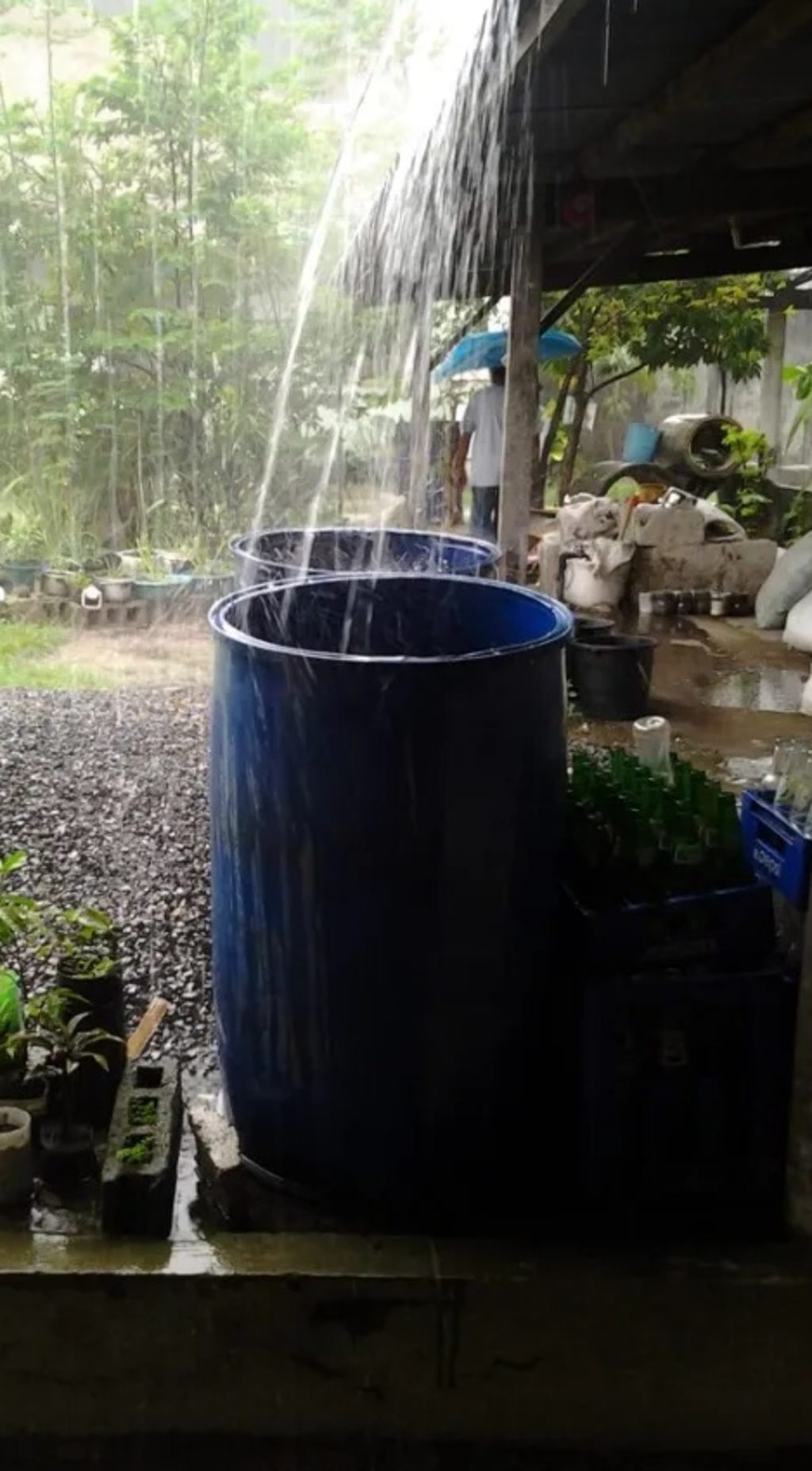
The farming community in Lomaivuna rely on rainwater for daily use.
Picture: DESERTIFICATION
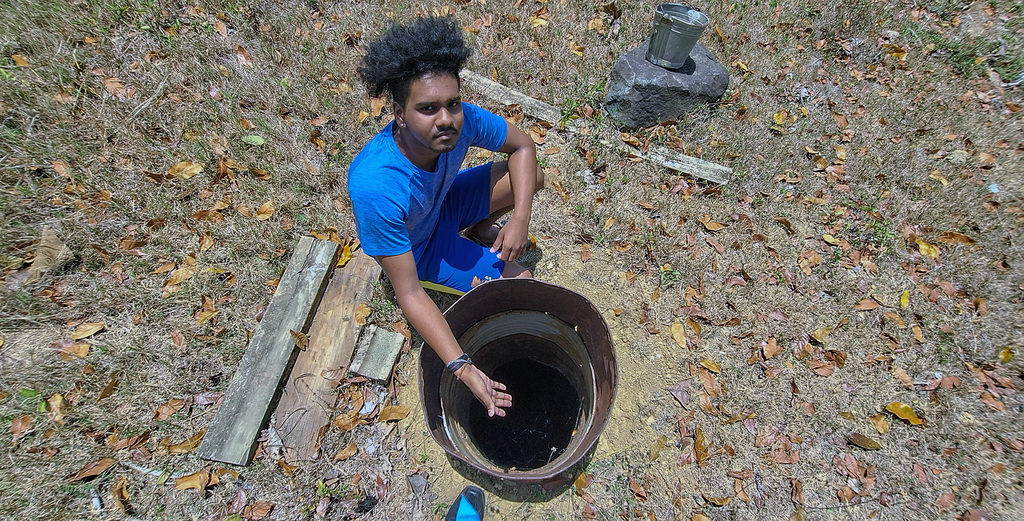
Other communities are also feeling the effects of the prolonged dry spell, here Navneel Goundar shows a dried up well at Nalovo No.3 road, Nadi. Picture: BALJEET SINGH