
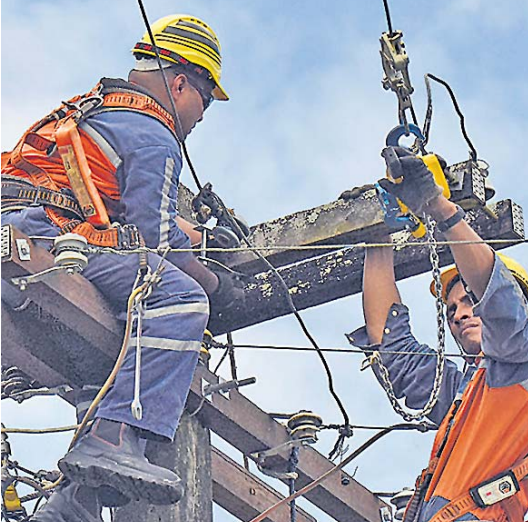
FIJIANS are bracing for higher electricity charges and increased public transport costs as the Coalition Government moves to cushion the country from a worsening global fuel crisis that is now placing severe pressure on essential services and the national economy.
At a joint media conference on Thursday, Fijian Competition and Consumer Commission chief executive officer Senikavika Jiuta and Finance Minister Esrom Immanuel announced a series of measures aimed at balancing rising operational costs with consumer protection, while warning that the international fuel crisis was intensifying.
Electricity customers will face an interim fuel surcharge increase of 5.91 cents per kilowatt hour from May 26, while bus fares across Fiji will rise by 22.5 per cent. However, Government said it will absorb the full bus fare increase for commuters and subsidise electricity costs for low-income households and small businesses earning below $30,000 annually.
Electricity costs rise
Ms Jiuta said the FCCC had approached both reviews with “great care, diligence, and responsibility” because the decisions directly affected “families, businesses, workers, students, and commuters alike.”
She revealed that Energy Fiji Limited had initially applied for an 11-cent increase in fuel surcharge on April 13 due to soaring global fuel prices and rising costs of Industrial Diesel Oil and Heavy Fuel Oil used for electricity generation.
“EFL advised that without some level of fuel cost recovery, the ability to maintain a reliable and stable electricity supply throughout the country would become increasingly challenging,” Ms Jiuta said.
She said Fiji remained heavily dependent on imported fuel and ongoing geopolitical tensions continued to create instability in global fuel markets.
“As many Fijians are aware, Fiji still relies significantly on imported fuel for electricity generation.
“Ongoing global instability and geopolitical tensions continue to place pressure on international fuel markets, making prices highly volatile and unpredictable.”
She said following a detailed review of EFL’s financial submissions, operational costs and projected impacts, FCCC approved a lower interim surcharge of 5.91 cents per kilowatt hour instead of the 11 cents requested.
“For domestic customers currently paying approximately 34 cents per kilowatt hour, electricity rates will increase to approximately 39 cents per kilowatt hour.
“A household currently receiving a monthly bill of around $68.00 can expect an increase of approximately $11.82.”
Commercial customers will also be affected. Businesses currently paying around 40 cents per kilowatt hour will now pay approximately 46 cents, meaning a monthly electricity bill of about $2,049 could increase by nearly $300.
Ms Jiuta stressed that the adjustment was temporary and necessary to maintain reliable electricity services across Fiji.
“This decision reflects the careful balance FCCC has had to strike between protecting consumers from excessive costs while also ensuring Fiji continues to have reliable and sustainable electricity supply which ensures continued economic growth.”
Bus fares increase
Public transport operators will also receive relief through higher fares after operators raised concerns over escalating fuel and operational expenses.
“Bus fares will increase by 22.5 per cent effective from 26 May, 2026,” Ms Jiuta announced.
“For commuters travelling on Stage 46 routes, the current fare of $27.16 will increase to approximately $33.27.”
But in a move designed to shield ordinary Fijians from additional financial pressure, Mr Immanuel announced that Government would fully absorb the increase.
“What this means is that none of the approximately 350,000 Fijians who rely on bus transport, including students using blue and yellow cards, as well as adults using red cards, will pay any additional bus fares despite the increase in fares,” Mr Immanuel said.
“Government will fully absorb the 22.5 per cent increase at an additional fiscal cost of $2 million per month.”
The Government will also provide additional support for rural service licence holders and boat operators transporting students in maritime and remote areas.
Government steps in
Mr Immanuel described the situation as a “war-induced fuel price crisis” with potentially devastating consequences if essential services were disrupted.
He said these services were critical and any major disruption to these services will have severe consequences for businesses, households, jobs, public finances, national security and the wider economy.
“Such a disruption has to be avoided at any cost.”
The Government has also announced that it will absorb the new electricity surcharge for more than 57,000 low-income households already receiving subsidised electricity tariffs.
“With respect to the fuel surcharge of 5.91 cents per kilowatt hour, Government has decided to fully absorb this additional cost for all subsidised electricity users with household incomes below $30,000 per year.
“We will also expand this subsidy of 5.91 cents to all MSMEs that have an annual gross income turnover of less than $30,000.”
The support measures come as Government attempts to balance rising fiscal pressures with growing public concern over the cost of living.
Mr Immanuel said Government had already increased social welfare allowances by 50 per cent for 130,000 recipients, extended duty-free fuel concessions to EFL, bus operators and inter-island shipping providers, and offered assistance to Fiji Airways.
Spending cuts and support
At the same time, Government has introduced austerity measures, including a 20 per cent pay cut for parliamentarians and ministers, restrictions on official travel and tighter control of government spending.
Municipal elections have also been deferred until after the next general election to prioritise spending during the crisis.
Mr Immanuel said Fiji was also securing external financial support, including $A30million from Australia and $NZ8.5million from New Zealand, while negotiations continued with international financial institutions for further funding.
“As we announce the new budget on the 26th of next month, we will announce more support measures to protect our people, businesses and the economy,” he said.
Despite the rising costs, both officials urged Fijians to conserve electricity and prepare for difficult months ahead as global fuel uncertainty continues.
“We must choose between higher electricity prices or the risk of electricity shortages and disruptions which will be much more costly and painful.”

